
Net carbs vs. total carbs: which one should you track in the calculator?
Understanding the fundamental pivot of nutritional ketosis and how to maintain a therapeutic metabolic state.
In the complex clinical landscape of metabolic health, few topics generate as much patient confusion as the debate between net carbs vs. total carbs. For individuals embarking on a ketogenic journey, the distinction between these two metrics is not merely a matter of semantics; it is the fundamental pivot upon which nutritional ketosis rotates. Understanding how to calculate net carbs is essential for maintaining a therapeutic metabolic state while ensuring nutritional adequacy through fiber-rich whole foods.
Whether you are managing type 2 diabetes, treating drug-resistant epilepsy, or pursuing fat loss, the way you input data into your keto calculator determines the accuracy of your results. This guide provides a definitive technical analysis of net carbs vs. total carbs, clarifying why the physiological impact of a carbohydrate is often more significant than its raw mass. By mastering counting carbs on keto, you can navigate nutritional labels with professional precision and build long-term trust in your tracking tools.
The biochemical foundation of carbohydrates
To understand net carbs vs. total carbs, one must first analyze the molecular structure of the macronutrients in question. Carbohydrates are organic compounds consisting of carbon, hydrogen, and oxygen, typically categorized into sugars, starches, and fibers. In a standard dietary context, these molecules serve as the primary substrate for ATP production. However, not all carbohydrate structures are processed identically by the human digestive system.
Total carbohydrates represent the cumulative sum of all these categories found in a food item or beverage. This includes simple sugars (glucose, fructose, lactose), complex starches (chains of glucose), and non-digestible polysaccharides like fiber. While starches and sugars are rapidly broken down into glucose, causing a concomitant rise in blood glucose and insulin levels, fiber and certain sugar alcohols follow a different metabolic pathway.
👇 Calculate Your Personal Macros
Use our scientifically validated tool to find your metabolic targets.
Your Personalized Results
Daily Target
0
kcal / day
Defining net carbs: the “impact” metric
Net carbs, often referred to as “digestible” or “impact” carbohydrates, represent the portion of total carbohydrates that the body effectively absorbs and utilizes for energy. These are the molecules that significantly influence blood sugar and insulin secretion. When you are counting carbs on keto, the net carb count is your “north star” because it reflects the actual metabolic load placed on your system.
The physiological premise is straightforward: if a carbohydrate cannot be broken down by human digestive enzymes, it cannot enter the bloodstream as glucose. By focusing on net carbs vs. total carbs, patients can incorporate a wider variety of nutrient-dense vegetables without exceeding the threshold required for ketone production.
The technical formula: how to calculate net carbs
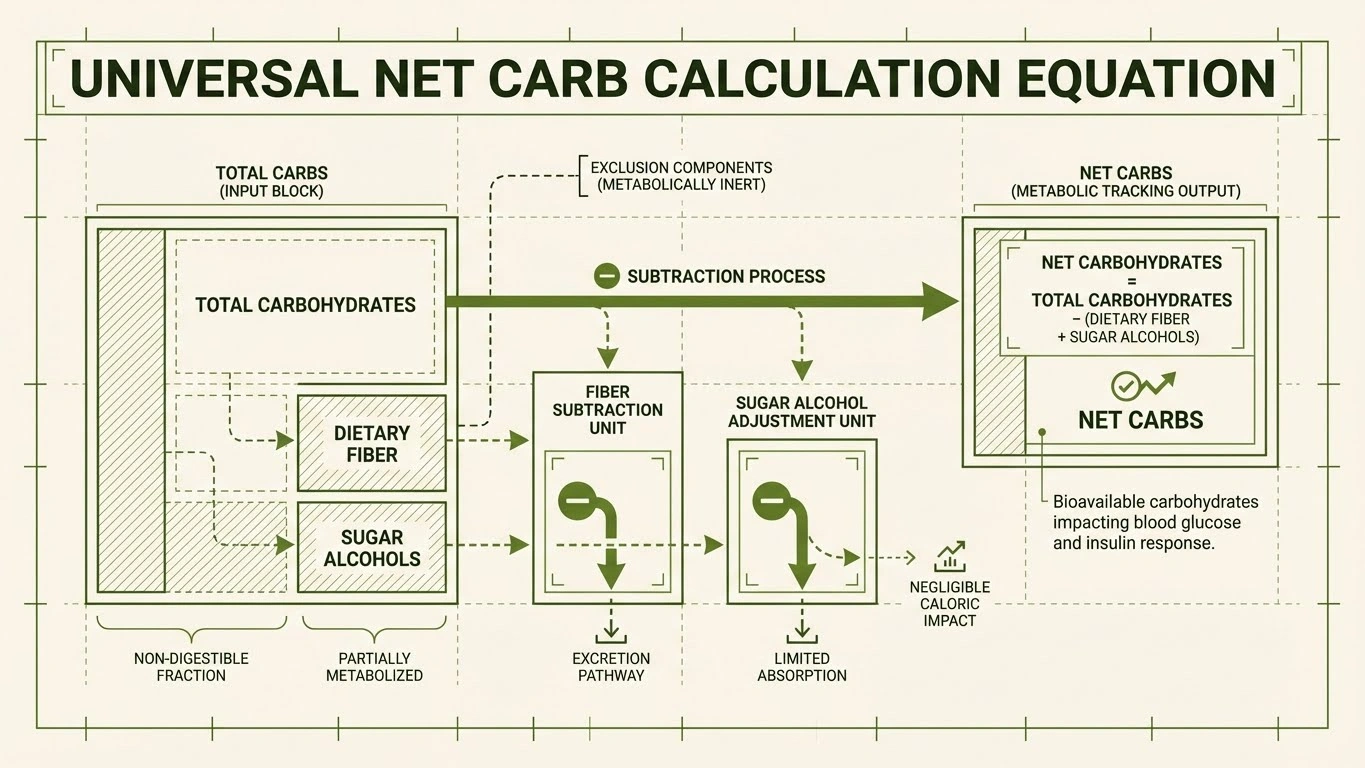
Learning how to calculate net carbs involves a two-step subtraction process that filters out non-glycemic components.
The Universal Net Carb Equation
The “fiber subtraction” visual example
To solidify your understanding, let us examine a high-fiber whole food: the avocado. This example illustrates why the raw “total carb” number can be highly misleading for someone counting carbs on keto.
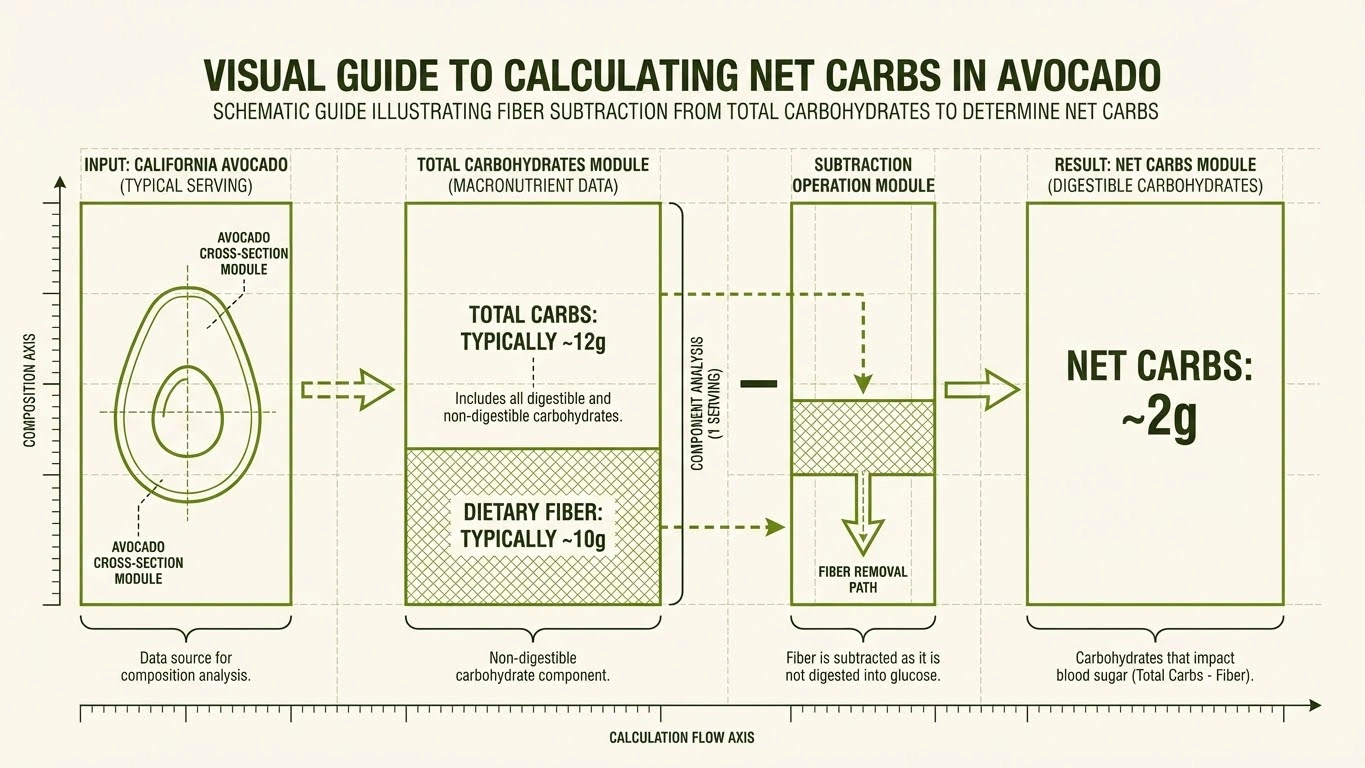
Calculation for a standard California avocado:
- Start with Total Carbs: 11.7g
- Subtract Dietary Fiber: 9.2g
- Subtract Sugar Alcohols: 0g
- Result: 2.5 grams of Net Carbs
Fiber: why it gets a “free pass”
Fiber is a unique form of carbohydrate that human enzymes cannot break down into glucose. Instead of being absorbed in the small intestine, it moves to the large intestine, serving as a prebiotic. These bacteria ferment fiber into short-chain fatty acids (SCFAs) like butyrate, which provide health benefits without raising blood glucose.
The sugar alcohol paradox: erythritol vs. maltitol
Sugar alcohols (polyols) are common in “keto-friendly” processed goods, but they are not all created equal. Their absorption rates vary significantly.
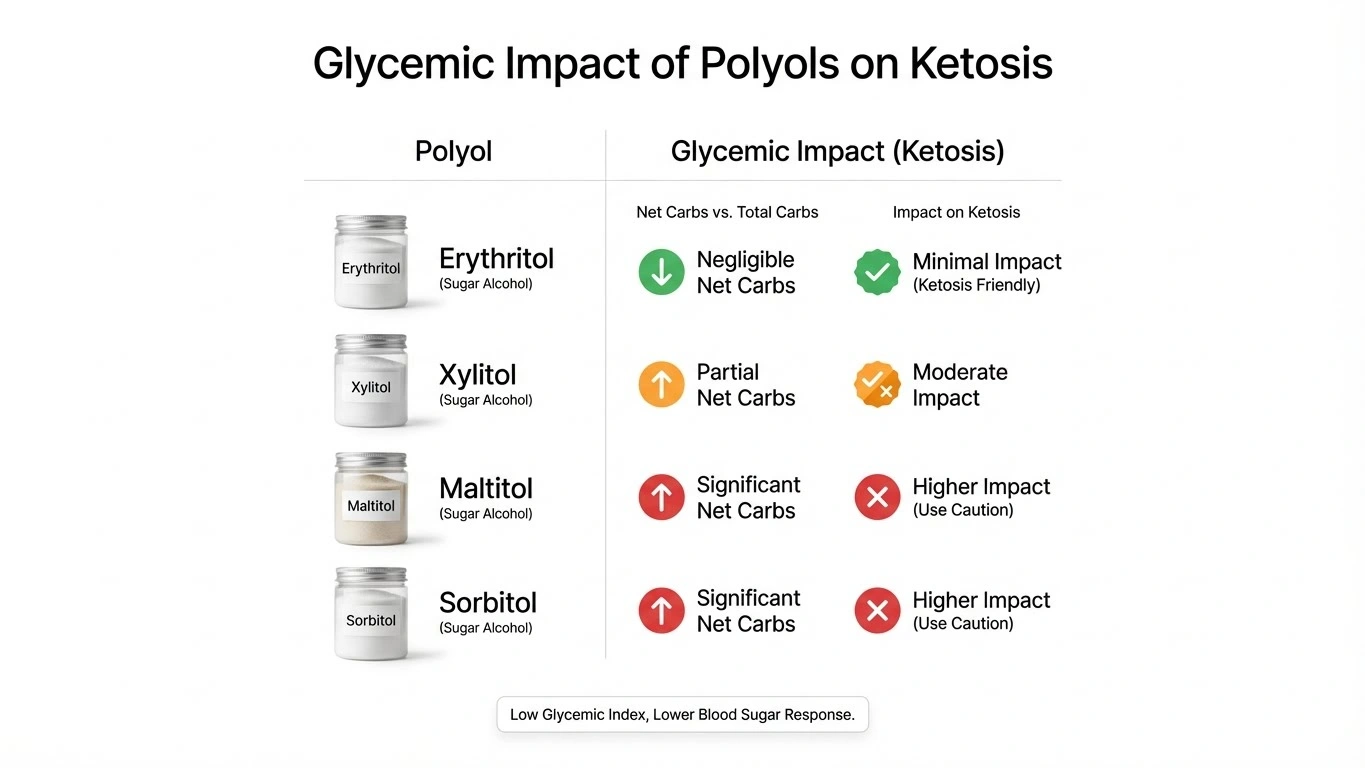
- Erythritol: Glycemic index of 0. Can be 100% subtracted.
- Xylitol and Mannitol: Low impact, usually subtracted by 50% or more.
- Maltitol and Sorbitol: The “trap” polyols. Maltitol has a GI of ~36 and can spike insulin.
Regional labeling standards: a source of confusion
One of the primary reasons users get confused about net carbs vs. total carbs is due to international differences in labeling laws.
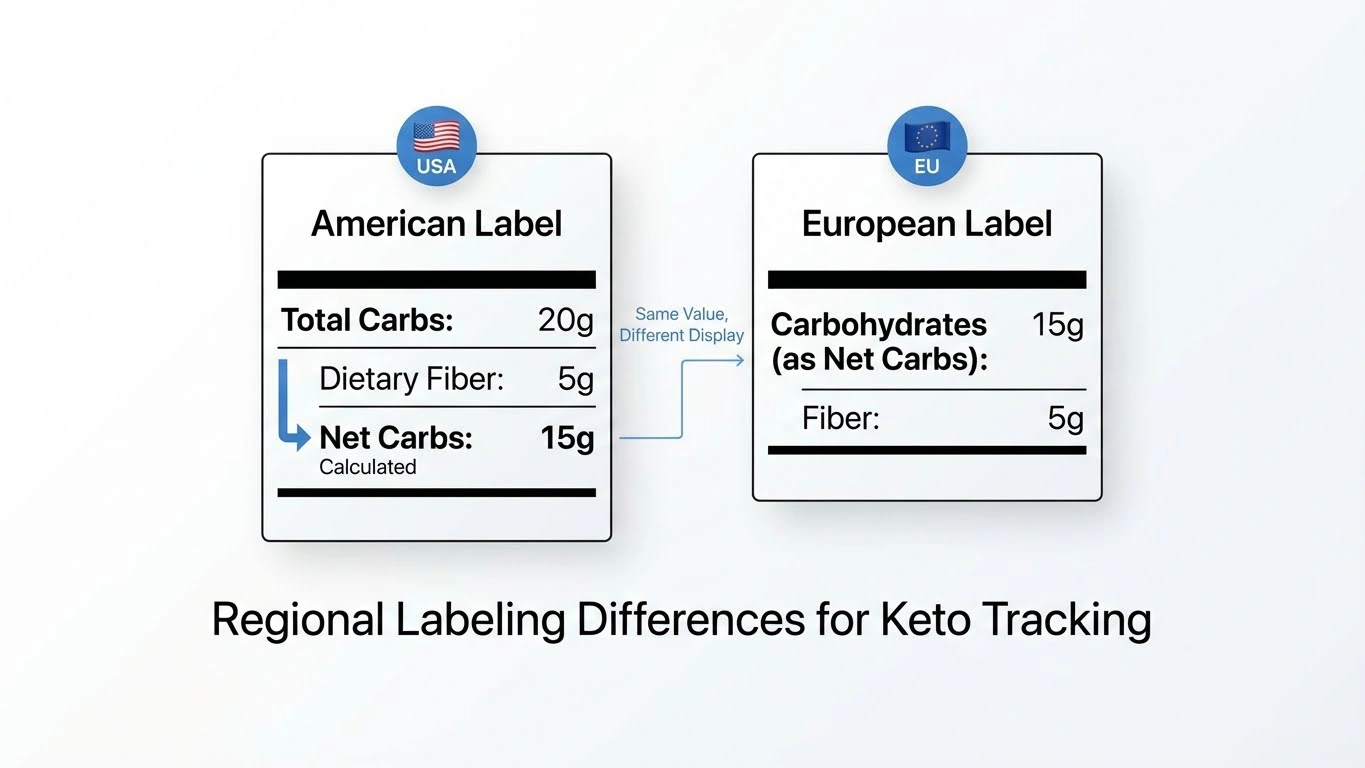
United States and Canada: Total Carbohydrate includes fiber. You must subtract. (Total – Fiber = Net).
European Union, UK, and Australia: “Carbohydrates” line typically refers to available carbs only. Fiber is listed separately and is ALREADY subtracted.
Why net carbs are the “gold standard” for keto
- Diet Sustainability: Allows for significant portions of broccoli, spinach, and raspberries.
- Nutritional Density: Encourages consumption of essential micronutrients and minerals found in fibrous foods.
- Metabolic Precision: Fiber and erythritol do not cause insulin spikes, making them irrelevant to the metabolic switch.
Conclusion: trusting the science of net carbs
The debate of net carbs vs. total carbs is ultimately a choice between metabolic precision and dietary restriction. By focusing on the carbohydrates that actually impact your blood sugar, you unlock the ability to eat a diverse, nutrient-rich diet while reaping the full benefits of ketosis.
Analogy for understanding: Think of a net carb calculation like a tax return. Your “Total Carbs” are your gross income. However, you pay taxes on your taxable income. “Fiber” and “Sugar Alcohols” are like the standard deductions that reduce your total. The “Net Carbs” are the only amount your metabolic “IRS” (insulin system) is interested in taxing.