
Free keto calculator for weight loss
Find your personalized fat-burning macros — calories low enough to trigger weight loss, protein high enough to protect your muscle and metabolism.
The science of fat burning on keto
Many people start the ketogenic diet but fail to see the scale move. Why? Because ketosis alone does not guarantee weight loss. To burn stored body fat, you still need a strategic calorie deficit — your body must take in fewer calories than it expends.
Our keto calculator for weight loss is designed to find your optimal balance: calories low enough to trigger measurable fat loss, but protein high enough to protect your metabolism and preserve lean muscle mass. Without enough protein during a caloric deficit, the body will break down muscle tissue for energy — the opposite of what most people want.
How this calculator approaches weight loss
If you want to understand the underlying math behind your daily energy needs before running the calculator, see our guide to TDEE vs BMR — the equations behind your daily calories.
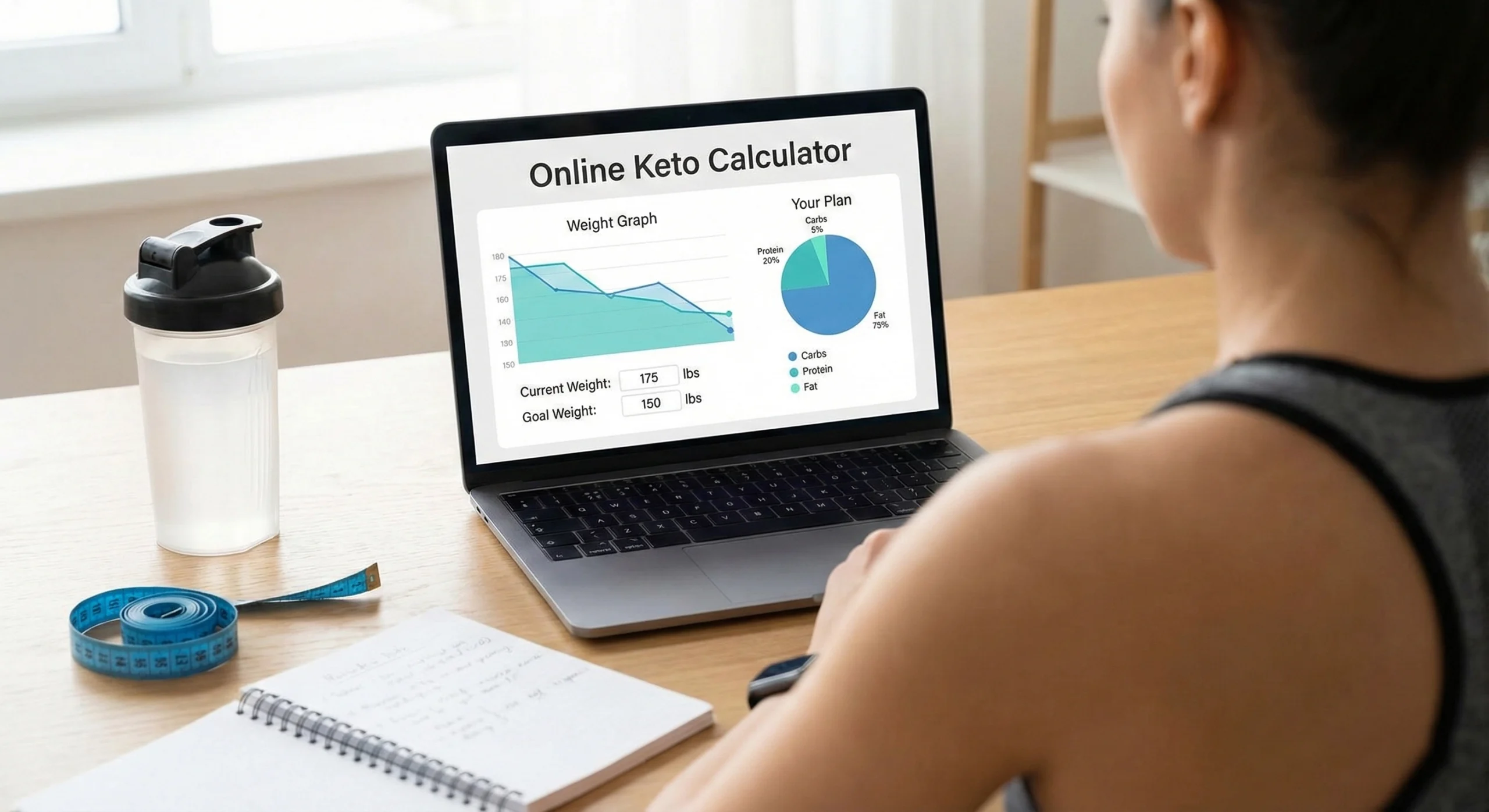
👇 Calculate Your Fat-Burning Macros
Enter your stats below to get personalized keto weight loss targets based on validated nutritional formulas.
Your Weight Loss Plan
Daily Target Calories
0
kcal / day
3 common mistakes preventing keto weight loss
Using this keto calculator for weight loss is step one. Step two is avoiding the common pitfalls that stall progress even when macros look right on paper.
Eating too many “keto” fats
Ketosis is not a free pass to eat unlimited fat. Calories still matter. If you are consuming thousands of calories through butter coffee, cheese, and fat bombs, your body will preferentially burn dietary fat rather than mobilizing your stored body fat. A calorie deficit is non-negotiable for weight loss — keto or otherwise.
Not eating enough protein
When eating in a calorie deficit, your body may break down muscle tissue for energy if protein intake is insufficient. Research shows that adequate protein intake during a deficit helps protect lean mass and keeps metabolic rate higher over time. This is why the calculator targets 0.8–1.0g of protein per pound of bodyweight.
“Carb creep” from snacks
A handful of nuts here, a few berries there, a splash of flavored creamer — it adds up fast and can push you over your net carb limit without realizing it. If detailed tracking feels overwhelming, consider exploring a lazy keto approach that focuses solely on keeping carbs under a set daily limit without tracking every macro.
Sample 1-day weight loss menu
What does a practical day of eating look like when following the results from this keto calculator for weight loss? Here is a template that keeps insulin low while providing ample protein to maintain satiety between meals.
- Breakfast: 3-egg omelet with spinach and 1 oz cheddar cheese, cooked in a teaspoon of butter. Coffee with heavy cream (no sugar).
- Lunch: Large grilled chicken salad with sliced avocado, cucumber, cherry tomatoes, and an olive oil and lemon dressing.
- Dinner: Baked salmon fillet with roasted asparagus and cauliflower rice sautéed in garlic butter.
- Snack (optional): 1 oz mixed macadamia nuts or a hard-boiled egg if hunger strikes between meals.
This daily structure keeps net carbs well under 30g while hitting protein targets of 120–150g depending on bodyweight — a sustainable pattern that supports fat loss without sacrificing muscle.
For more food ideas that keep you in ketosis, see our guide to low-carb vegetables on keto.
Frequently asked questions
How fast will I lose weight on keto?
Most people see a rapid drop of 3–8 pounds in the first week — this is mostly water weight as glycogen stores deplete and insulin levels fall. After that initial phase, a healthy and sustainable rate is typically 1–2 pounds per week when maintaining a consistent calorie deficit.
Do I have to exercise to lose weight on keto?
No — nutrition drives the majority of weight loss results. A well-constructed keto calorie deficit can produce significant fat loss without structured exercise. However, adding resistance training is strongly recommended: it preserves and builds lean muscle, which raises your basal metabolic rate and makes long-term weight management easier.
What if I hit a weight loss plateau?
If your weight hasn’t moved for 3 weeks, recalculate your macros using your current (lower) bodyweight — your TDEE will have decreased as you’ve lost mass. Also audit your sleep quality: consistently poor sleep elevates cortisol, which impairs fat mobilization and increases cravings. If you suspect a deeper stall after a carb indulgence, see our guide to getting back into ketosis.
Does net carbs or total carbs matter more for weight loss?
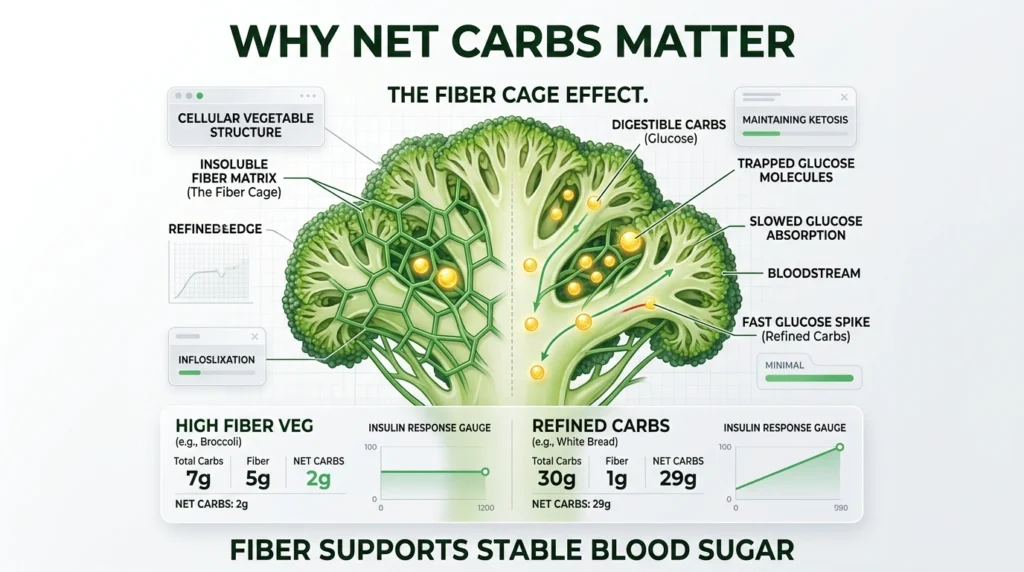
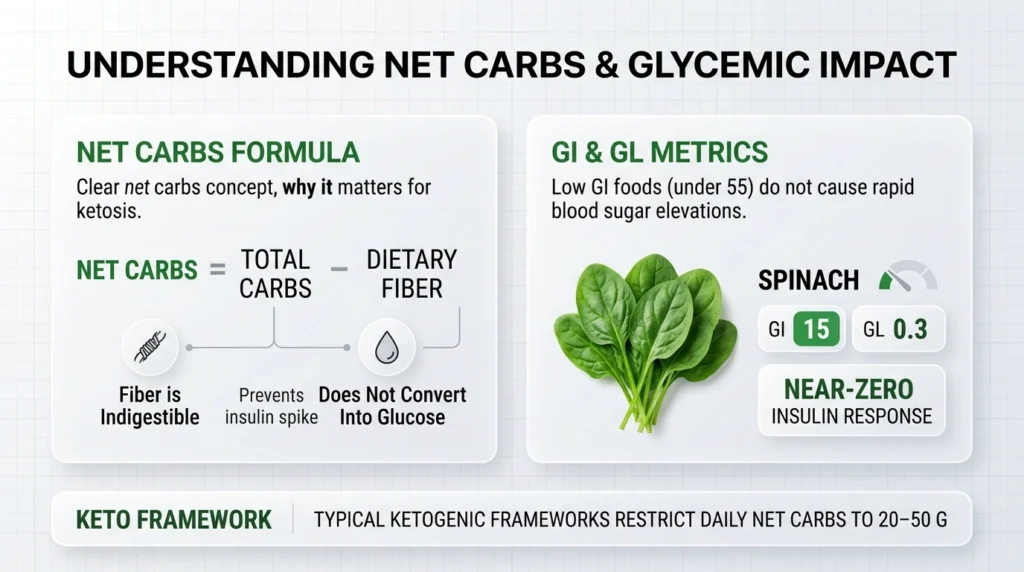
For ketosis and weight loss purposes, net carbs (total carbohydrates minus dietary fiber) is the more actionable metric. Fiber is not digested or absorbed as glucose, so it does not stimulate an insulin response. Our calculator targets net carbs. For a deeper breakdown of the distinction, read our net carbs vs total carbs guide.
Related guides on MyKetoCalcs
Deepen your understanding of the metabolic mechanics behind keto weight loss:
Latest articles

Keto Drinks Guide: Best & Worst Beverages for Ketosis
Keto Drinks Guide Keto Drinks: Best Zero-Carb Beverages for Ketosis Keto drinks are zero-carbohydrate beverages...
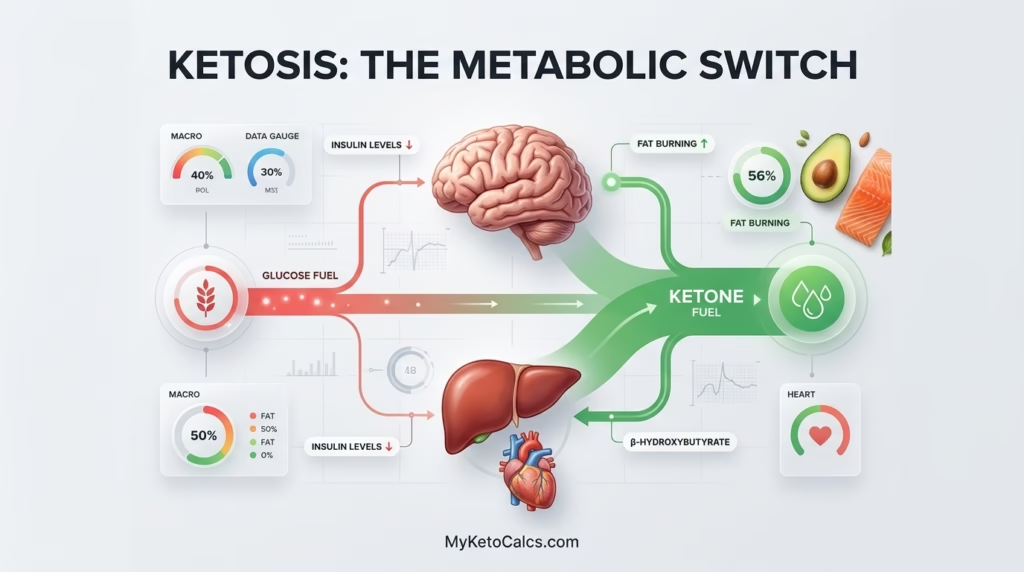
What Is Ketosis? How It Works and Why It Happens
Ketosis Guide What is ketosis? How it works and why it happens Ketosis is a...
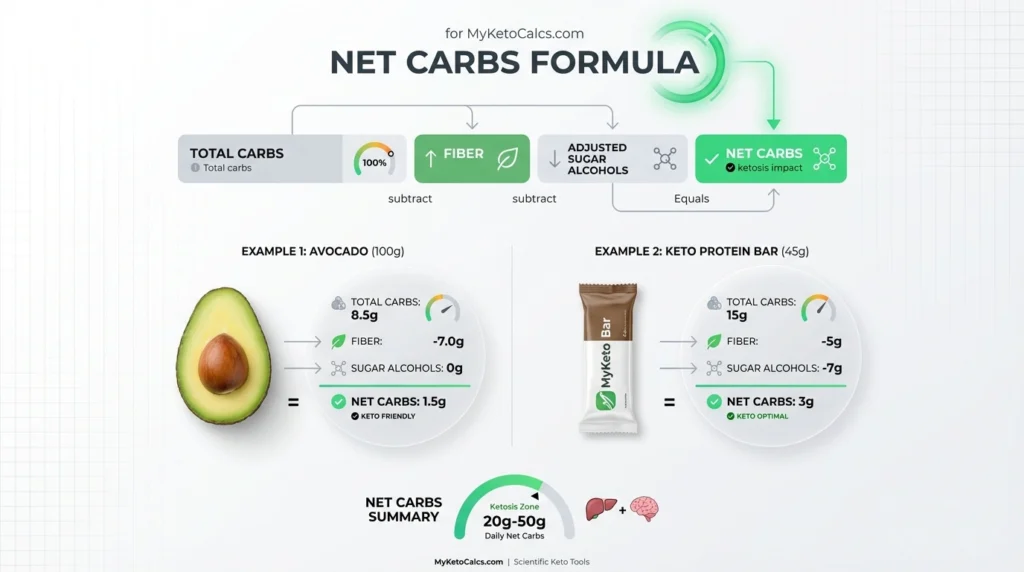
Net Carbs vs Total Carbs: What Matters for Keto?
Keto Nutrition Guide Net carbs vs. total carbs: the science + calculator tool Understand the...
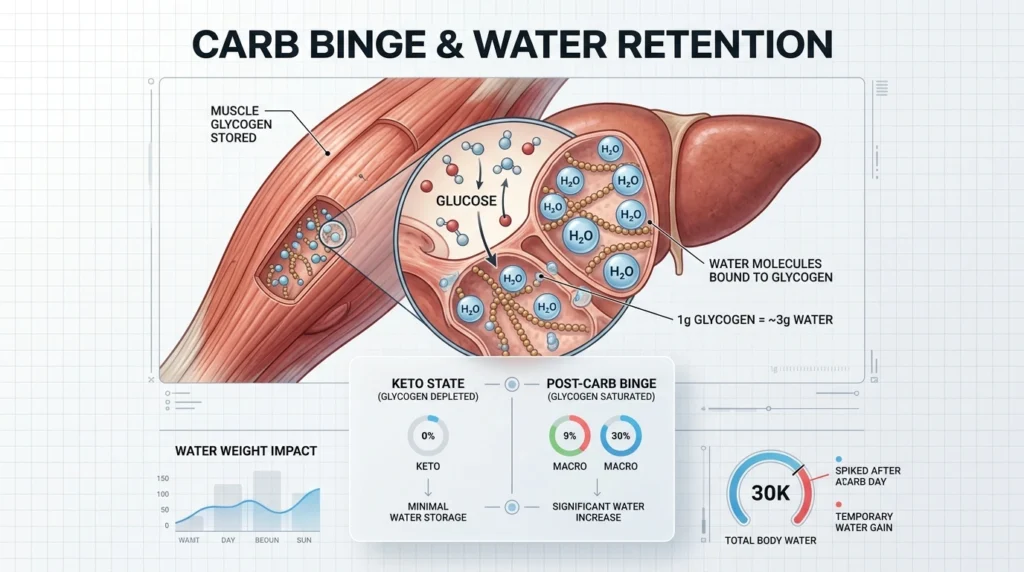
How Long to Get Back Into Ketosis After a Carb Binge?
Keto Recovery Guide How to Get Back Into Ketosis After a Carb Binge (Recovery Guide)...
Low Carb Vegetables: Scientific Keto Guide & Metabolic Matrix
Definitive Metabolic Database Low Carb Vegetables: The Definitive Database and Metabolic Guide Prioritize non-starchy, above-ground...
Is Spinach Keto? Net Carbs Per Cup, Per 100g + Serving Guide
Metabolic Analysis Is Spinach Keto? Net Carbs Per Cup, Per 100g + Serving Guide Raw...