
The Scientific Truth About How Much Protein on Keto You Really Need
Analyzing the metabolic interplay between amino acids, ketone bodies, and evidence-based guidelines for muscle preservation.
Determining how much protein on keto is optimal represents one of the most persistent challenges for both clinicians and patients navigating the ketogenic lifestyle. In the clinical setting, we often encounter patients who express a profound fear of dietary protein, operating under the assumption that a single excessive serving of steak will spontaneously transform into “chocolate cake in the bloodstream” via biochemical pathways.
This anxiety stems from a widespread misunderstanding of a physiological process known as gluconeogenesis (gng). The objective of this comprehensive guide is to analyze the metabolic interplay between amino acids and ketone bodies, debunk the prevalent “supply-driven” gluconeogenesis myth, and establish evidence-based guidelines for muscle preservation.
Debunking the Myth: Can Too Much Protein on Keto Disrupt Your Results?
One of the greatest differentiators between the ketogenic diet and other low-carbohydrate paradigms, such as Atkins or Paleo, is the degree of protein restriction often advocated by “keto gurus”. Many believe that too much protein on keto intake will elevate insulin levels to a degree that effectively terminates fat oxidation and ketone production. To evaluate this concern, we must examine the actual mechanics of human biochemistry.
Understanding Gluconeogenesis: Demand vs. Supply
Gluconeogenesis is the metabolic pathway through which the liver and kidneys synthesize glucose from non-carbohydrate precursors, including lactate, glycerol, and certain amino acids. It is not a pathological state but a vital survival mechanism.
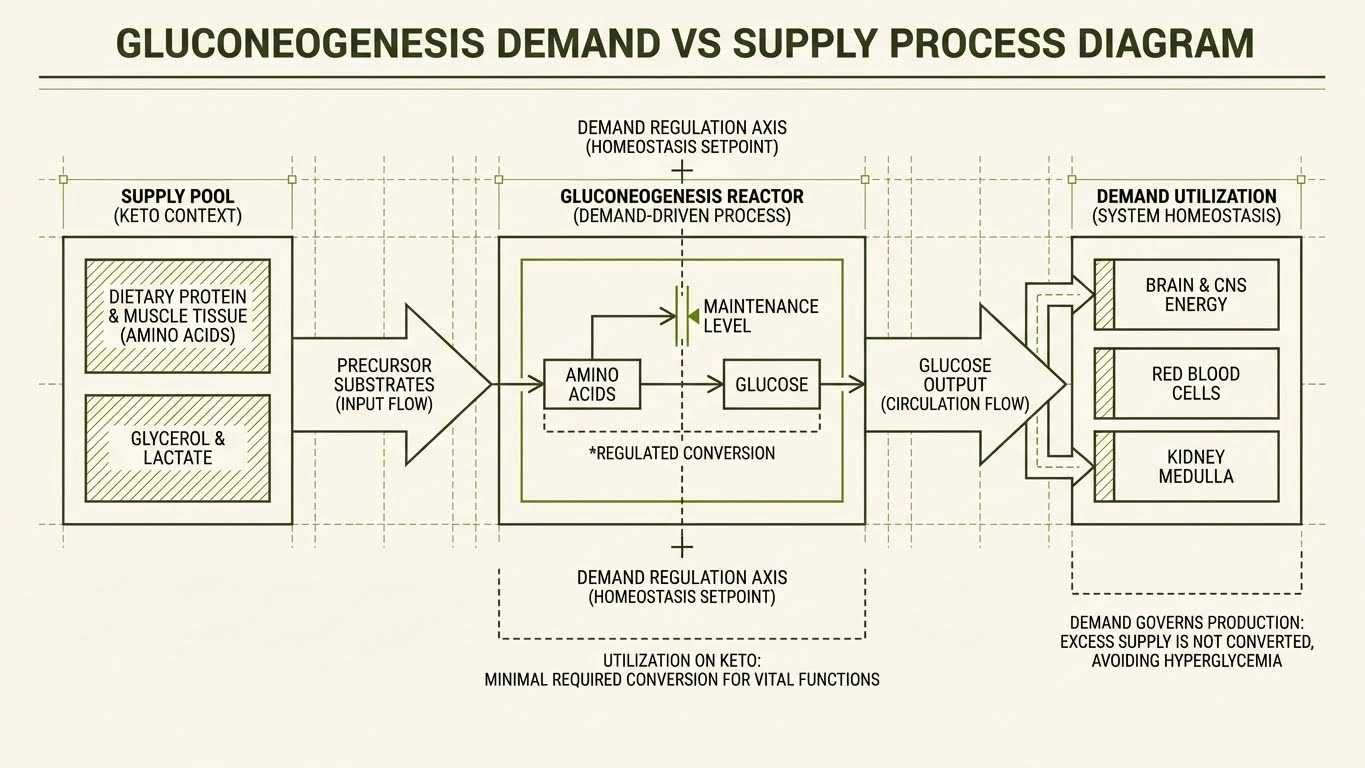
The critical error in the “too much protein on keto” argument is the assumption that gng is a supply-driven process—meaning that if you provide more amino acids, your body will automatically produce more glucose. Clinical data indicate that gng is, in fact, a demand-driven process. The rate of internal glucose production remains remarkably stable regardless of whether you consume 60 grams or 200 grams of protein.
The Efficiency of the Pathway
Converting protein into glucose is metabolically expensive and inefficient. It requires approximately 1.6 grams of amino acids to produce a single gram of glucose. Because this process consumes significant energy (six atp molecules per glucose molecule synthesized), the body preferentially switches to ketone metabolism whenever possible.
Why Sparing Muscle Mass Requires a Precise Protein Intake
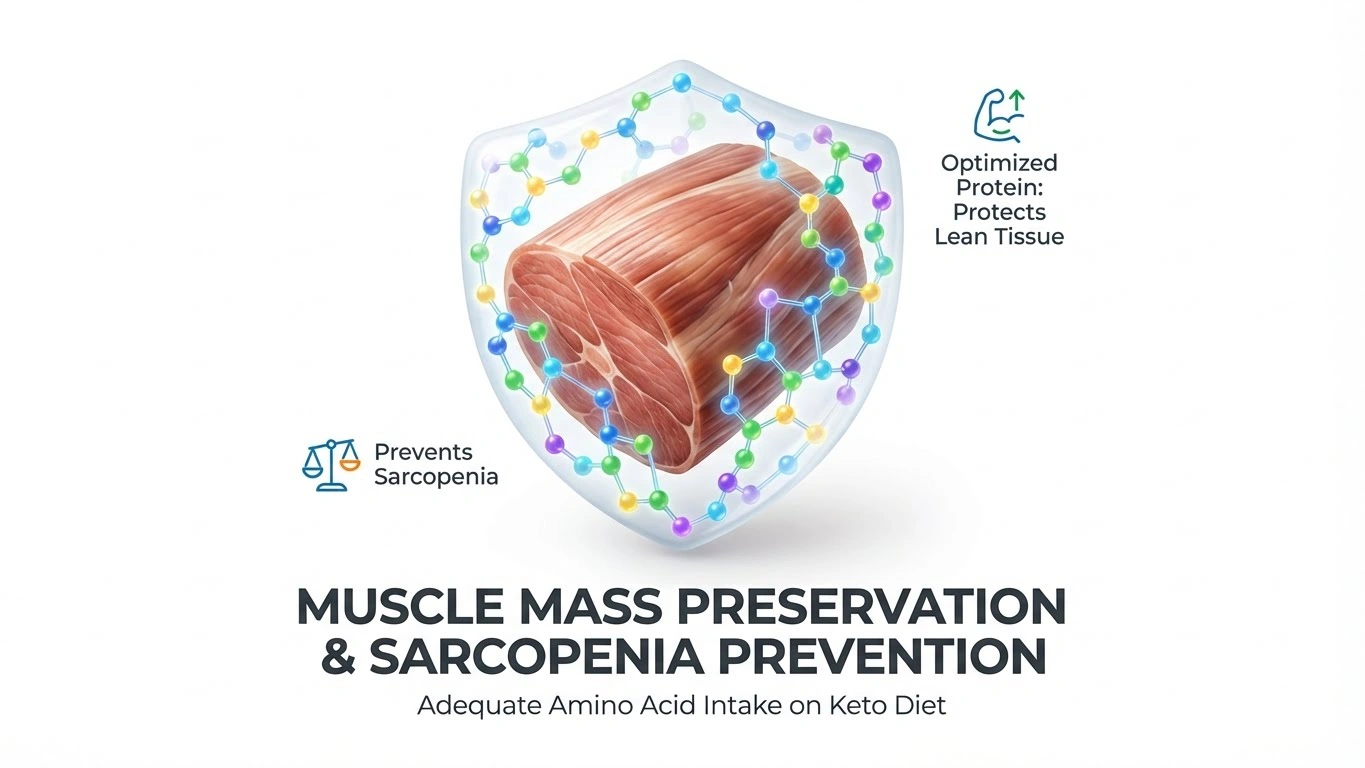
While many focus on the risk of entering “glucose-burning mode”, the real clinical risk on a ketogenic diet is undereating protein. When patients restrict protein too severely, they often encounter metabolic slowdown and accelerated sarcopenia (muscle wasting).
The Anabolic Resistance of Weight Loss
Losing weight places the body in a catabolic state where it may break down lean tissue for energy. Muscle is metabolically active tissue; its loss reduces your resting metabolic rate, making long-term weight maintenance significantly more difficult. Adequate protein intake acts as a “muscle-sparing” agent.
Beyond Muscle: Protein’s Role in Systemic Health
- Enzymatic and Hormonal Production: Vital regulators like insulin and growth hormone are protein-based.
- Immune Function: Antibodies depend on a steady supply of amino acids like arginine and glutamine.
- Integumentary Health: Keratin and collagen maintain skin, hair, and nails; deficiency often leads to hair loss.
👇 Calculate Your Personal Protein Needs
Use our clinical formulas to find your specific “how much protein on keto” target.
Your Keto Targets
Daily Energy
0
kcal / day
The Protein Leverage Hypothesis and Satiety
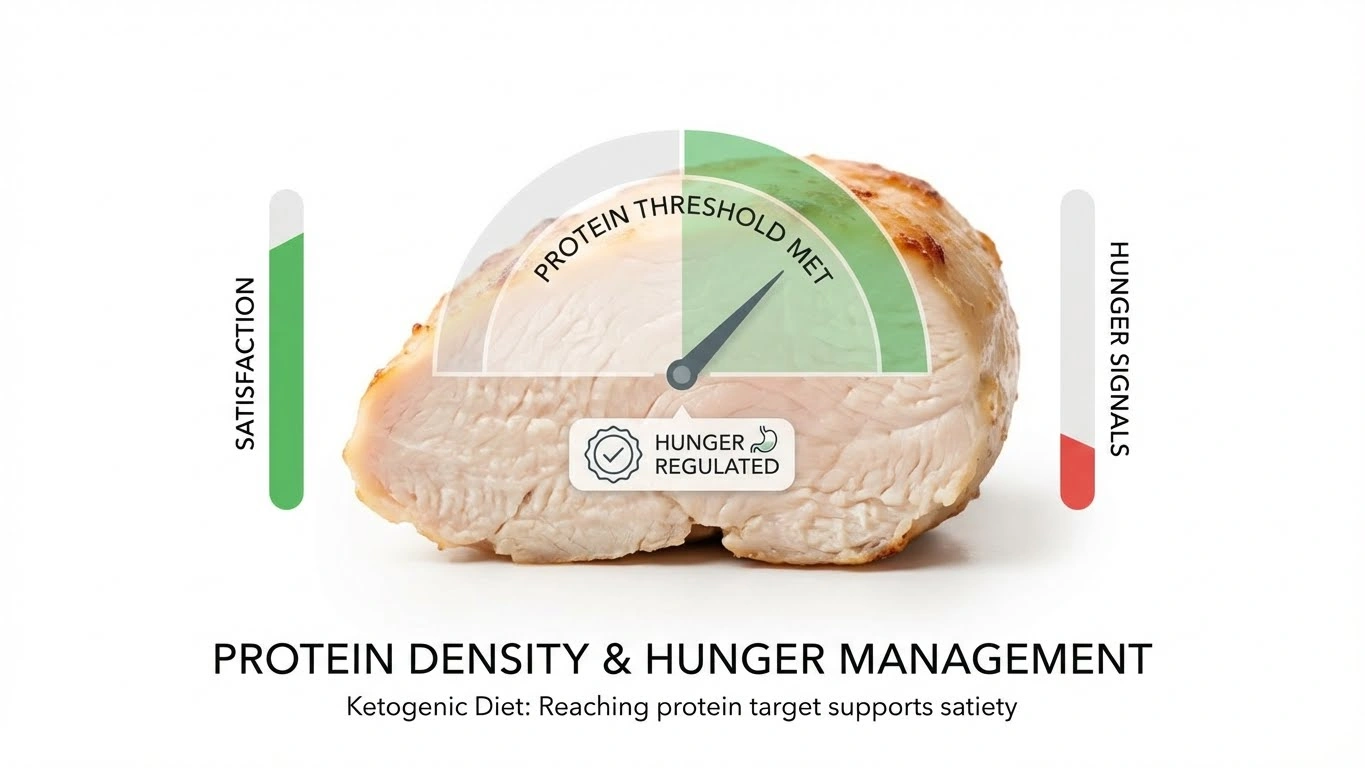
The protein leverage hypothesis suggests that humans possess a biological drive to prioritize protein intake over energy intake. We continue to consume food until we have met a specific protein threshold.
Managing Hunger Through Protein Density
Our analysis confirms that as the percentage of protein in the diet increases, total calorie intake tends to decrease spontaneously. Shifting from a 15% protein diet to a 50% protein diet was associated with an average reduction of 800 calories per day. This occurs because protein is the most satiating macronutrient, influencing leptin and ghrelin.
Analyzing the 0.8g – 1.2g Range: Finding Your Specific Number
Generic percentages are often ineffective. Clinical recommendations should instead be based on grams per pound of lean body mass (LBM).
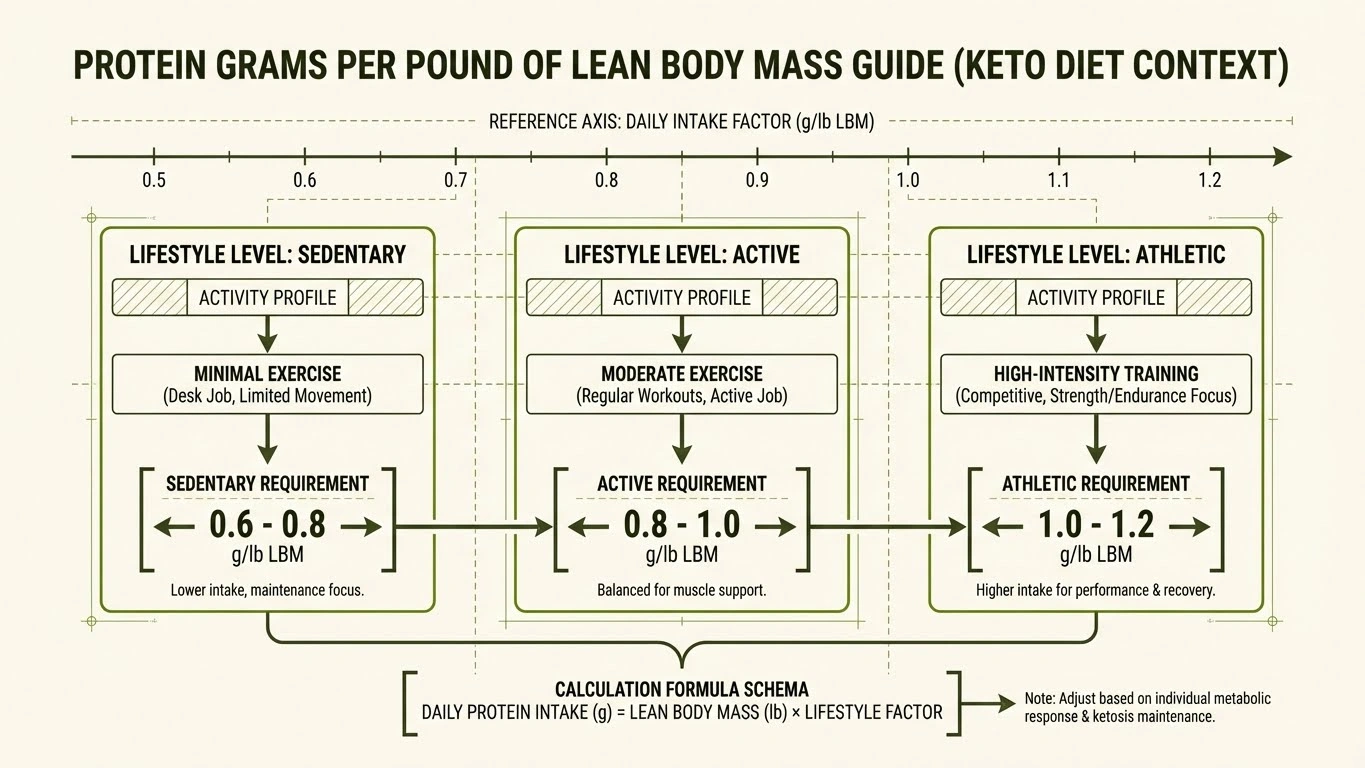
- The Baseline (0.8g per lb of LBM): For sedentary adults to prevent deficiency and support daily tissue turnover.
- The Active Range (1.0g – 1.2g per lb of LBM): Required for those lifting weights or recovering from metabolic damage to facilitate repair.
Practical Indicators of Optimal Protein Intake
Signs You Are Undereating
- Persistent Hunger
- Muscle Weakness
- Thinning Hair/Brittle Nails
- Weight Loss Stalls
Signs Intake is Too High
- Ammonia Breath (Windex smell)
- Keto Flu Recurrence
- Digestive Sluggishness
Frequently Asked Questions
Does protein increase blood sugar?
In healthy individuals and Type 2 Diabetics, pure protein does not cause a significant spike. Any sugar produced via GNG is used to replenish glycogen or released so slowly it doesn’t impact systemic levels.
Is high protein bad for my kidneys?
This is a dated concern. Unless you have pre-existing late-stage chronic kidney disease, high protein does not cause damage. It actually provides the “resistance training” kidneys need to maintain efficiency.
Master Your Keto Macros
Dive deeper into the science of fat-burning with our most popular guides: