
Breaking the Keto Plateau: A Scientific Guide to Recalculating Macros
Understanding metabolic adaptation and utilizing advanced tools to align your nutritional intake with your current metabolic reality.
Understanding the keto plateau requires a shift from viewing the human body as a static machine to understanding it as a dynamic, adaptive biological system. For many individuals, the initial phase of a ketogenic diet is marked by rapid and encouraging weight loss, often driven by the depletion of glycogen stores and the subsequent release of associated water. However, as the journey progresses, it is clinically common for progress to decelerate or halt entirely, leading to a frustrating keto stall.
This cessation of progress—where the scale fails to move for several weeks despite strict adherence—is often not a failure of the diet itself, but rather a sign of metabolic adaptation. As your body mass decreases, your physiological requirements for energy also diminish. Macros that were perfectly calibrated for your starting weight eventually become “maintenance” macros for your new, smaller self.
In this troubleshooting guide, we will analyze the underlying biological mechanisms that cause weight loss to stop and provide a structured framework for recalculating macros for weight loss. By utilizing our advanced tool again, you can align your nutritional intake with your current metabolic reality and successfully break through your keto plateau.
The Physiology of Metabolic Adaptation: Why Weight Loss Stopped
To understand why a keto stall occurs, we must first examine the basal metabolic rate (BMR). BMR represents the number of calories your body requires to maintain basic physiological functions—such as respiration, circulation, and cellular repair—while at complete rest. Your total daily energy expenditure (TDEE) is then calculated by multiplying your BMR by an activity factor.
The Shrinking Engine Phenomenon
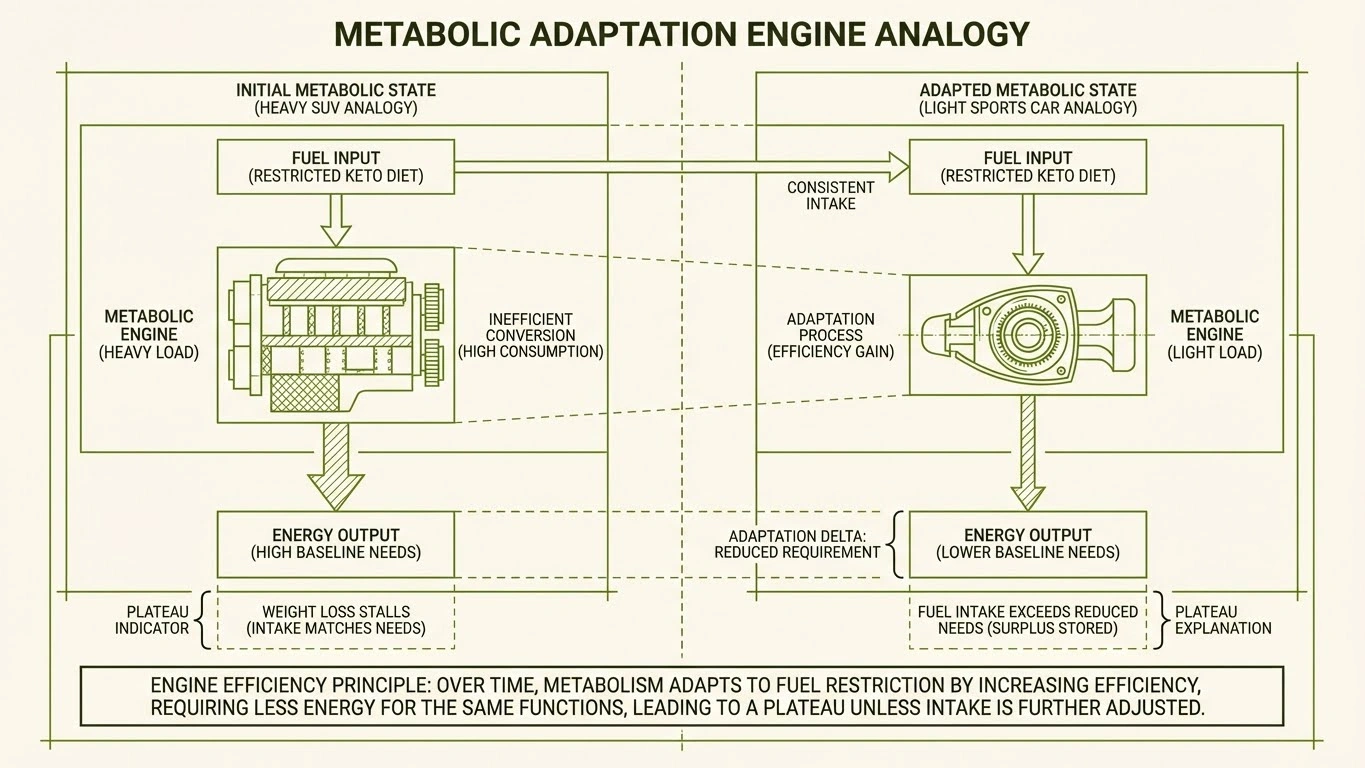
When you lose a significant amount of weight, you are effectively “shrinking” your biological engine. A larger body requires more energy to move and maintain its tissues than a smaller one. Therefore, as you lose weight, your BMR naturally decreases.
If you do not adjust your intake, the caloric deficit that initially triggered fat loss will gradually shrink until it reaches zero. At this point, you have reached energy equilibrium, and your weight loss has stopped on keto because you are now eating at your new maintenance level.
Adaptive Thermogenesis and NEAT
Beyond the simple reduction in body mass, the body employs a survival mechanism known as adaptive thermogenesis. From an evolutionary perspective, rapid weight loss signals a potential famine. To preserve life, the brain may trigger a reduction in non-resting energy expenditure, such as spontaneous movement, fidgeting, and posture maintenance—collectively known as non-exercise activity thermogenesis (NEAT). This subtle reduction in daily movement can further narrow your caloric deficit without you being consciously aware of it.
The 3 Signs You Need to Recalculate Your Macros
Identifying when a keto plateau is a true physiological stall versus a temporary fluctuation is critical for clinical success. Adjusting your macros too early can lead to unnecessary restriction, while waiting too long can result in a loss of motivation.
1. The Four-Week Measurement Flatline
In clinical practice, a “true” keto stall is defined as a period of four or more consecutive weeks without a change in body weight or physical measurements. It is essential to look at 7-day weight averages rather than day-to-day fluctuations, which are often influenced by hydration levels, sodium intake, and hormonal shifts.
- Clinical indicator: if your weekly average has remained stagnant for 28 days despite high dietary compliance, your current caloric intake is likely your new maintenance level.
- The action: this is the primary indicator that it is time to use the calculator to determine your new targets.
2. The 15-Pound Milestone Rule
A proactive approach to preventing a keto plateau involves recalculating your nutritional targets at specific weight intervals. As a general rule of thumb, every 10 to 15 pounds (approximately 5 to 7 kg) of weight lost warrants a new calculation.
- Why it matters: losing 10–15 pounds of mass can reduce your daily energy needs by enough to significantly slow the rate of loss.
- The action: do not wait for progress to stop entirely; every time you cross a 15-pound threshold, update your stats in our tool to ensure your deficit remains intact.
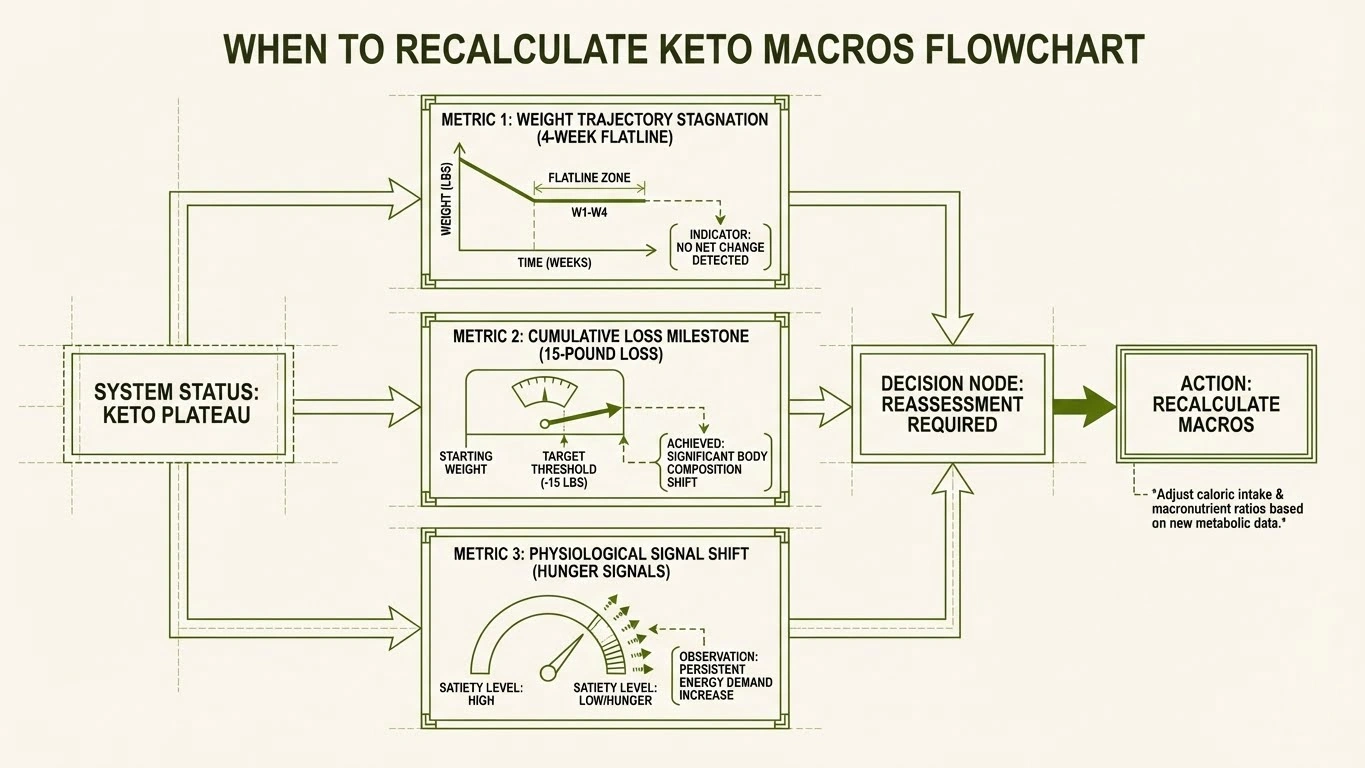
3. Deteriorating Biofeedback (The Satiety and Energy Crisis)
Sometimes the need for recalculating macros for weight loss is signaled by your body’s internal feedback systems rather than the scale. If you find yourself experiencing persistent, ravenous hunger or chronic fatigue during your workouts, your macro ratios may no longer be optimal for your body composition.
- Protein sparing: as you become leaner, your body may require a higher percentage of protein to protect against muscle wasting. Muscle tissue is more metabolically active than fat, and losing it will further depress your BMR.
- The action: if you are “white-knuckling” through your day or your gym performance is plummeting, recalculate to potentially increase protein while slightly adjusting fats.
👇 Recalculate Your Macros Now
Update your current weight and activity level to find your new deficit.
Your Personalized Results
Daily Target
0
kcal / day
Troubleshooting the Keto Stall: Beyond the Calculator
Before concluding that a reduction in calories is the only solution to your keto plateau, it is imperative to rule out other common variables that can mask fat loss or halt progress.
Hidden Carbohydrates and “Keto Creep”
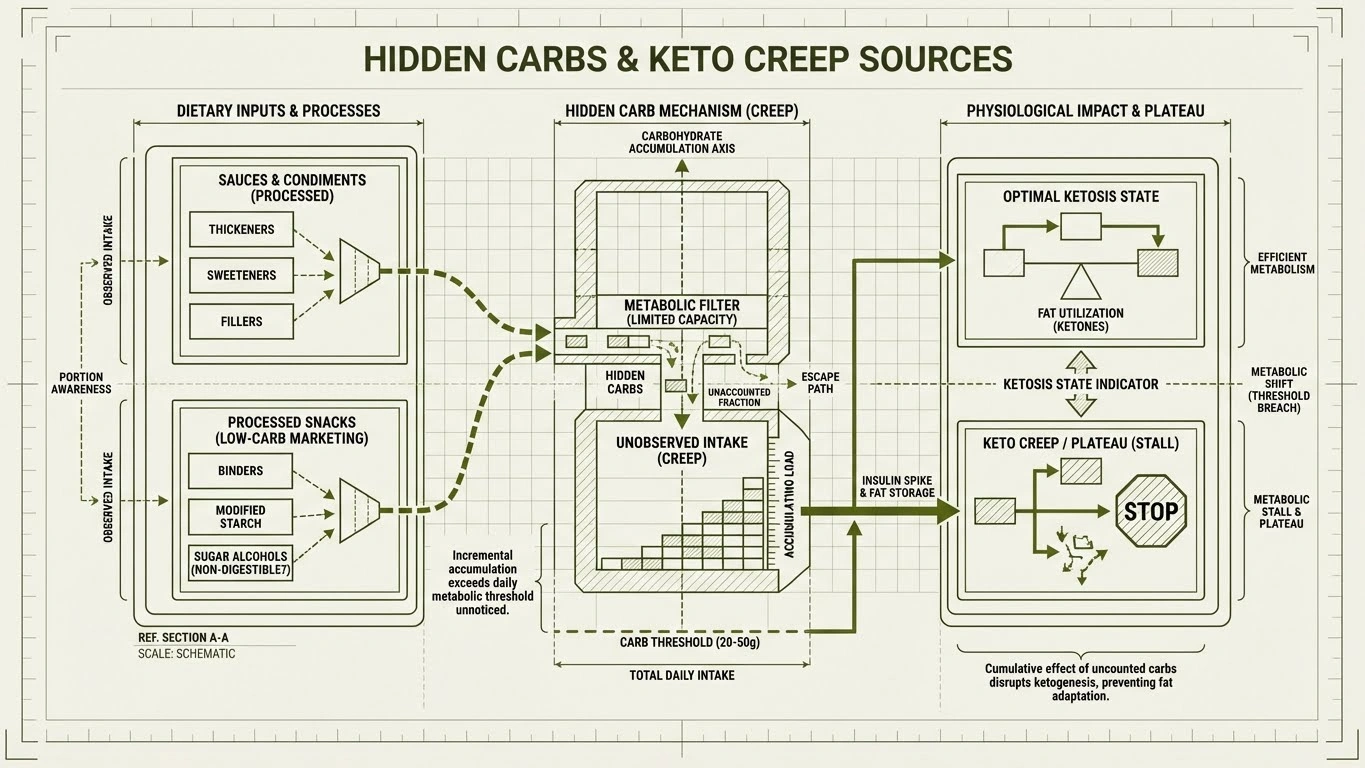
Carbohydrates are ubiquitous in modern food processing. Even on a ketogenic diet, small amounts of hidden sugars in sauces, condiments, and “keto-friendly” processed snacks can accumulate. This “keto creep” can raise insulin levels just enough to inhibit fat oxidation and pull you out of nutritional ketosis.
- Nutrient tracking: patients often underestimate their intake by 20–30%. Re-engaging with a detailed food diary for 3 to 5 days can reveal whether “net carb” marketing or unmeasured portions of nuts and cheese are the true culprits.
- Alcoholic interference: while dry wines and spirits may be low-carb, alcohol is processed by the liver as a priority fuel. While your body is metabolizing ethanol, fat oxidation is temporarily suspended, which can prolong a keto stall.
Cortisol and the Stress Response
Chronic psychological stress or inadequate sleep can manifest physically as a keto plateau. Stress triggers the release of cortisol, a hormone that can increase blood glucose through gluconeogenesis and encourage visceral fat storage. Furthermore, sleep deprivation disrupts the balance of leptin (the satiety hormone) and ghrelin (the hunger hormone), often leading to unconscious overeating.
Muscle Gain vs. Fat Loss
It is physiologically possible to lose fat while gaining muscle, a process known as body recomposition. Because muscle tissue is significantly denser than adipose tissue, your body measurements may be shrinking even if the scale remains unchanged.
- Measuring success: use a tape measure to track your waist-to-hip ratio or assess how your clothing fits. If your waist is narrowing but the scale is steady, you are not in a keto plateau; you are successfully reshaping your body.
How to Recalculate Your Macros Using the Keto Calculator
When you have confirmed a keto stall, the most effective clinical intervention is to return to the data. Our free keto calculator uses the Mifflin-St Jeor equation, the gold standard for estimating metabolic needs in modern nutrition.
Step 1: Update Your Current Weight and Age
Your age and current weight are the primary inputs for determining your BMR. Even a 10-pound difference can change your caloric requirements by a meaningful margin. Be honest with your current stats to ensure the new macro profile is accurate.
Step 2: Re-evaluate Your Activity Level
One common mistake that leads to a keto plateau is overestimating activity levels. If you have a sedentary desk job but perform 30 minutes of cardio three times a week, you are likely “lightly active” rather than “moderately active”. Underestimating your actual movement can result in a calorie target that is too high to maintain a deficit.
Step 3: Set Your Deficit and Protein Targets
For sustainable weight loss, a caloric deficit of 10–20% is generally recommended. While a 25–30% deficit may lead to faster initial results, it increases the risk of muscle loss and significant metabolic slowdown.
- Prioritize protein: ensure your protein target is set to 0.8g–1.2g per pound of lean body mass. This provides the necessary amino acids for tissue repair and maximizes the thermic effect of food (TEF), as the body burns 20–30% of protein calories just during digestion.
- Adjust fats for satiety: on keto, fat is a “lever” rather than a goal. If you are stalling, recalculating may show a need to reduce fat intake slightly to encourage the body to burn its own stored energy instead of exogenous (dietary) fat.
Advanced Strategies to Reignite Fat Loss
If recalculating macros for weight loss does not immediately break the stall, clinical researchers suggest several secondary strategies to optimize metabolic flexibility.
Intermittent Fasting (IF)
Integrating intermittent fasting—such as the 16:8 protocol—can enhance insulin sensitivity and promote the production of growth hormone, which aids in fat mobilization. By limiting your “eating window,” you naturally tend to consume fewer calories while allowing your body longer periods of low insulin levels to access stored fat.
Resistance Training and HIIT
While aerobic exercise is beneficial for cardiovascular health, resistance training (weightlifting) is the key to maintaining a high metabolic rate. By building lean muscle mass, you increase the number of mitochondria in your cells, which translates to higher energy expenditure even at rest. Additionally, high-intensity interval training (HIIT) can deplete glycogen stores more effectively than steady-state cardio, potentially accelerating your return to deep ketosis after a stall.
The “Diet Break” and Refeeding
Paradoxically, the solution to a keto plateau is sometimes to eat more for a brief period. Continuous caloric restriction can lead to a drop in thyroid hormone production and leptin levels. A strategic “refeed” or a two-week diet break at maintenance calories can “reset” these hormones, signaling to the body that it is safe to resume fat loss once the deficit is reintroduced.
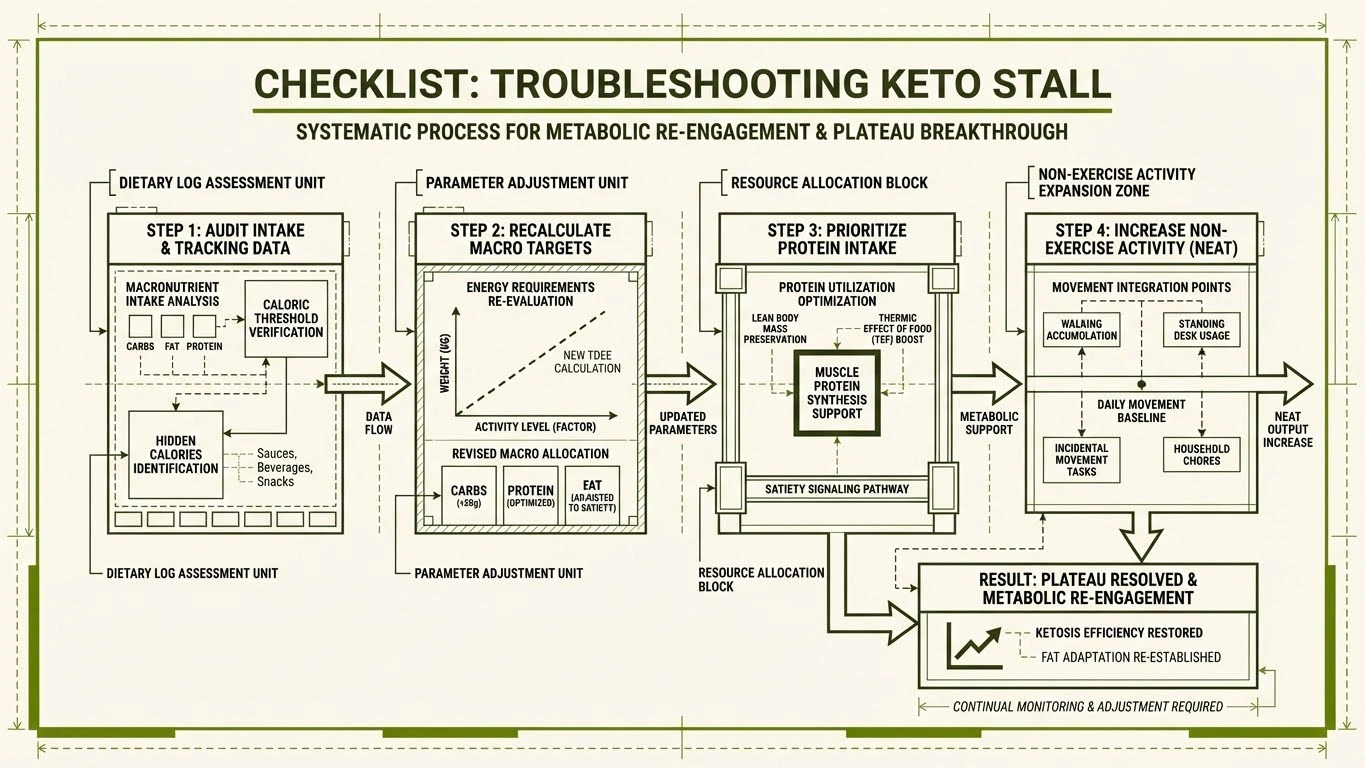
Summary Checklist for Troubleshooting a Keto Plateau
If your weight loss has stopped on keto, follow this clinical hierarchy of interventions:
- Confirm the stall: have the scale average AND your waist measurement been flat for 4 weeks?
- Audit your intake: are you weighing your food and checking for hidden carbs in sauces and “keto” treats?
- Recalculate: use our calculator with your new weight and honest activity level.
- Prioritize protein: ensure you are hitting at least 0.8g of protein per pound of lean mass to protect your metabolism.
- Optimize lifestyle: are you sleeping 7–8 hours and managing your cortisol through movement or meditation?
- Increase NEAT: can you add 2,000 more steps a day or use a standing desk to counteract metabolic adaptation?
Analogy for Understanding Metabolic Stalls
Think of your weight loss journey like driving a car across the country. When you started at your heaviest weight, you were driving a heavy, fuel-hungry SUV. It required a lot of gasoline (calories) just to keep the engine running and move that heavy frame down the highway.
As you lose weight, you are essentially swapping that SUV for a smaller, lightweight sports car. The sports car is much more efficient; if you keep trying to pump the same amount of gasoline into it that the SUV needed, the tank will overflow (your weight will stall or increase). Recalculating your macros is simply updating your fuel plan so you don’t overwhelm your new, smaller, and more efficient engine.
A keto plateau is not a sign of failure; it is a sign that your body has successfully adapted to its new environment. Weight loss is non-linear, and the road to your goal weight often includes periods of stability where the body “retools” its internal systems. By recalculating macros for weight loss every 15 pounds, you stay one step ahead of your metabolism, ensuring that your nutritional “map” always matches the current “terrain” of your body.
Stay consistent, trust the data provided by our tool, and remember that long-term health is a marathon, not a sprint.
Further Reading & Resources
Deepen your understanding of metabolic health with these expert sources: