
Intermittent Fasting on Keto: The Ultimate Weight Loss Combo
Reawakening ancient metabolic machinery through the synergistic power of ketosis and time-restricted eating.
In the grand timeline of human existence, the concept of three square meals a day interspersed with snacks is a blink of an eye—a modern anomaly in our biological history. For millennia, our ancestors thrived in environments where food scarcity was the rule, not the exception. Their survival depended on metabolic flexibility that allowed them to function at peak cognitive and physical capacity even in the absence of exogenous glucose. Today, by implementing intermittent fasting on keto, we are not discovering a new fad; we are reawakening ancient, dormant physiological machinery.
This article provides a clinical dissection of why combining the ketogenic diet with intermittent fasting (IF) is considered the gold standard for metabolic optimization. We will explore the synergistic mechanisms that make intermittent fasting on keto a powerful tool for fat loss, analyze the popular 16/8 protocol, and explain why the mathematics of your macros—calculated via the Free Keto Calculator—remain the immutable law of your nutrition, regardless of the clock.
The Biological Synergy: Why Keto and Fasting Are Metabolic Twins
To understand the power of this combination, one must first appreciate that the ketogenic diet and intermittent fasting are, mechanistically speaking, two sides of the same coin. Both strategies share a singular metabolic objective: to lower insulin levels and shift the body from a glucocentric (sugar-burning) state to an adipocentric (fat-burning) state.
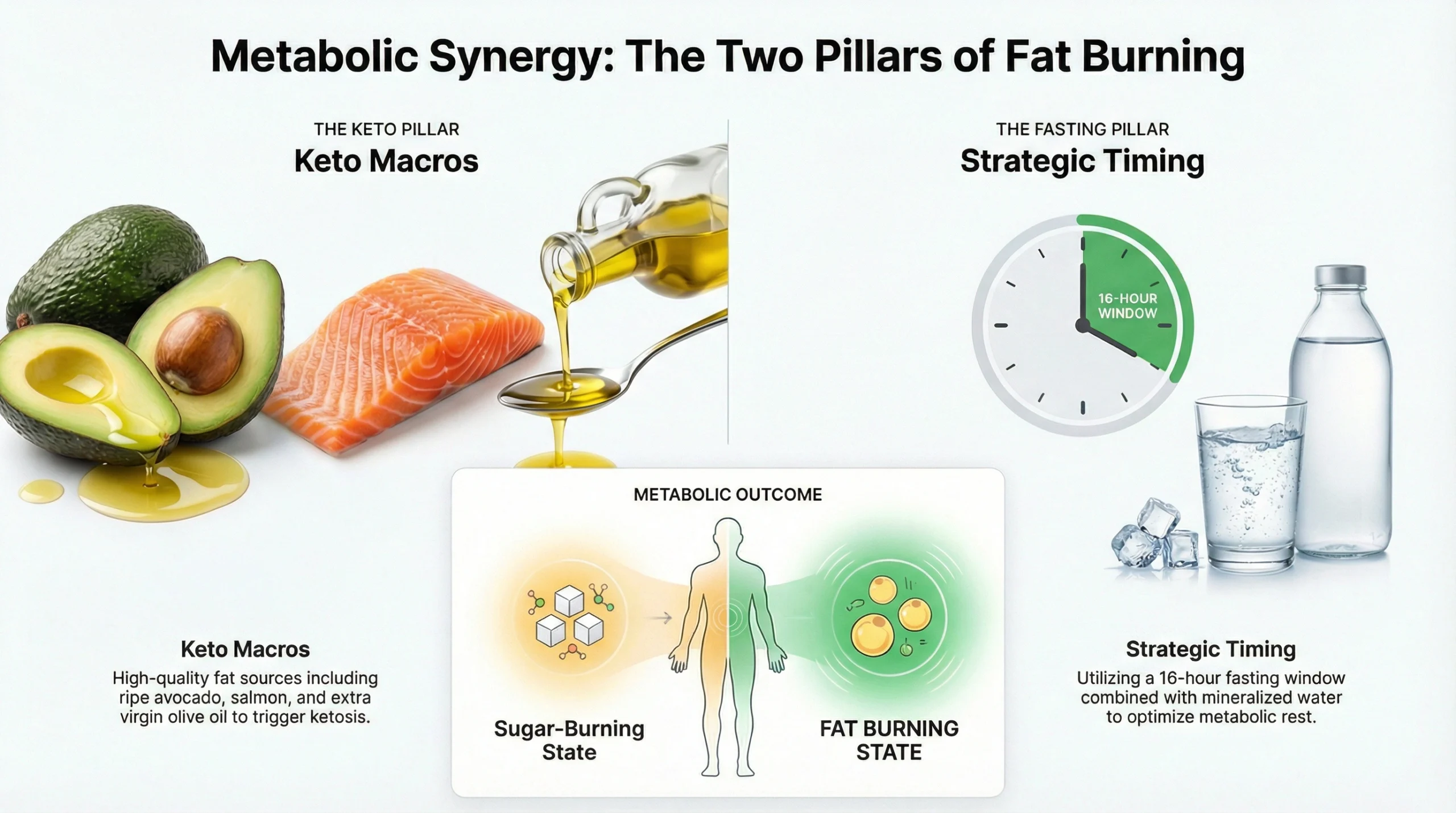
The ketogenic diet mimics the metabolic state of fasting by restricting carbohydrates, the primary stimulus for insulin secretion. When you consume a standard Western diet, high insulin levels inhibit lipolysis (the breakdown of fat) and lock energy into your adipose tissue. By restricting carbohydrates to under 50 grams per day, you lower insulin, allowing the body to access these reserves.
Intermittent fasting on keto acts as a turbocharger for this process. While the diet restricts the type of fuel (carbohydrates), fasting restricts the frequency of fuel. When you stop eating, insulin levels plummet further, and glycogen stores (stored sugar in the liver and muscles) are depleted more rapidly. This depletion is the biochemical prerequisite for ketosis. Therefore, combining the two strategies creates a powerful synergy that forces the body to burn fat for fuel with ruthless efficiency.
The “Fast Track” to Ketosis
One of the most clinically significant benefits of fasting and keto together is the acceleration of ketoadaptation. For a patient starting a standard ketogenic diet, entering nutritional ketosis can take anywhere from 3 to 10 days, depending on their glycogen reserves and metabolic resistance.
Fasting accelerates this timeline significantly. Research indicates that the metabolic switch from glucose to ketone utilization is triggered between 12 and 36 hours of fasting. By engaging in intermittent fasting on keto, you deplete liver glycogen stores within 8–12 hours. Once these stores are empty, the liver has no choice but to ramp up the production of ketone bodies (acetoacetate, beta-hydroxybutyrate, and acetone) to fuel the brain and vital organs. Consequently, patients who combine these protocols often report bypassing the sluggish transition period and achieving therapeutic ketone levels faster than those relying on diet alone.
Decoding the 16/8 Protocol: The Clinical Gold Standard
While there are various fasting architectures, the 16/8 protocol remains the most clinically prescribed and sustainable method for the majority of patients.
What is the 16/8 Method?
The 16/8 protocol involves a daily cycle of fasting for 16 hours and restricting caloric intake to an 8-hour window. For example, a patient might finish their evening meal by 8:00 PM and not consume calories again until 12:00 PM the following day. This effectively amounts to skipping breakfast and avoiding late-night snacking.
Why 16 Hours?
The duration is not arbitrary. Clinical evidence suggests that 12 hours is the minimum threshold required to deplete glycogen stores and begin the shift toward lipid oxidation. Pushing this window to 16 hours allows the body to spend four solid hours in a state of deep fat burning and elevated ketone production before the next influx of calories breaks the fast.
Keto 16/8 results often show superior fat loss compared to continuous calorie restriction because this specific window aligns with circadian rhythms, improving insulin sensitivity and optimizing the hormonal environment for weight management. Furthermore, studies involving resistance-trained males showed that the 16/8 method could lead to a significant reduction in fat mass while preserving muscle mass, a critical factor for metabolic health.
👇 Calculate Your 16/8 Macros
Even with intermittent fasting, your macros remain constant. Find your personalized targets below.
Your Personalized Results
Daily Target (within 8-hour window)
0
kcal / day
The Mathematics of Macros: The Window Changes, the Numbers Do Not
A critical error observed in clinical practice is the confusion regarding caloric intake during the feeding window. It is imperative to understand that intermittent fasting on keto is a tool for timing, not necessarily for starvation.
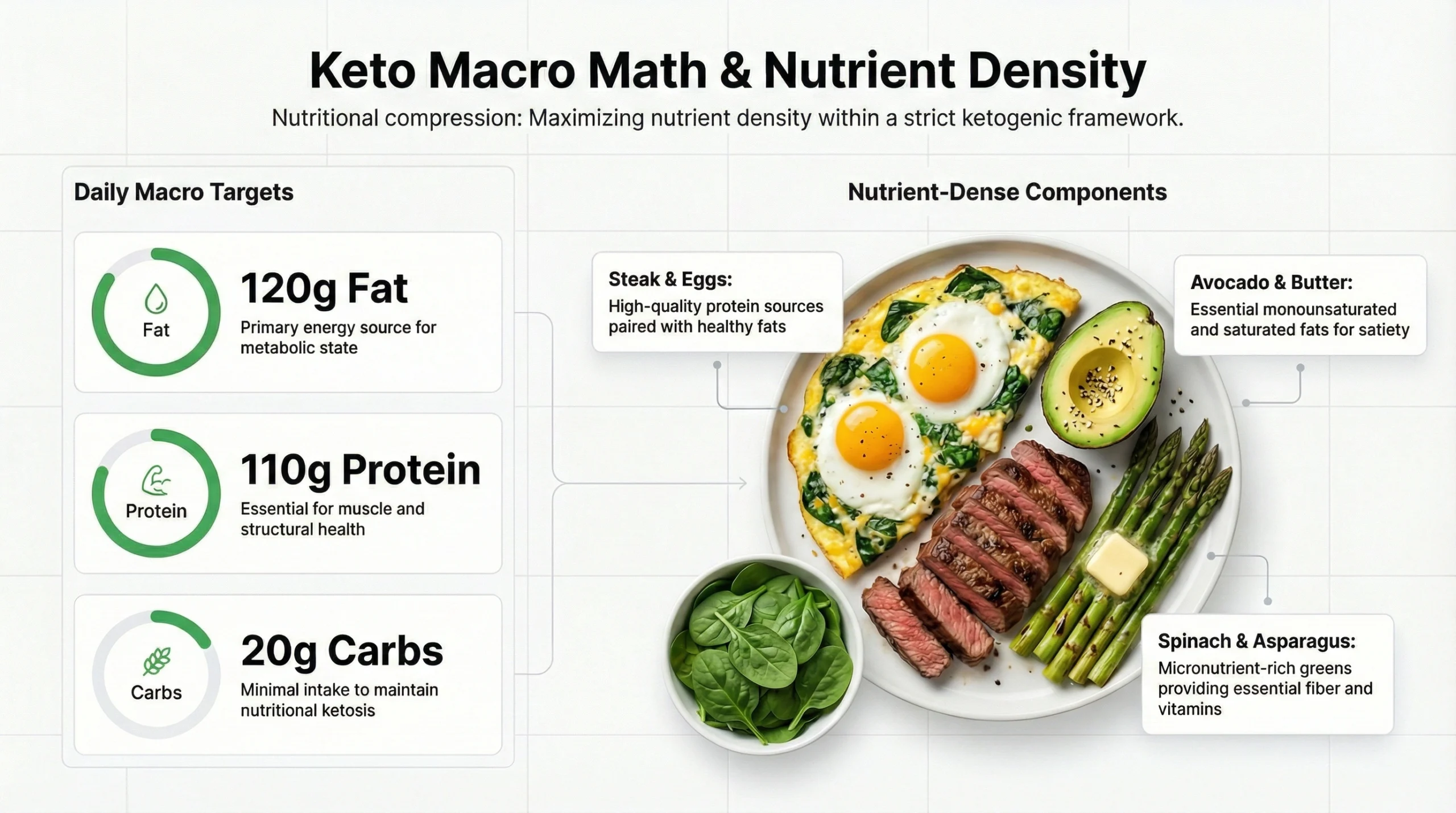
When you calculate your macros using the Free Keto Calculator, you are given a specific target for protein, fats, and carbohydrates to maintain your basal metabolic rate (BMR) and activity levels. These numbers remain unchanged whether you consume them over 14 hours or 8 hours.
Preserving the Nutrient Density
If the calculator prescribes 1,800 calories comprising 120g of fat, 110g of protein, and 20g of carbohydrates, you must consume this total amount during your 8-hour eating window. Reducing your intake drastically just because the window is shorter can lead to a downregulation of thyroid hormones (T3), a decrease in metabolic rate, and the loss of lean muscle mass.
The goal is to compress the nutrition, not eliminate it. This ensures that during the fasting window, the body burns body fat for fuel, but during the feeding window, it receives the essential amino acids and fatty acids required for cellular repair and hormonal function. The focus must be on nutrient-dense, high-satiety foods: avocados, eggs, fatty fish, and olive oil, ensuring that the keto 16/8 results are driven by fat oxidation, not muscle catabolism.
Autophagy: The Cellular Recycling Plant
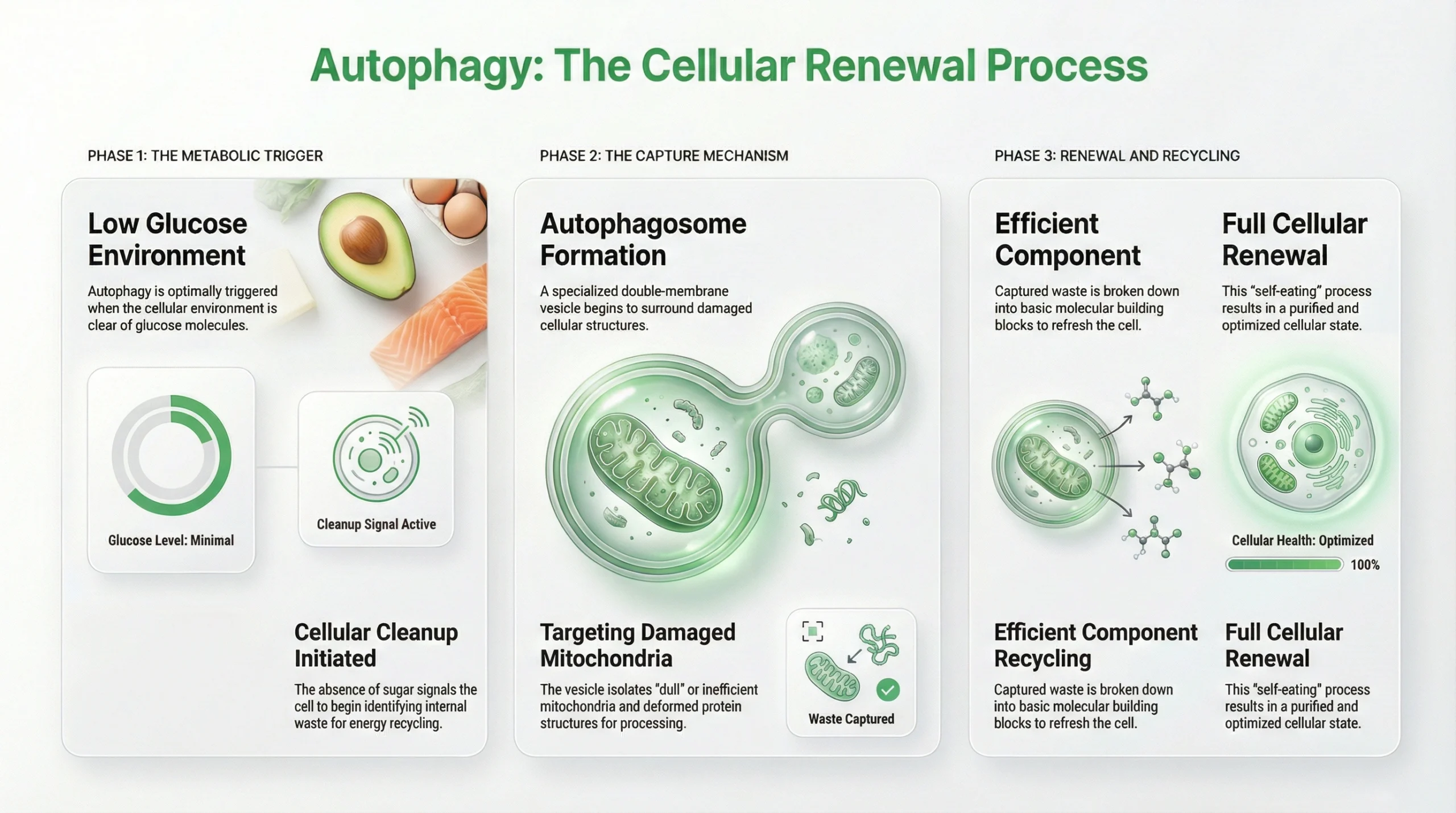
Beyond weight loss, the combination of intermittent fasting on keto unlocks a biological process known as autophagy. Derived from the Greek for “self-eating,” autophagy is a cellular housekeeping mechanism where the body identifies damaged cells, misfolded proteins, and dysfunctional mitochondria and recycles them for energy.
The Role of Insulin and mTOR
Autophagy is regulated by nutrient sensors in the body, primarily insulin and mTOR (mammalian target of rapamycin). When you eat, insulin rises and mTOR is activated, which signals the body to grow and divide. This shuts down autophagy. Conversely, when you fast and restrict carbohydrates (keeping insulin low), mTOR is suppressed, and the AMPK pathway is activated, triggering autophagy.
While ketosis alone can stimulate some degree of autophagy, the deep fasted state amplifies this effect. Research suggests that autophagy is significantly upregulated after 16–24 hours of fasting. By practicing intermittent fasting on keto, you are providing your body with a daily opportunity to cleanse itself of cellular debris, potentially reducing the risk of neurodegenerative diseases and slowing the aging process. This is not merely weight loss; it is cellular rejuvenation.
Clinical Benefits of Fasting and Keto Together
The benefits of fasting and keto together extend far beyond the aesthetic appeal of a slimmer waistline. The physiological impact is systemic, affecting everything from brain function to inflammatory markers.
Enhanced Insulin Sensitivity and Glycemic Control
Insulin resistance is the hallmark of metabolic syndrome and type 2 diabetes. By compressing the eating window and eliminating glucose spikes through keto, resting insulin levels drop dramatically. This resensitizes the cell receptors to insulin, allowing for better blood sugar regulation. Studies have shown that this combination can be effective in reducing HbA1c levels and, in some cases, reversing type 2 diabetes.
Accelerated Visceral Fat Loss
Visceral fat—the dangerous fat stored around the internal organs—is highly sensitive to insulin. By lowering insulin through intermittent fasting on keto, the body is able to mobilize this stubborn fat more effectively than with calorie restriction alone. Keto 16/8 results frequently show a significant reduction in waist circumference, a key indicator of metabolic health.
Cognitive Enhancement and Neuroprotection
The brain is an energy-hungry organ. In the absence of glucose, it thrives on ketones. Ketones, specifically beta-hydroxybutyrate (BHB), are a more efficient fuel source than glucose, producing more energy per unit of oxygen with less oxidative stress. Patients often report a “lifting of brain fog” and heightened mental acuity. Furthermore, the increase in brain-derived neurotrophic factor (BDNF) associated with fasting supports neuronal health and resistance to neurodegeneration.
Suppression of Appetite
It seems paradoxical, but eating less often reduces hunger. Ketones have a direct impact on ghrelin, the “hunger hormone,” suppressing appetite. Additionally, stabilizing blood sugar prevents the hypoglycemic crashes that trigger cravings. This makes the 16/8 protocol surprisingly sustainable compared to chronic calorie-counting diets.
Navigating the Challenges: The “Keto Flu” and Electrolytes
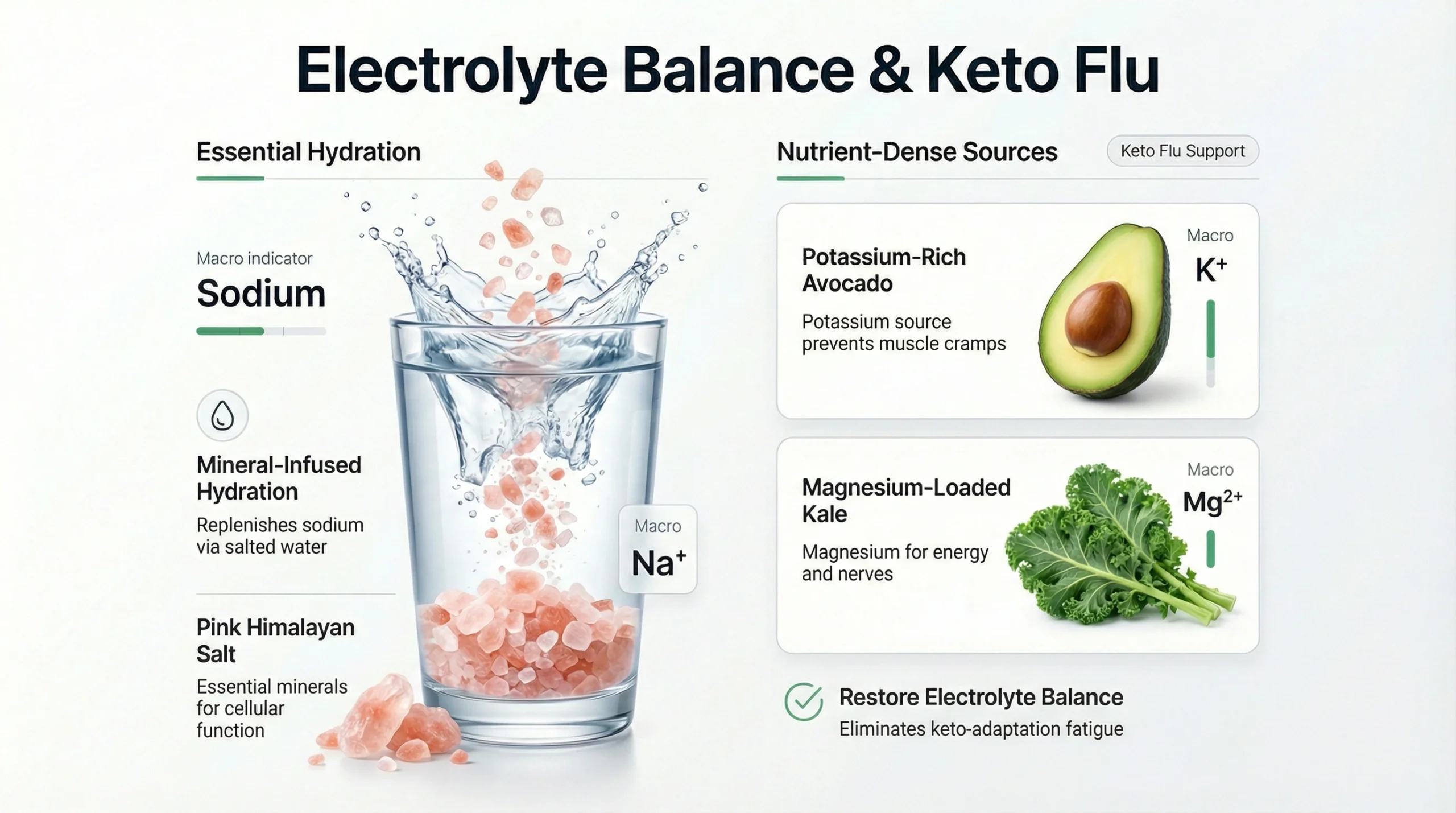
Transitioning to intermittent fasting on keto changes the body’s hydrology and mineral balance. As insulin drops, the kidneys excrete sodium and water at an accelerated rate. This diuretic effect is responsible for the rapid initial weight loss (often called “water weight”), but it can also lead to a constellation of symptoms known as the “keto flu.”
Symptoms and Management
Symptoms include fatigue, headaches, dizziness, and muscle cramps. These are not signs of starvation, but of electrolyte deficiency.
- Sodium: the most critical mineral to replenish. Generously salting food or drinking broth is essential.
- Magnesium and potassium: essential for preventing muscle cramps and fatigue. Leafy greens and avocados are excellent keto-friendly sources.
- Hydration: water alone is not enough; water without electrolytes can flush out remaining minerals. It is vital to drink mineralized water or electrolyte supplements during the fasting window.
A Practical Protocol for Patients
For those ready to implement intermittent fasting on keto, a gradual approach ensures safety and adherence.
Phase 1: Fat Adaptation (Weeks 1-2)
Focus strictly on the ketogenic diet. Reduce carbohydrates to <20g net carbs. Eat to satiety. Allow the body to build the enzymatic machinery required to burn fat. Do not restrict eating windows yet.
Phase 2: The Soft Start (Weeks 3-4)
Begin by eliminating late-night snacking. Stop eating at 8:00 PM and eat breakfast at 8:00 AM (12:12 schedule). This is the physiological baseline.
Phase 3: The 16/8 Protocol (Week 5+)
Push breakfast back gradually.
- 7:00 AM: wake up. Hydrate with water and electrolytes. Black coffee or tea is permitted (no sugar, milk, or sweeteners).
- 12:00 PM (break fast): consume the first meal. Prioritize protein and healthy fats. Example: omelet with spinach, avocado, and salmon.
- 4:00 PM (optional snack): a handful of macadamia nuts or a small portion of full-fat cheese, only if truly hungry.
- 8:00 PM (last meal): finish dinner. Example: steak with asparagus and butter.
- 8:00 PM – 12:00 PM: fasting window (water/tea/coffee only).
Contraindications and Safety
While powerful, intermittent fasting on keto is a significant metabolic stressor and is not suitable for everyone.
- Type 1 diabetes: requires strict medical supervision due to the risk of diabetic ketoacidosis (DKA) if insulin is omitted, as opposed to nutritional ketosis.
- Pregnancy and breastfeeding: high nutrient demands for fetal growth and milk production make restriction inadvisable.
- Eating disorders: the restrictive nature of tracking windows and macros can exacerbate a history of anorexia or orthorexia.
- Underweight individuals: those with a BMI <18.5 should not restrict intake windows.
Conclusion: The Ultimate Metabolic Reset
The combination of intermittent fasting on keto represents a sophisticated manipulation of human physiology. It is not merely a weight loss strategy; it is a metabolic correction. By aligning the nutritional quality of the ketogenic diet with the circadian timing of intermittent fasting, patients can achieve keto 16/8 results that transcend the scale: reduced inflammation, cellular renewal, and hormonal balance.
However, precision is required. Respect the macros provided by the calculator, prioritize electrolyte balance, and view this not as a temporary deprivation, but as a sustainable lifestyle calibration. As with any clinical intervention, listen to your body’s feedback signals. When executed correctly, this duo offers a pathway to regaining metabolic flexibility—the true definition of health in the modern age.
Further Reading & Tools
Understand the biological mechanisms of transitioning to fat-burning mentioned in the “Metabolic Twins” section.
Get precise macro numbers for your 8-hour eating window, optimized for fat burning.
A practical solution for maintaining satiety during your fasting window or as your first energy intake.
Explore More Resources
For additional information check out these excellent resources on keto and intermittent fasting: