
Keto Calculator Lose Weight Fast: Personalized Fat-Burning Plan Backed by Science
A critical first step for anyone attempting to optimize their metabolic health through carbohydrate restriction.
When patients ask, “how much weight will I lose on keto calculator results?” they are often seeking a precise, linear prediction that biological systems rarely provide. However, by utilizing a scientifically validated keto weight-loss calculator tool, you can move away from anecdotal guesswork and toward a data-driven roadmap tailored to your specific physiology.
Clinical evidence suggests that while the ketogenic diet is a powerful tool for adipose tissue reduction and appetite regulation, the rate of progress is governed by a complex interplay of caloric energy balance, hormonal signaling, and individual metabolic rates.
👇 Calculate Your Personal Macros
Use our scientifically validated tool to find your baseline.
Your Personalized Results
Daily Target
0
kcal / day
The mathematical foundation of metabolic weight loss
To understand realistic keto results, one must first understand the laws of thermodynamics as they apply to human metabolism. While the hormonal benefits of ketosis—specifically the reduction of insulin levels—are significant, weight loss remains primarily a function of maintaining a caloric deficit.
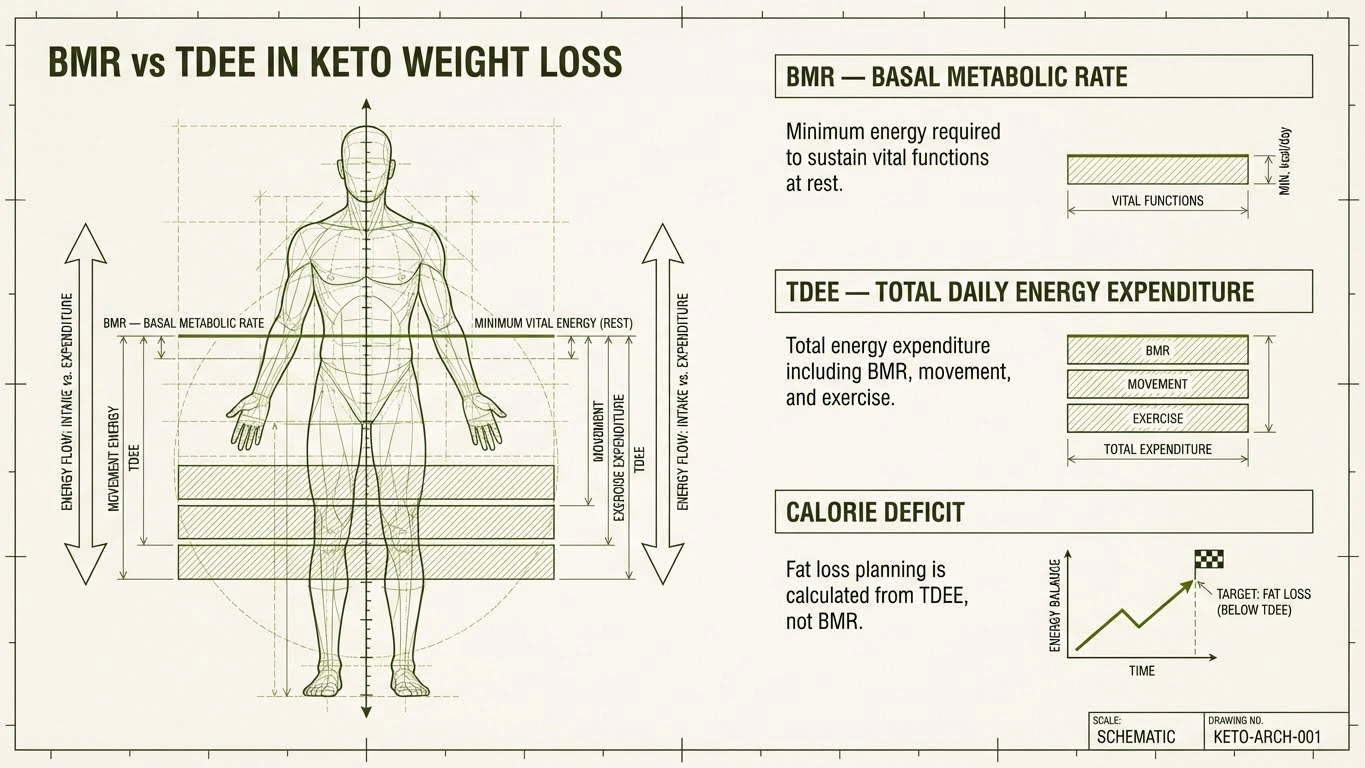
A keto calculator lose weight effectively determines your total daily energy expenditure (tdee) and then subtracts a specific percentage to ensure your body utilizes its own fat stores for fuel. The most accurate tools today utilize the Mifflin-St. Jeor equation, which is currently considered the clinical gold standard for calculating basal metabolic rate (bmr).
bmr represents the energy required for basic physiological functions such as respiration, circulation, and cellular division at complete rest. Once this baseline is established, an activity multiplier is applied to account for your lifestyle, ranging from sedentary (desk jobs) to extra active (intense training).
The standard activity multipliers used in calculations:
- sedentary: bmr x 1.2 (little to no exercise).
- lightly active: bmr x 1.375 (1–3 days of exercise/week).
- moderately active: bmr x 1.55 (3–5 days of exercise/week).
- very active: bmr x 1.725 (6–7 days of intense exercise).
By using a keto weight-loss calculator, targets are established by determining the appropriate caloric deficit. Medical experts generally recommend a moderate deficit of 10% to 20% for sustainable, long-term success.
Estimated weight loss based on caloric deficits
The following table illustrates the projected weight loss for a hypothetical individual with a tdee of 2,000 calories per day. This assumes a standard conversion where approximately 3,500 calories of deficit equate to one pound of fat loss.
| deficit level | daily calories | daily deficit | weekly fat loss (est.) | monthly fat loss (est.) |
|---|---|---|---|---|
| 10% (conservative) | 1,800 kcal | 200 kcal | 0.4 lbs (0.18 kg) | 1.6 lbs (0.72 kg) |
| 20% (moderate) | 1,600 kcal | 400 kcal | 0.8 lbs (0.36 kg) | 3.2 lbs (1.45 kg) |
| 30% (aggressive) | 1,400 kcal | 600 kcal | 1.2 lbs (0.54 kg) | 4.8 lbs (2.17 kg) |
Note: these figures represent fat mass specifically and do not include the initial water weight drop observed in the first week. While more aggressive deficits may seem appealing, clinical studies warn against excessive calorie cutting. A 50% deficit, for example, can trigger metabolic downregulation, where the body slows its bmr to conserve energy, potentially leading to muscle atrophy and nutrient deficiencies.
The science of “water weight” vs. fat loss
One of the most common points of confusion for those starting a ketogenic regimen is the dramatic weight loss observed in the first 7 to 10 days. It is physiologically possible to lose between 2 to 10 pounds during this initial phase, but it is crucial to recognize that this is primarily water loss, not adipose tissue reduction.
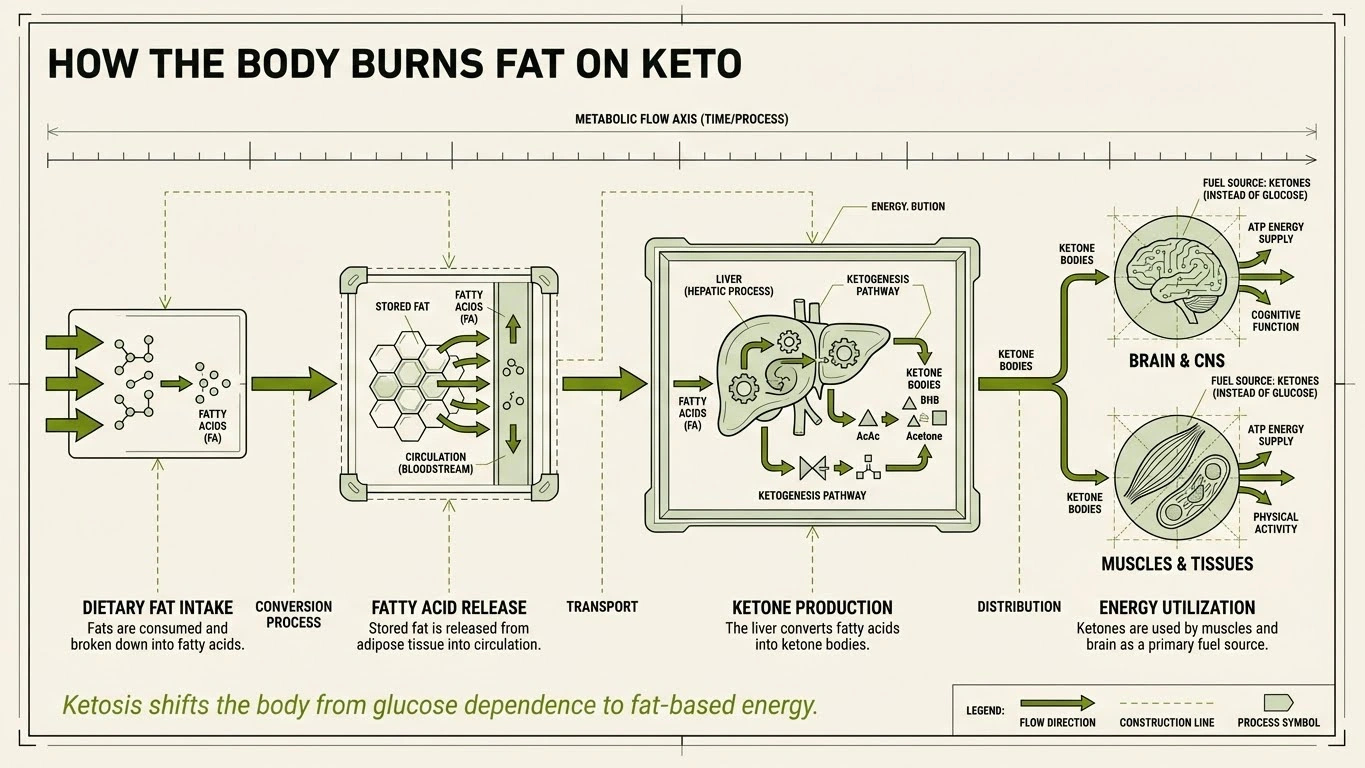
When you utilize keto weight-loss calculator instructions, they usually mandate a reduction of carbohydrate intake to under 20–50 grams of net carbs. This restriction forces the body to deplete its stores of glycogen, which is the storage form of glucose in the liver and muscles. Glycogen is a highly hydrophilic molecule; for every gram of glycogen stored, the body binds approximately 3 to 4 grams of water.
As glycogen is burned for fuel during the transition to ketosis, the bound water is released and excreted through increased urination. This process provides a significant psychological win and a “milestone” for the user, but it should not be misinterpreted as sustained fat loss. True fat burning begins once the liver begins to break down dietary and stored fats into ketone bodies for energy, a state known as ketosis.
The realistic keto weight loss timeline
A keto weight loss timeline is highly individualized, depending on your starting body mass index (bmi), age, activity level, and metabolic flexibility. However, general clinical patterns have been observed:
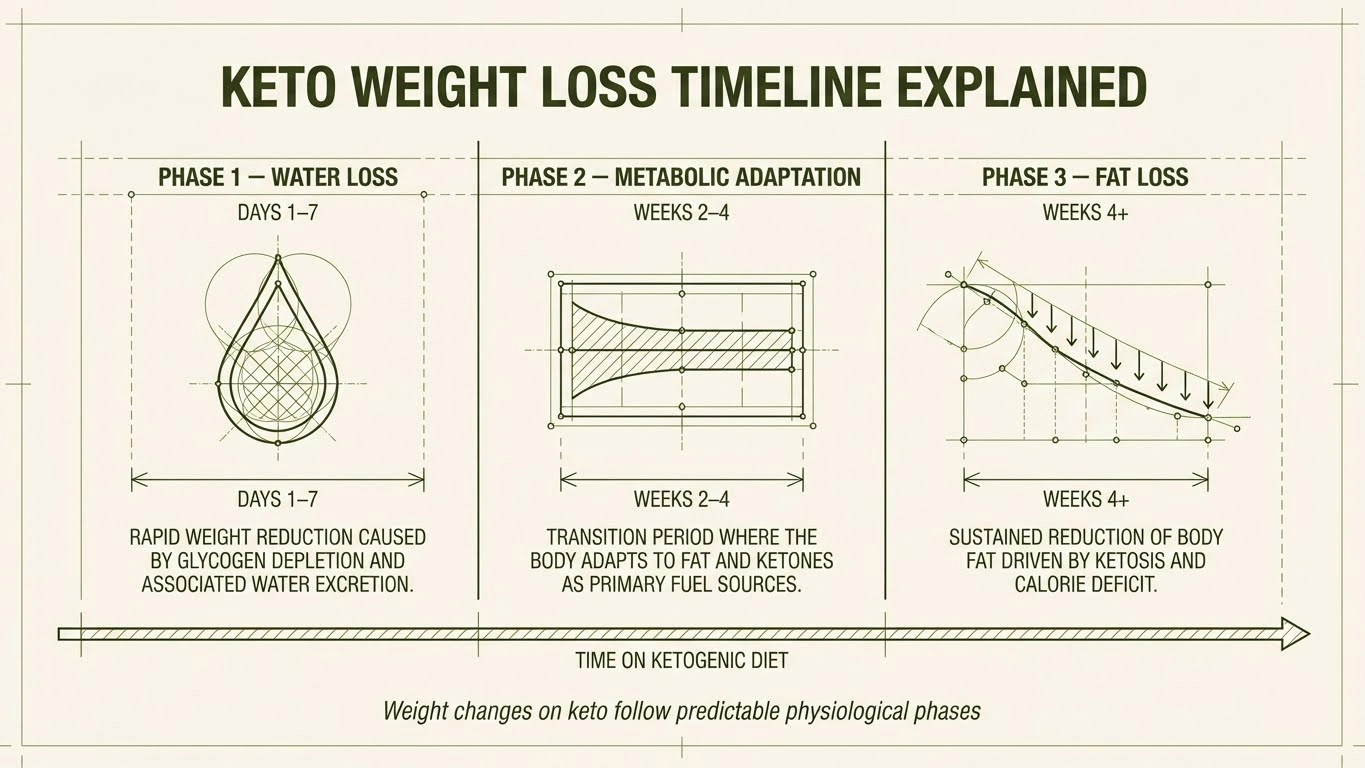
- Week 1 (the water phase): rapid reduction of 2–10 pounds as glycogen stores are depleted. symptoms of the “keto flu,” such as fatigue and headaches, may occur due to electrolyte loss.
- Weeks 2–4 (the adaptation phase): weight loss slows to a steady rate of 1 to 2 pounds per week. the body is “learning” to utilize fat as its primary fuel source.
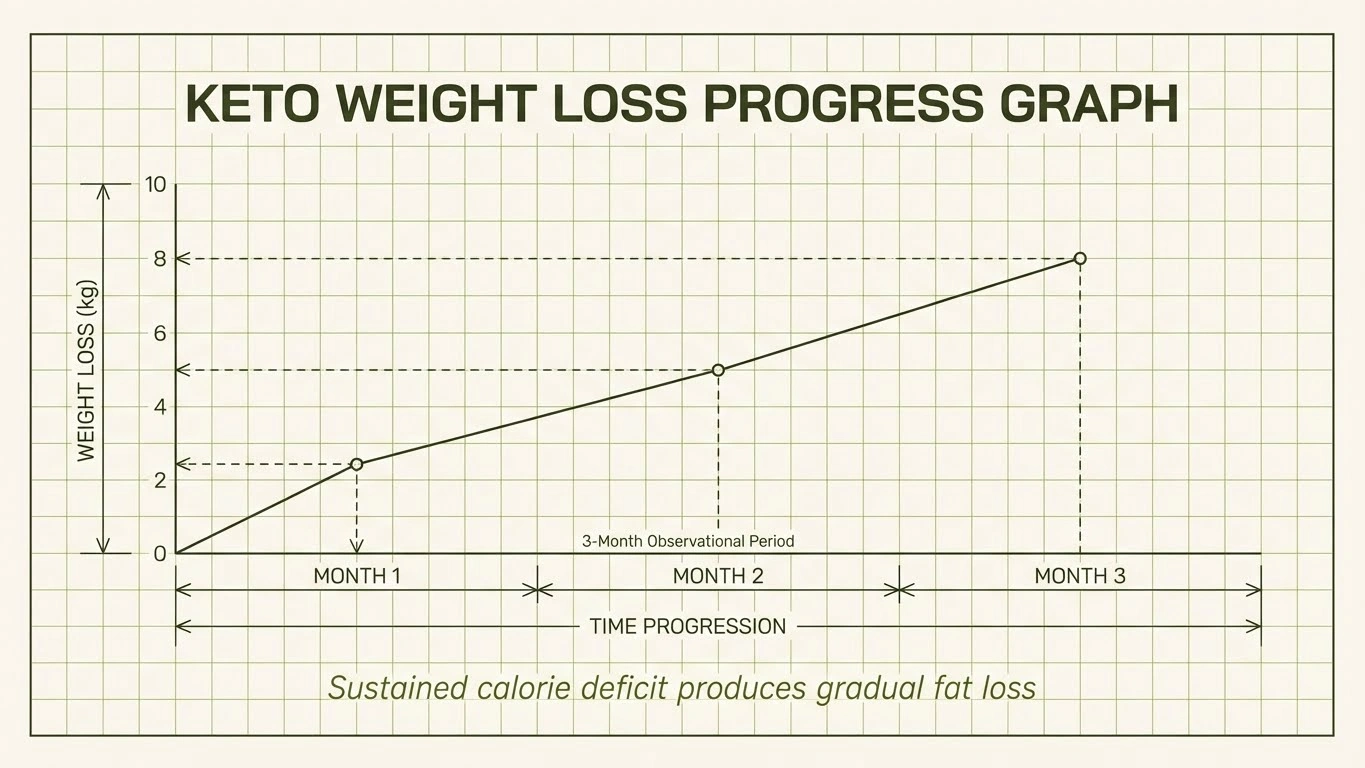
- Month 2 and beyond (the fat adaptation phase): loss typically settles at 1 pound per week or roughly 4–5 pounds per month.
Long-term adherence is key; studies show that after 12 weeks, participants can experience fat mass reductions of up to 40% when remaining consistent with their macros.
Why weight loss isn’t linear: navigating the plateau
Patients often become discouraged when the scale stops moving, despite strict adherence to their keto weight-loss calculator plan. It is a medical reality that weight loss is non-linear. The human body is not a simple math equation; it is a complex biological system that seeks homeostasis.
Several factors contribute to these fluctuations: hormonal shifts, the “whoosh” effect (fat cells temporarily filling with water), muscle gain, and metabolic adaptation. As you lose weight, your bmr naturally decreases because a smaller body requires less energy. This necessitates periodic recalculation of your macros through the keto weight-loss calculator tool to ensure you remain in a deficit.
How to use your calculator to set realistic goals
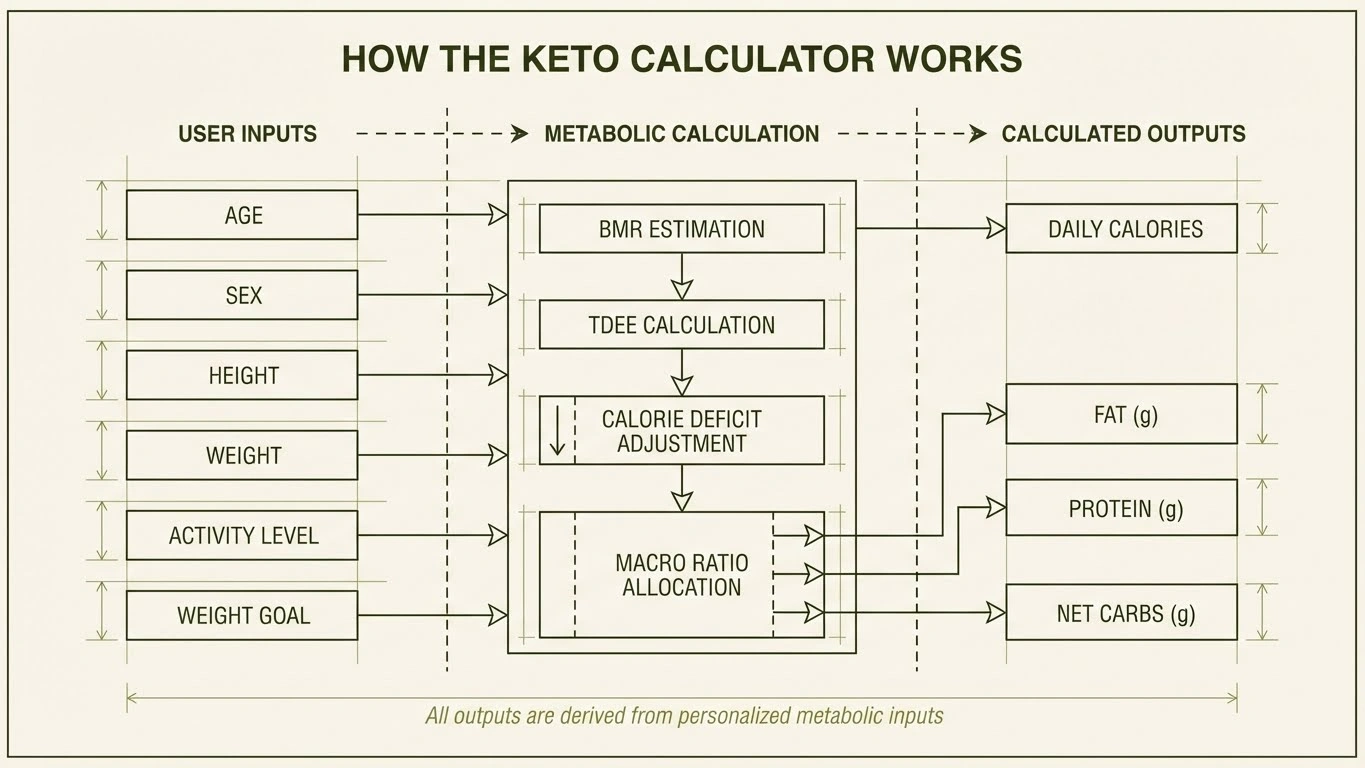
To achieve realistic keto results, you must treat the data from your calculator as a professional diagnostic tool rather than a rigid prophecy. Precision in the input phase ensures accuracy in the output phase.
Step 1: input accurate personal data. your age, height, and weight must be current. If you know your body fat percentage, including it can refine your results significantly.
Step 2: define your activity level honestly. one of the most frequent errors is overestimating physical activity. most clinical experts suggest starting with the “sedentary” or “lightly active” setting.
Step 3: set your macronutrient ratios. a standard ketogenic diet typically follows these parameters: carbohydrates (5–10%), protein (20–30%), and fat (60–75%).
Breaking down the keto calculator formula: From TDEE to Macros
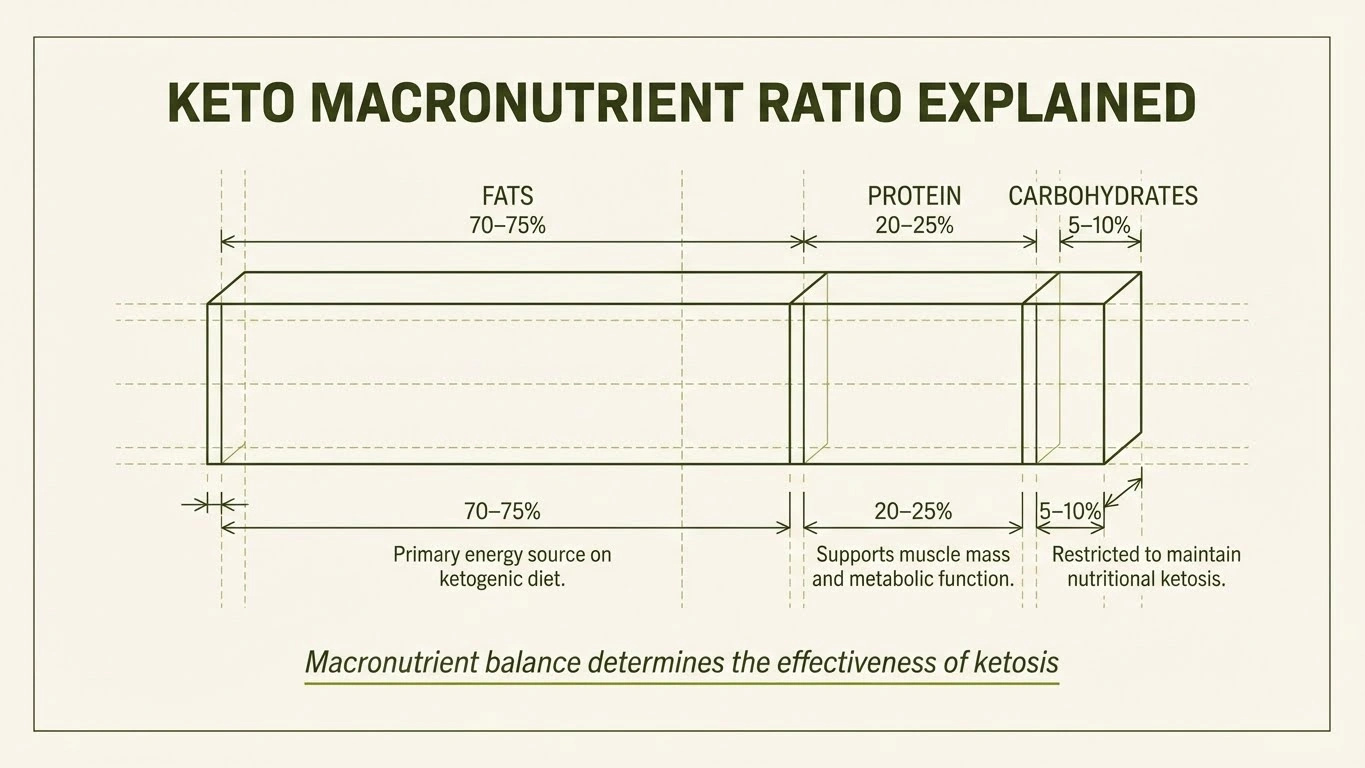
Once we have calculated your TDEE (the total calories you burn in a day), the specialized work keto calculator lose weight process begins. This is where we differ from a standard calorie counter. Our formula takes your TDEE and applies the specific macronutrient ratios required to induce physiological ketosis.
1. The Carb Limit (The Hard Ceiling)
To enter ketosis, liver glycogen must be depleted. We generally default to 20g or 25g of net carbs. Clinical data shows that the vast majority of people will enter ketosis at this level.
2. The Protein Goal (The Anchor)
The calculator determines your protein needs based on your lean body mass and activity level. If you lift weights, the formula increases this to 1.0g or 1.2g to prevent muscle atrophy. This ensures you lose fat, not muscle.
3. The Fat Lever (The Variable)
Fat is a “lever.” If you want to lose weight, we reduce the dietary fat so your body burns its own stored fat. If you want to maintain weight, we increase dietary fat to match your energy expenditure.
Addressing hidden barriers and Long-term sustainability
Even with a perfect keto strategy, certain variables can stall progress. It is essential to monitor for hidden carbohydrates found in sauces, dressings, and “sugar-free” processed snacks. Sleep quality and stress management are equally vital. elevated cortisol from chronic stress or sleep deprivation can impair fat metabolism and promote water retention.
The ketogenic diet should be viewed as a lifestyle shift rather than a short-term intervention. Once you reach your target weight, the keto weight-loss calculator settings should be transitioned to “maintenance”. Some individuals find success with keto cycling or a more modified Mediterranean-style keto diet once they have achieved their goals.
Conclusion: the analytical approach to success. In conclusion, using a keto weight-loss calculator is the most effective way to ensure your efforts are grounded in biological reality. By understanding that the initial drop is fluid and that fat loss is a steady marathon, you can set realistic keto results that are sustainable for years to come.
Explore More Resources
For additional information check out these excellent resources on keto and metabolic health: