
Expert Guide to Keto Drinks: What to Order at Starbucks and Beyond
How to navigate coffee shop menus, avoid hidden sugars, and formulate orders that support metabolic health.
In the clinical management of a ketogenic lifestyle, the primary objective is to maintain a state of nutritional ketosis—a metabolic process where the body utilizes fat-derived ketones as its primary fuel source instead of glucose. While water remains the gold standard for hydration, many patients find the restrictive nature of traditional beverage choices challenging for long-term compliance. Understanding how to navigate the complex menus of global chains is essential for success. This guide analyzes keto drinks, specifically focusing on how to formulate keto coffee orders that support metabolic health without triggering an unwanted insulin response.
The modern coffee landscape is an environment saturated with high-glycemic sweeteners and starch-based additives. However, with precise adjustments and an analytical approach to ingredient selection, it is entirely possible to enjoy sugar-free drinks that align with low-carb, high-fat dietary requirements. Whether you are searching for keto Starbucks drinks or navigating local boutiques, the following medical and nutritional insights will empower you to order with clinical precision.
👇 Calculate Your Daily Carb Limit
Use our scientifically validated tool to find your baseline before ordering drinks.
Your Personalized Results
Daily Target
0
kcal / day
The Metabolic Trap: Why “Skinny” Does Not Mean Keto
From a physiological perspective, one of the most common errors patients make is equating “skinny” with “low-carb.” In the lexicon of commercial coffee chains like Starbucks, the term “skinny” typically refers to a reduction in calories and fat, often achieved by utilizing nonfat milk and sugar-free syrups.
While these modifications reduce the caloric load, they do not necessarily eliminate the carbohydrates that can disrupt ketosis. For example, a “Skinny Vanilla Latte” still contains significant amounts of lactose—the naturally occurring sugar in milk—which can rack up 15 to 19 grams of carbohydrates in a standard serving. For a patient attempting to stay under a 20-gram daily limit, a single “skinny” drink could represent their entire carbohydrate allowance.
To successfully select keto drinks, we must move beyond marketing labels and analyze the chemical components of each additive. Our goal is to maximize healthy fats to promote satiety while keeping net carbs as close to zero as possible.
Analyzing the Foundation: Low-Carb Beverage Bases
Every drink starts with a base. To ensure your order remains ketogenic, you must choose a foundation that is naturally free of sugars and starches.
Brewed Coffee and Espresso
Freshly brewed coffee—whether a Pike Place roast, blonde roast, or dark roast—contains zero net carbs and negligible calories. Espresso shots are similarly safe, typically containing approximately 1 gram of net carbs due to the concentration of the bean’s natural oils.
Cold Brew and Nitro Cold Brew
For patients who prefer a smoother, less acidic profile, cold brew is an excellent foundation. Standard cold brew is prepared without heat and contains zero carbs. Nitro cold brew, which is infused with nitrogen, offers a naturally creamy texture and a perception of sweetness without any added sugars.
Unsweetened Teas
Teavana teas, including black, green, white, and herbal varieties like Passion Tango, are inherently keto-friendly when ordered unsweetened. Patients should be cautioned that “iced tea” at many chains is pre-sweetened by default; therefore, the instruction “unsweetened” is mandatory.
The Chemistry of Milk and Cream Substitutions
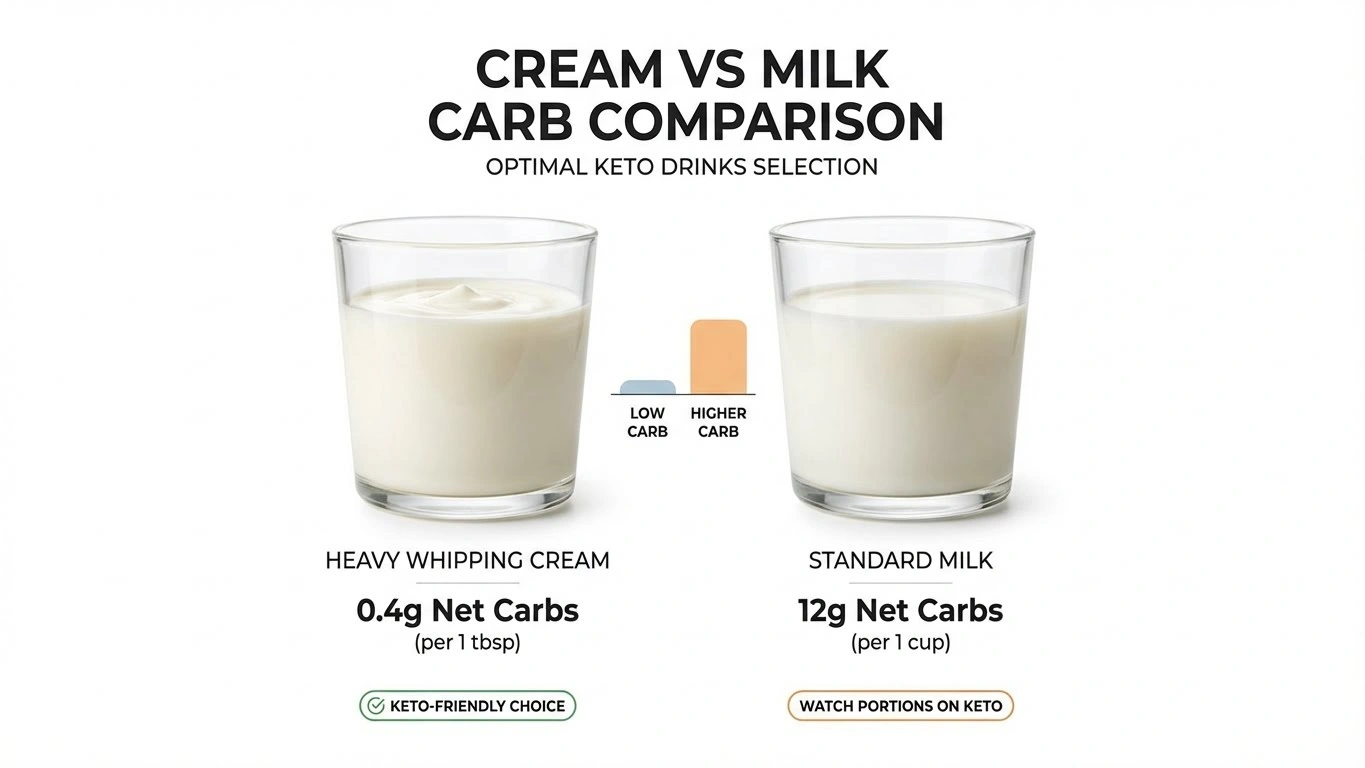
The selection of a “whitener” is where most ketogenic diets are compromised. Standard dairy milk is rich in lactose, which the body quickly converts to glucose.
Dairy Options: Heavy Cream vs. Half-and-Half
In the context of keto coffee orders, heavy whipping cream (HWC) is the preferred lipid source. It contains approximately 0.5 to 1 gram of carbs per tablespoon and is high in fat, which supports ketone production.
However, patients must be wary of the “calorie bomb” effect. A standard latte made entirely with heavy cream can exceed 1,500 calories and 14 grams of carbs. A “splash” of heavy cream—usually defined as one to two ounces—is the therapeutic dose for flavor and satiety.
Half-and-half (often ordered as “breve”) contains more lactose than heavy cream, with about 1.5 grams of carbs per ounce. It is a viable secondary option but requires stricter macro tracking.
Plant-Based Alternatives
When dairy is not desired, unsweetened almond milk is the most effective clinical substitute. It typically contains only 1 gram of net carbs per cup.
Important Warning
Many coffee chains use a sweetened version of almond milk or coconut milk. For instance, Starbucks’ coconut milk is sweetened with cane sugar and contains approximately 9 grams of carbs per cup. Soy milk is also high in carbs (13-15 g per cup) and should generally be avoided. Oat milk is the least compatible with ketosis, containing up to 16-20 grams of carbs per serving.
Navigating Sugar-Free Syrups and Sweeteners
To achieve the “pizzazz” of a specialty drink without the glucose spike, patients often turn to sugar-free drinks utilizing artificial sweeteners.
Sugar-Free Vanilla and Cinnamon Dolce
Most Starbucks locations consistently offer sugar-free vanilla syrup. While it is marketed as zero-calorie, it typically contains about 1 gram of net carbs per pump due to the presence of maltodextrin or other carriers. We recommend limiting use to 1 or 2 pumps.
Natural Sweeteners: Stevia and Monk Fruit
The most “clean” approach to sweetening keto drinks involves using stevia or monk fruit. Many shops now carry “Whole Earth” packets, which are a blend of stevia and monk fruit. While these are significantly better for blood sugar stability than sucrose, be aware that some packets contain bulking agents like fructose or erythritol, contributing 1-2 grams of carbs per serving.
Clinical Deep Dive: Formulating Keto Starbucks Drinks
Starbucks offers the most customization for the ketogenic patient. Here is an analytical breakdown of how to “keto-fy” the menu.
The “Keto Pink Drink”
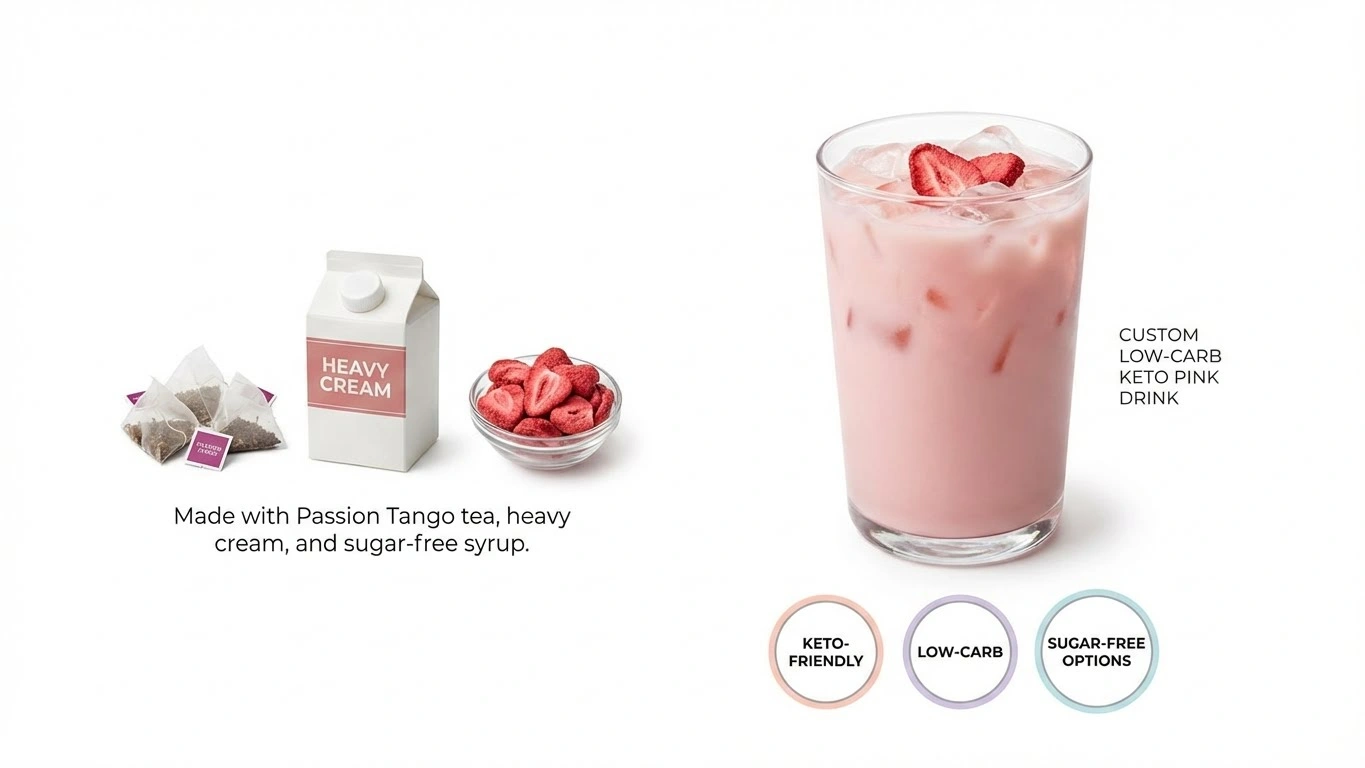
The original Pink Drink utilizes a sugary Refresher base and coconut milk. To create a ketogenic version, the order must be entirely reconstructed:
- Base: Iced Passion Tango Tea (unsweetened).
- Lipid: A heavy splash of heavy whipping cream.
- Sweetener: 2 pumps of sugar-free vanilla syrup.
- Result: A creamy, fruit-flavored beverage with approximately 3-5 grams of net carbs.
The Low-Carb Frappuccino
Traditional Frappuccinos use a “base” that is essentially liquid sugar. To avoid this, order:
- Base: Iced coffee or cold brew with extra ice.
- Lipid: Heavy whipping cream.
- Sweetener: Sugar-free vanilla or cinnamon dolce syrup.
- Instruction: “Double blended” with no Frappuccino base and no whipped cream.
- Note: The texture will be icier than a standard drink, but it will not disrupt insulin levels.
The Keto White Drink
Often cited as a “secret menu” favorite, this drink mimics the flavor of peach cobbler:
- Base: Unsweetened Peach Tranquility tea (or Peach Citrus White tea, where available).
- Lipid: Splash of heavy cream.
- Sweetener: 2-4 pumps of sugar-free vanilla syrup.
Dunkin’ and Other Coffee Shop Strategies
While Starbucks provides heavy cream, other chains like Dunkin’ often only carry half-and-half or sweetened creamers.
Dunkin’ Keto Tactics
At Dunkin’, the strategy is to focus on “Flavor Shots” rather than “Flavor Swirls.”
- Flavor Shots: Unsweetened and sugar-free (Vanilla, Hazelnut, Toasted Almond, Blueberry, Raspberry).
- Flavor Swirls: High-sugar syrups that must be avoided.
- Standard Order: Large Cold Brew with a Vanilla Flavor Shot and a splash of whole milk or cream (if available).
Practical Guide: Ordering Scripts for the Real World
Communicating precisely with your barista is the most critical step in ensuring the integrity of your keto drinks. Use these specific scripts to avoid common misunderstandings.
For a hot latte replacement:
“Can I have a Grande Americano with only three-quarters water, the rest filled with steamed heavy cream, and two pumps of sugar-free vanilla?”
For a cold refreshing drink:
“I’d like a Venti Iced Coffee, unsweetened with no classic syrup, a splash of heavy cream, and two pumps of sugar-free cinnamon dolce.”
For a spicy tea treat:
“Could I get a Tall Brewed Chai Tea—using the tea bags, not the concentrate—with a splash of heavy cream and two pumps of sugar-free vanilla?”
For a decadent espresso:
“I’ll take a Doppio Espresso Macchiato, but please use heavy cream for the foam instead of milk.”
Analytical Table: Hidden Sugars in Common Drinks
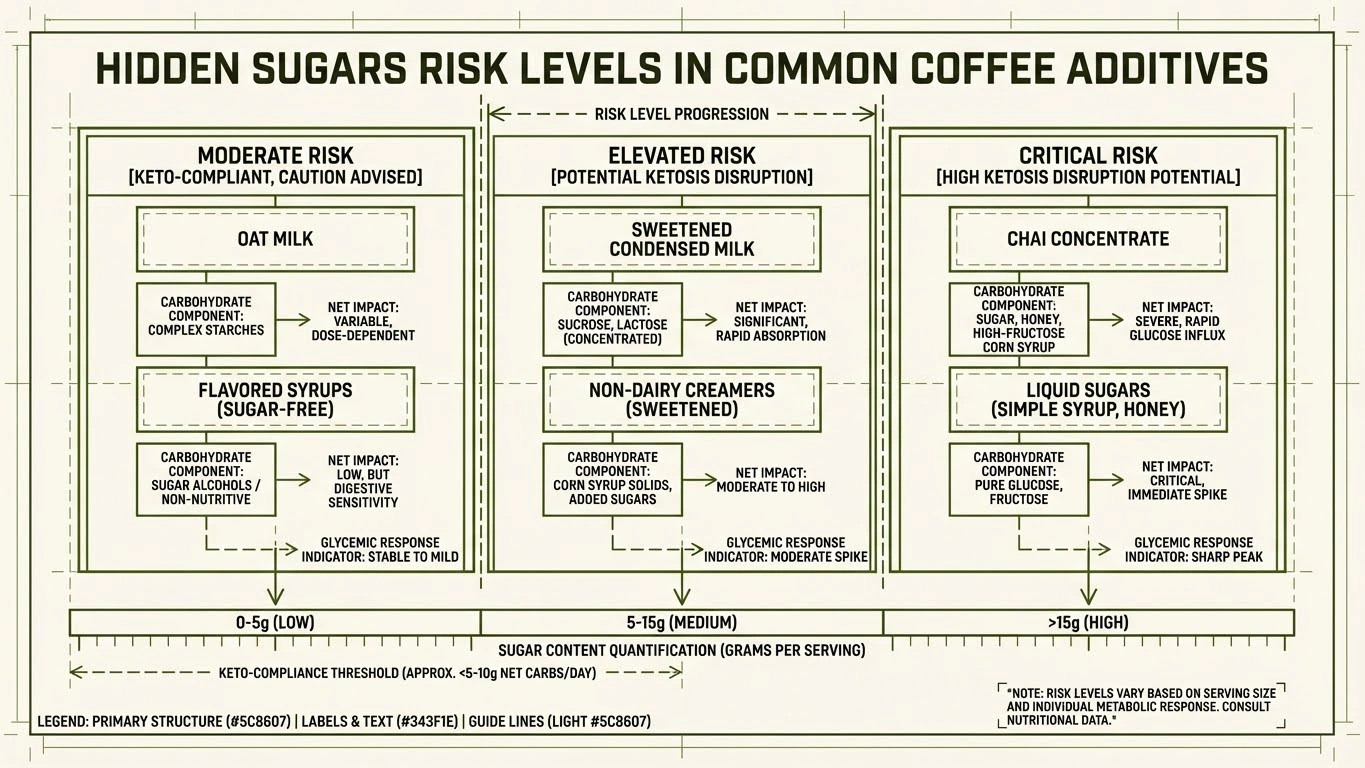
As a medical professional, I advise patients to memorize the “Hidden Sugar” culprits. These ingredients are often added automatically unless specifically excluded.
| Ingredient | Estimated Carbs | Clinical Risk Level |
|---|---|---|
| Classic Syrup (Standard Sweetener) | 5g per pump | High – Triggers insulin response |
| Matcha Powder (Starbucks Mix) | 10g+ per scoop | Critical – Pre-mixed with sugar |
| Chai Concentrate | 10-15g per pump | Critical – High fructose/honey content |
| Whipped Cream | 2g per serving | Moderate – Contains vanilla syrup |
| Standard Milk (2% or Whole) | 12-13g per cup | Moderate – Significant lactose load |
| Oat Milk | 16-20g per cup | High – Complex grain sugars |
| Frappuccino Base | 20-30g+ per drink | Critical – Pure carbohydrate syrup |
| Caramel Drizzle | 3-5g per serving | Moderate – Pure sugar |
Clinical Insights on Additives: Beyond the Basics
To further optimize your keto coffee orders, consider these evidence-based additions that can enhance both flavor and metabolic performance.
The Role of MCT Oil and Collagen
Some specialty shops allow the addition of MCT (Medium Chain Triglyceride) oil or collagen peptides. MCT oil is unique because it is transported directly to the liver and converted into ketones, providing an immediate energy source for the brain. If your shop doesn’t carry it, many patients bring portable MCT powder or oil to stir into their Americanos.
Spices as Metabolic Enhancers
Cinnamon and nutmeg are zero-carb toppings that can satisfy the psychological craving for sweetness without affecting blood glucose. In fact, some studies suggest cinnamon may even improve insulin sensitivity.
Salt for Electrolyte Balance
Patients new to a ketogenic lifestyle often experience the “keto flu” due to electrolyte excretion. Adding a pinch of sea salt to your coffee can help maintain sodium levels and reduce the bitterness of black roasts.
Keto-Friendly Food Pairings at Coffee Shops
If you require a meal to accompany your keto drinks, most coffee chains offer a limited but manageable selection of snacks.
- Sous Vide Egg Bites: The Bacon & Gruyère variety contains approximately 9 grams of net carbs. While not zero-carb due to rice starch or cottage cheese, they are a reasonable option in a pinch.
- Protein Boxes: Order these but consume only the hard-boiled eggs, cheese, and meats. Discard the crackers, bread, and fruit.
- Charcuterie and Cheese: Many shops sell individual string cheese or meat-and-cheese trays which are perfectly aligned with keto macros.
- Avocado Spread: This is a high-fat, low-carb additive that can be paired with egg bites or eaten directly for a satiety boost.
Summary of Ordering Principles
To summarize the clinical approach to ordering at any coffee shop, follow these four rules:
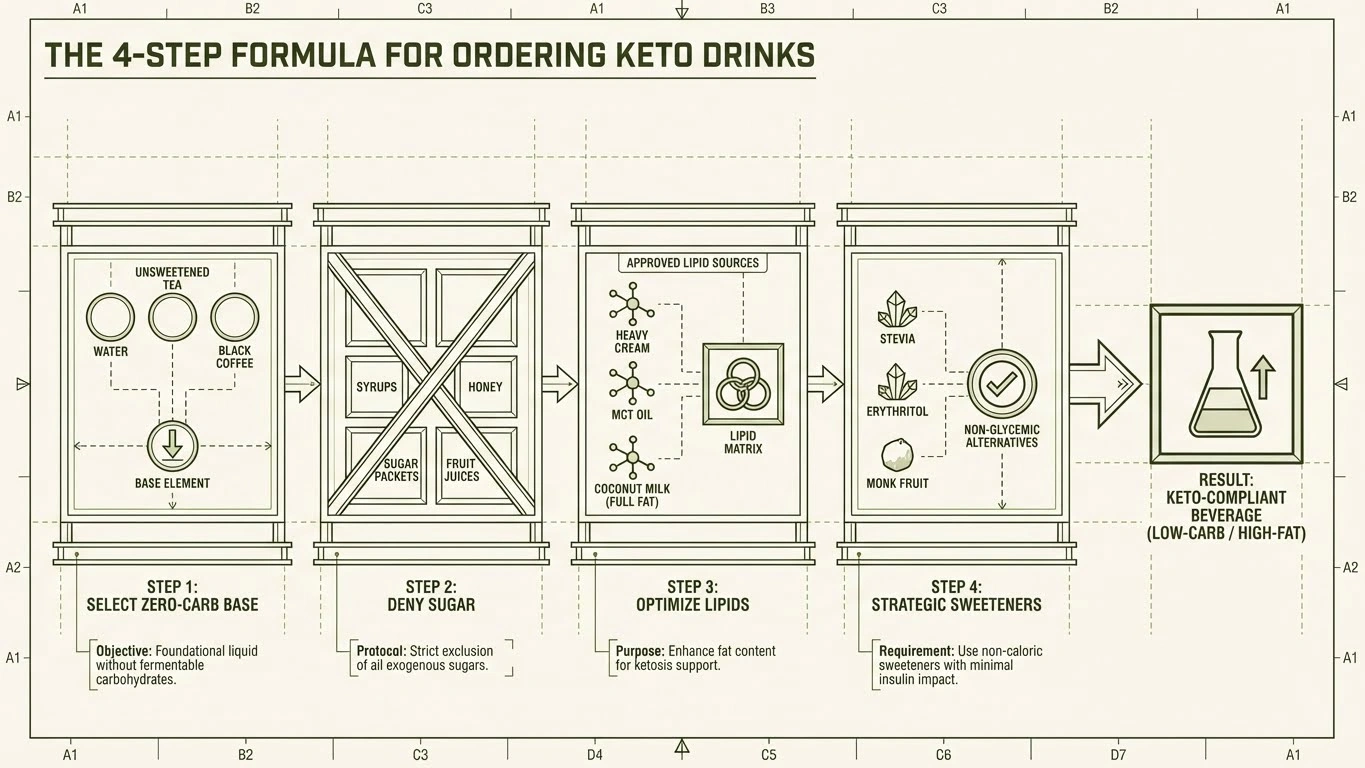
- Select a Zero-Carb Base: Black coffee, espresso, or unsweetened tea.
- Explicitly Deny Sugars: Use the phrase “No classic syrup, no sugar, no liquid cane sugar”.
- Optimize the Lipid Profile: Request heavy cream or unsweetened almond milk in measured amounts.
- Use Strategic Sweeteners: Opt for sugar-free vanilla or bring your own pure stevia/monk fruit drops.
Conclusion: Mastering Your Metabolic Environment
The transition to a ketogenic lifestyle requires a shift from passive consumption to active dietary management. By viewing the coffee shop menu through an analytical lens, you can enjoy complex and flavorful keto drinks that satisfy your palate without compromising your physiological goals.
Navigating Starbucks or Dunkin’ is not merely about finding “safe” items; it is about understanding the chemical interactions between fats, proteins, and carbohydrates. With the ordering scripts and nutritional data provided in this guide, you are now equipped to maintain consistent ketosis while enjoying the convenience and social aspects of modern coffee culture.
To visualize this process: Ordering a standard specialty latte is like fueling a gasoline engine with sugar water—it leads to metabolic clogging and energy failure. Formulating a proper keto coffee order is like providing high-octane synthetic fuel; it keeps the engine running cleanly, efficiently, and at peak performance.
Recommended Next Steps
This guide deepens your understanding of why fat-loading coffee supports metabolic health and satiety.
Verify if your custom order fits your daily macro limit by inputting specific ingredients to check for hidden sugars.
Make one of the most popular (and high-sugar) drinks safely at home with this specific, low-carb recipe.
External Keto Coffee Guides & Resources
Explore these additional resources for more ideas and nutritional information: