
Keto and Alcohol: Lower-Carb Drink Options for Adults Who Choose to Drink
How alcohol affects ketosis, which drinks contain the fewest carbs, and the safety points adults on keto should know before drinking.
⚠ Important Safety Notice — Read Before Continuing
This article is for adults of legal drinking age and is educational only. It is not medical advice and does not encourage drinking, increasing drinking, binge drinking, or starting to drink to fit a keto lifestyle. People who do not currently drink have no nutritional reason to start.
Speak to a qualified healthcare professional before drinking any alcohol if any of the following apply to you:
- You take insulin, sulfonylureas, SGLT2 inhibitors, or any other glucose-lowering medication — alcohol can cause severe, delayed hypoglycaemia (low blood sugar), sometimes hours after the last drink
- You have type 1 or type 2 diabetes
- You are pregnant, planning pregnancy, or breastfeeding (no amount of alcohol is considered safe)
- You have any liver condition, including fatty liver, hepatitis, or cirrhosis
- You have a history of pancreatitis
- You have a history of alcohol use disorder, alcohol misuse, or a family history of either
- You take prescription medication of any kind, including blood pressure medication, anticonvulsants, antidepressants, anti-anxiety medication, sleep medication, blood thinners (e.g. warfarin), or metformin
- You live with a mental health condition that may be worsened by alcohol
Never drink and drive. Reduced alcohol tolerance on keto means you may reach impairment levels — including legal driving limits — much faster than on a higher-carb diet. Do not operate vehicles or machinery after drinking.
If you choose to drink, the safest pattern is moderate, infrequent, and well-hydrated. Binge drinking (4+ drinks in 2 hours for women, 5+ for men) carries serious health risks regardless of carbohydrate intake.
Some alcoholic drinks contain few enough carbohydrates to fit within a keto carb allowance — particularly unflavoured spirits (0 g per shot), dry sparkling wines (1–2 g per glass), and ultra-light beers (around 2 g per can). However, alcohol pauses fat oxidation while it is being processed, lowers alcohol tolerance, worsens dehydration, and carries serious safety risks for people on diabetes medication, with liver conditions, during pregnancy, or with a history of alcohol use disorder. This guide is for adults of legal drinking age and is not a recommendation to drink.
Table of Contents
Alcohol and a ketogenic diet are not a natural fit. The primary goal of keto is to shift the body’s fuel source from dietary glucose to ketones produced from fat. Alcohol changes how the body burns fuel in the short term and adds calories with no nutritional value. For adults who do choose to drink, some beverages contain very few carbohydrates and can fit within a daily carb allowance, but “low-carb” does not mean “harmless” — the safety section below outlines the points worth understanding first.
If you choose to drink, it helps to understand the metabolic “cost” of alcohol on a ketogenic diet. The body treats ethanol as a substance that needs to be cleared quickly. The liver prioritises processing alcohol over other fuels, which means ketone production and fat oxidation are temporarily paused while ethanol is being broken down.
How Alcohol Is Metabolised in Ketosis
The liver clears ethanol before it returns to its other jobs. While alcohol is being broken down, ketone production and fat oxidation are temporarily paused. The drink itself may be low-carb — but the metabolic work it triggers still slows fat-burning until the alcohol is cleared.
To understand why choosing lower-carb drinks matters, it helps to look at how the body ranks energy sources. Alcohol is sometimes called the “fourth macronutrient” because it provides roughly 7 calories per gram — more than protein or carbohydrate (4 kcal/g) and nearly as much as fat (9 kcal/g). These are typically described as “empty calories” because they deliver energy with very little accompanying nutritional value.
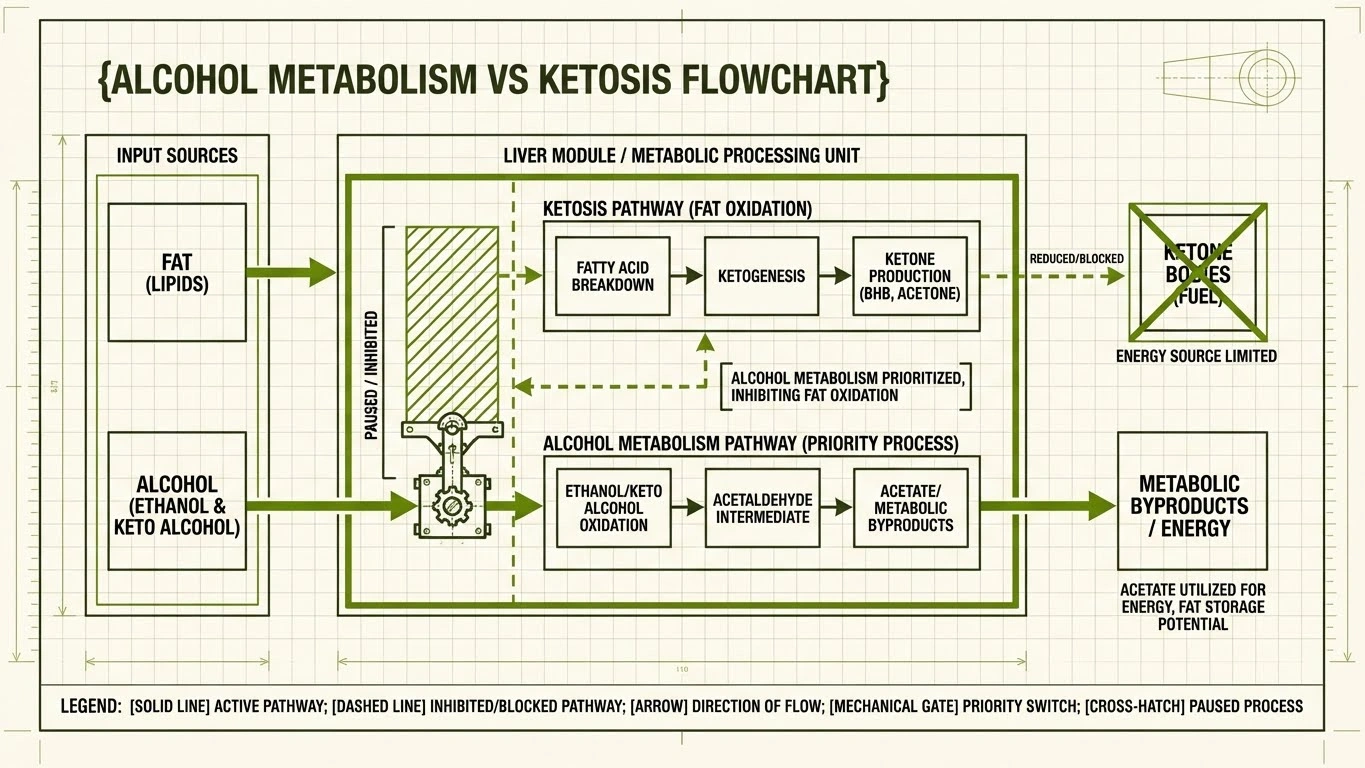
When alcohol enters the bloodstream, the liver shifts its priorities. A useful analogy is that of an unexpected guest (alcohol) arriving while someone is mid-task (the body burning fat). The work is paused until the guest is dealt with, then resumed. In biochemical terms, fat oxidation is temporarily suspended while the liver converts ethanol into acetate.
Nutritional ketosis also changes the body’s response to alcohol itself. With glycogen stores depleted on a strict low-carb regimen, the carbohydrate “buffer” that normally slows alcohol absorption is largely absent. Many people on keto report feeling the effects of alcohol more quickly and recovering more slowly, with dehydration and electrolyte loss playing a major role in the more intense hangover.
👇 Calculate Your Daily Macro Budget
If you choose to drink, work alcohol into your daily carb allowance — do not add it on top. If you take diabetes medication, share these macro results with your healthcare provider before changing what you eat or drink; do not adjust medication doses on your own.
Your Personalized Results
Daily Target
0
kcal / day
The Stoplight System: Categorising Drinks by Carb Load
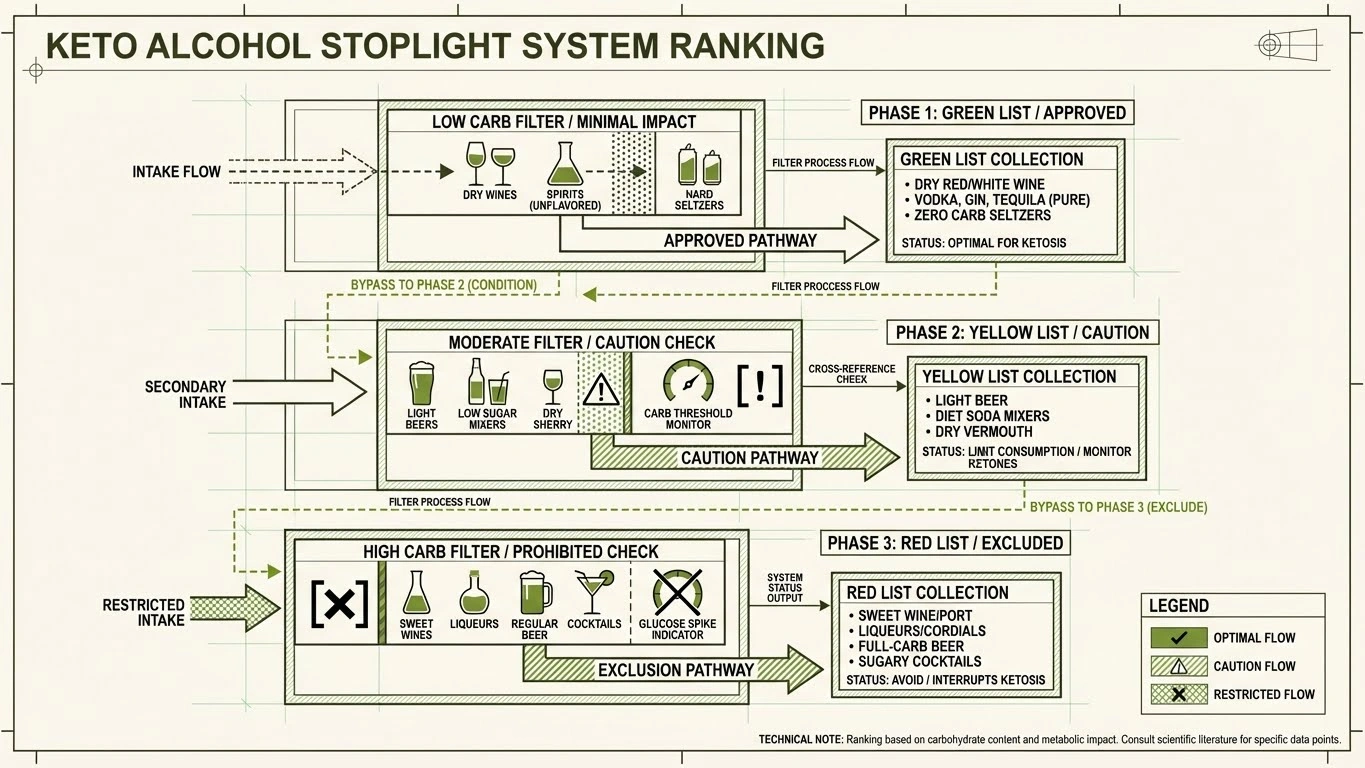
Drinks split roughly into three groups by carb load: spirits and brut sparkling wines (very low), dry table wines and light beers (moderate), and regular beer, liqueurs, dessert wines, and sugary cocktails (high). The colour-coded lists below show which drinks fall into each group.
This educational guide uses a simple “Stoplight” framework to group drinks by carbohydrate density. It is designed to help adults who already choose to drink make lower-carb selections — not to recommend drinking. People who do not currently drink alcohol have no nutritional reason to start.
Green List: Lowest-Carb Options (0–2 g Carbs)
The Green List groups beverages with the lowest impact on blood glucose and insulin. These options contain very little residual sugar.
- Pure Distilled Spirits: Unflavoured vodka, gin, tequila, whiskey, Scotch, and brandy contain zero net carbs. With vodka, it is worth checking that the spirit is not “flavoured,” as flavoured varieties often contain added syrups.
- Dry Wines: Specifically those labelled “Brut” or “Extra Brut,” which undergo a more complete fermentation that leaves little residual grape sugar.
- Ultra-Light Beers: Modern light lagers can contain as little as 1.9 grams of carbs per serving.
Yellow List: Moderate-Carb Options (3–6 g Carbs)
These beverages can fit within a daily macro budget but require careful portion control to stay within a typical 20–50 g daily carb allowance.
- Dry Red and White Wines: Varieties like Pinot Noir, Cabernet Sauvignon, and Sauvignon Blanc typically contain 3–4 g of carbs per 5 oz glass.
- Hard Seltzers: Most spiked sparkling waters contain between 1 and 3 g of carbs per can.
- Lighter Craft Beers: Some “light” IPAs and pale lagers fall into this category, ranging from 3.6 to 6 g of carbs.
Red List: High-Carb Drinks to Avoid on Keto (10 g+ Carbs)
These drinks contain enough carbohydrate to spike insulin and quickly use up a day’s keto carb allowance.
- Regular Beer: Sometimes called “liquid bread,” standard ales and lagers can contain 12–18 g of carbs per serving.
- Liqueurs and Cordials: Drinks like Bailey’s, Amaretto, and Kahlua are essentially sugar syrups with added alcohol, containing 10–25 g of carbs per shot.
- Sweet/Dessert Wines: Port, Sherry, and sweet Riesling are high in fructose and can contain over 20 g of carbs per glass.
- Sugary Cocktails: Classics like the Margarita, Piña Colada, and Sangria are very high in carbs due to added fruit juices and simple syrups.
Carb & Calorie Comparison Table
A standard 1.5 oz shot of unflavoured spirit contains 0 g of carbs. A 5 oz glass of dry wine usually contains 3–4 g. A 12 oz can of ultra-light beer can be as low as 1.9 g. A 12 oz regular tonic water alone contains around 32 g — more than most full drinks.
The table below shows standardised carbohydrate and calorie figures for popular beverages. Data is based on typical serving sizes (1.5 oz for spirits, 5 oz for wine, 12 oz for beer). Exact values vary by brand and batch — always check the label.
| Beverage Type | Specific Drink | Serving Size | Net Carbs (g) | Calories (kcal) |
|---|---|---|---|---|
| Spirit | Vodka (Unflavored) | 1.5 oz | 0g | 97 |
| Spirit | Tequila / Gin / Rum | 1.5 oz | 0g | 97 |
| Spirit | Whiskey / Bourbon | 1.5 oz | 0g | 105 |
| Wine | Champagne (Brut) | 5 oz | 1.2 – 2g | 95 – 115 |
| Wine | Sauvignon Blanc | 5 oz | 2.5 – 3g | 120 |
| Wine | Pinot Grigio | 5 oz | 3g | 123 |
| Wine | Pinot Noir (Dry Red) | 5 oz | 3.4g | 114 |
| Wine | Cabernet Sauvignon | 5 oz | 3.8g | 110 |
| Beer | Budweiser Select 55 | 12 oz | 1.9g | 55 |
| Beer | Miller 64 | 12 oz | 2.4g | 64 |
| Beer | Michelob Ultra | 12 oz | 2.6g | 95 |
| Beer | Miller Lite | 12 oz | 3.2g | 96 |
| Beer | Corona Premier | 12 oz | 2.6g | 90 |
| Seltzer | Truly Hard Seltzer | 12 oz | 1g | 100 |
| Seltzer | White Claw | 12 oz | 2g | 100 |
| Mixer | Club Soda / Seltzer | 12 oz | 0g | 0 |
| Mixer | Diet Tonic Water | 12 oz | 0g | 0 |
| Mixer | Regular Tonic Water | 12 oz | 32g | 124 |
Distilled Spirits: Vodka, Gin, Tequila, Whiskey
Distillation removes the sugars and starches present before fermentation. Unflavoured vodka, gin, tequila, whiskey, and rum all contain 0 g of carbs per 1.5 oz shot. The carbs in spirit-based drinks come almost entirely from the mixer or from added flavouring syrups.
For people closely tracking their macros, distilled spirits are the lowest-carb category. Distillation removes sugars and starches, leaving a concentrated ethanol solution.
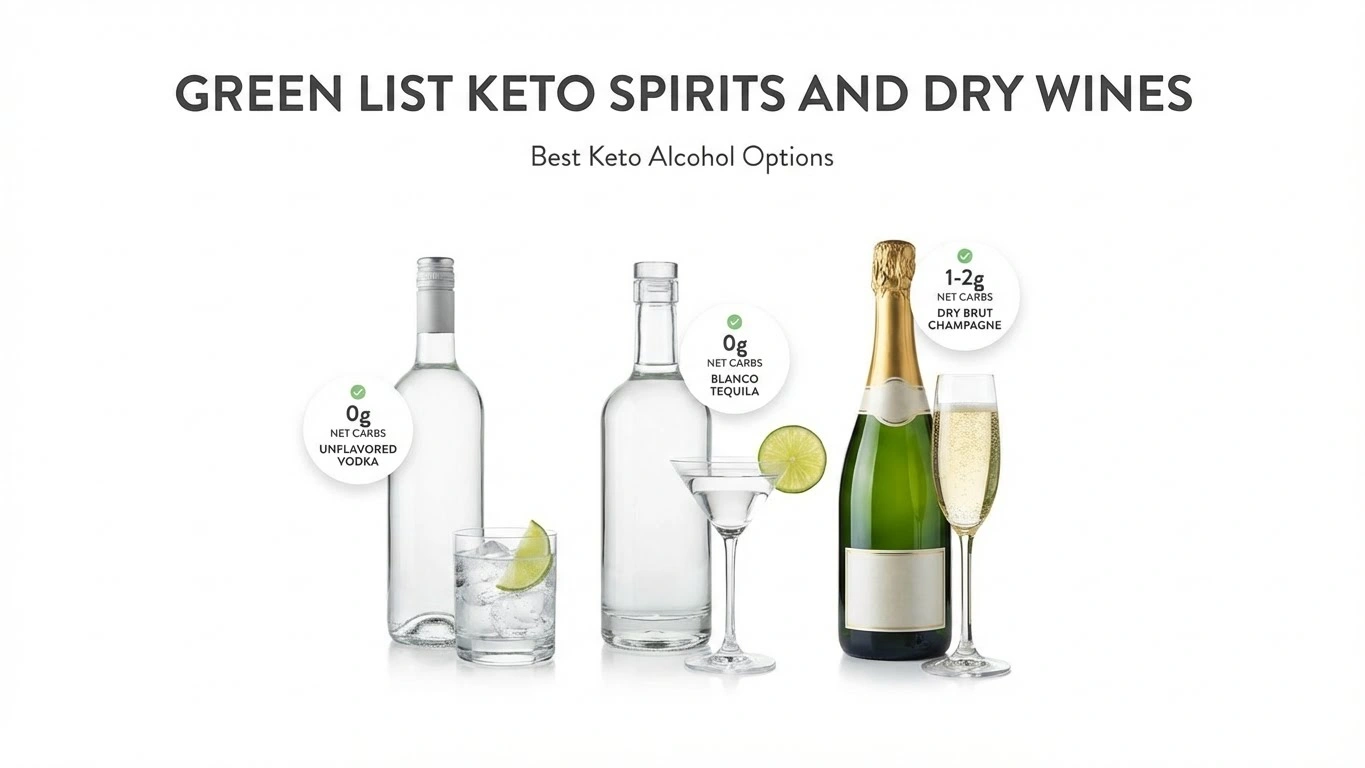
Vodka is one of the most-searched spirits in the low-carb space because, in its unflavoured form, a standard 1.5-ounce shot of 80-proof vodka contains 0 grams of carbohydrates. This makes plain vodka one of the lowest-carb base spirits. By contrast, pre-mixed “alcopops” such as Smirnoff Ice can contain around 26 g of sugar per bottle and would not fit within a typical keto carb allowance.
Tequila, gin, rum, and whiskey follow the same 0 g rule when unflavoured. Tequila is often discussed in keto communities for being relatively clean, provided it is 100% agave rather than a “mixto” with added cane sugar. Gin is another low-carb option, though pairing it with regular tonic water — not the spirit itself — is where most of the carbs come in.
Lower-Carb Wines for Adults Who Choose to Drink
The carb content of wine depends mostly on the grape variety and how complete the fermentation is. Wine is essentially fermented grape juice; the yeast converts the natural sugars (fructose and glucose) into alcohol. In “dry” wines, this process runs closer to completion, leaving less residual sugar.
If you choose to drink wine on keto, a practical guideline is to look for wines with an alcohol content of at least 12%. A higher ABV typically indicates more of the natural grape sugar was converted to alcohol during fermentation, leaving less residual sugar in the glass.
Lower-carb white wines
- Sauvignon Blanc: Known for its crispness; typically about 3 g of carbs per serving.
- Pinot Grigio: A very dry white at approximately 3 g of carbs per serving.
- Chardonnay: Often around 3.8 g per serving.
Lower-carb red wines
- Pinot Noir: Often the lightest red, at roughly 3.4 g of carbs.
- Cabernet Sauvignon: A bolder red, around 3.8 g.
- Merlot: Generally fits if it is a very dry style, averaging around 3.7 g per glass.
Sparkling wines such as Champagne or Cava can be the lowest-carb wine options. A “Brut Nature” or “Extra Brut” Champagne can contain as little as 1.2–2 g of carbs per flute. Avoid “Demi-Sec” or “Doux” varieties, which can contain more than 32 g of sugar per litre.
Lower-Carb Beer Options
Standard beer is one of the highest-carb alcoholic categories because it is brewed from grains like barley and wheat. A regular lager can easily contain 13–15 g of carbs, which uses up a significant chunk of a keto carb allowance in a single can.
Ultra-light options have changed this picture. Budweiser Select 55 and Miller 64 sit at the low end with 1.9 g and 2.4 g of carbs respectively. Michelob Ultra remains a popular middle ground at 2.6 g. For craft beer drinkers, low-carb IPAs such as Dogfish Head Slightly Mighty (3.6 g) offer hoppy flavour with less of the typical grain-heavy carb load.
Mixers: Where Most Carbs Sneak In
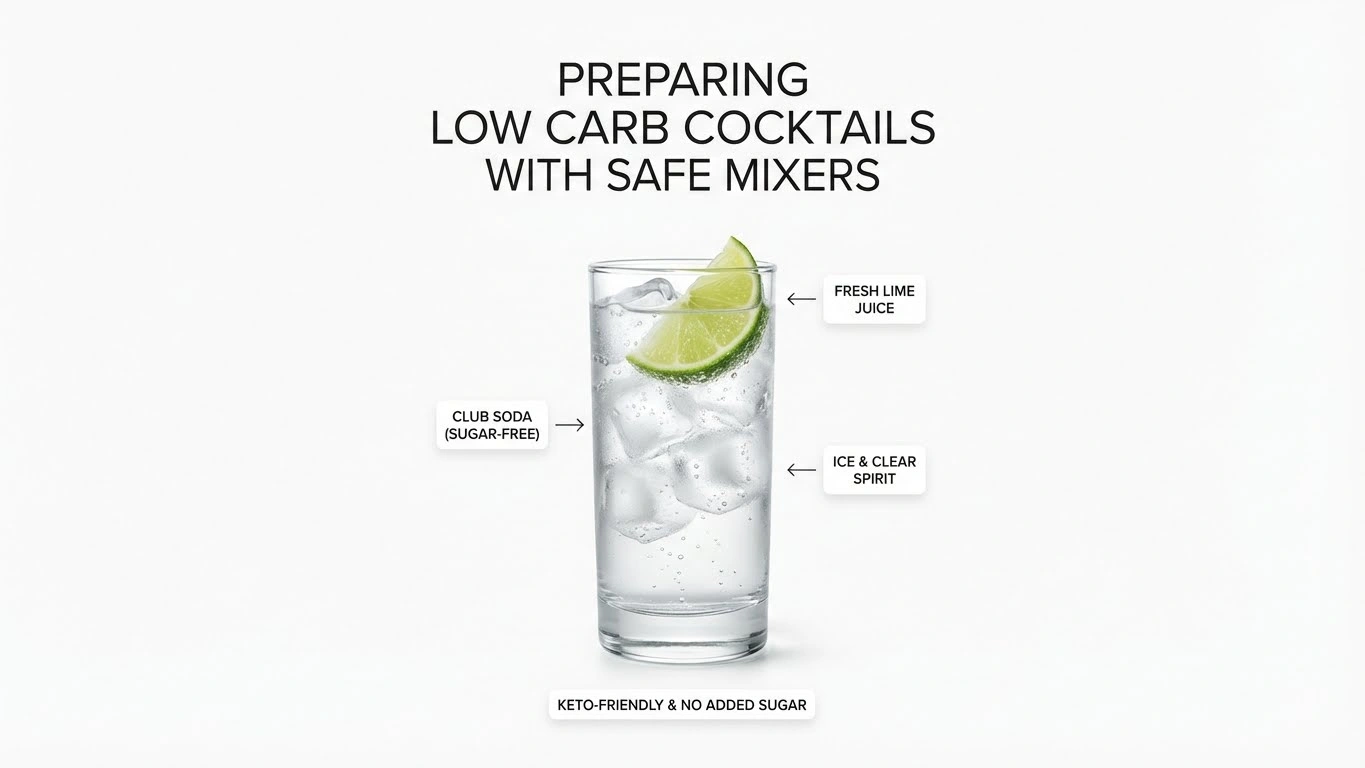
Regular tonic water, fruit juice, regular soda, and store-bought margarita mix can each add 20–32 g of carbs to a single drink — more than a typical full day’s keto carb allowance. Club soda, plain seltzer, fresh citrus, and stevia-sweetened mixers add 0–1 g.
A zero-carb spirit is only as low-carb as its mixer. Mixers are the most common place where adults following a ketogenic diet accidentally add a large amount of sugar to an otherwise low-carb drink.
High-carb mixers to avoid:
- Standard Tonic Water: Contains roughly 32 g of carbs per can — comparable to a regular soda.
- Orange / Cranberry Juice: A “screwdriver” or “vodka cranberry” adds 18–28 g of liquid sugar.
- Margarita Mix: Store-bought mixes are typically saturated with corn syrup and can exceed 20 g of carbs per drink.
Lower-carb mixers (0–1 g):
- Club Soda or Seltzer: Naturally carb-free and useful for hydration.
- Diet Sodas: Carb-free, though some people prefer to limit artificial sweeteners for other reasons.
- Fresh Citrus: A squeeze of lemon or lime adds negligible carbs (<1 g) but real flavour.
- Stevia-Sweetened Mixers: Brands like Zevia offer ginger ale and tonic options with 0 carbs.
Practical Cautions: Tolerance, Hangovers, and Stalls
The metabolic state of ketosis changes the way the body responds to alcohol. The points below are general educational notes — not medical advice — and may apply differently depending on your health, medications, and individual physiology.
Reduced tolerance. With dietary glucose largely absent, ethanol enters the bloodstream quickly. Many people on keto report feeling the effects of alcohol after roughly half the amount they would normally consume. This raises the risk of reaching impairment levels — including legal driving limits — much faster than expected. Do not drive or operate machinery after drinking on keto.
Stronger hangovers and dehydration. Glycogen stores hold water; on a low-carb diet those stores are depleted, so the body retains less fluid overall. Alcohol also acts as a diuretic. The combination can produce more severe dehydration and worse hangover symptoms than the same amount of alcohol on a higher-carb diet. A common practical rule is to drink a full glass of water for every alcoholic drink, but hydration alone does not eliminate the risks of alcohol.
Weight-loss stalls. While the liver is processing ethanol, fat oxidation is paused. Even low-carb drinks contribute calories (roughly 7 kcal per gram of alcohol) and these calories are metabolised before dietary fat. If progress has stalled and alcohol is part of the routine, that is often a useful place to look first.
Practical Preparation Notes for Adults Who Choose to Drink
- Eat first. Drinking on an empty stomach in ketosis speeds intoxication and worsens dehydration. A meal containing fat, protein, and non-starchy vegetables before drinking can slow alcohol absorption.
- Hydrate. A common practical rule is one full glass of water for every alcoholic drink, plus extra water before bed. Hydration does not undo the other effects of alcohol, but it does help with the dehydration component of a keto hangover.
- Electrolytes. Some people find that replenishing sodium, potassium, and magnesium the next morning helps with how they feel — for example, through broth, mineral water, or a low-sugar electrolyte mix. Individual electrolyte needs vary; talk to your clinician if you have kidney disease, heart failure, or take blood pressure medication.
- Morning-after food. Eggs, leafy greens, avocado, and water are simple, keto-aligned choices. There is no specific “hangover cure”; time, hydration, and rest do the work.
About activated charcoal: Activated charcoal is sometimes promoted as a pre-drink hangover preventive. It can bind to many medications and reduce their effectiveness, and it is not a substitute for limiting alcohol intake. Do not use activated charcoal around alcohol or any prescription medication without explicit guidance from a qualified healthcare professional.
Alcohol Safety on Keto — What to Know Before You Drink
The same factors that make low-carb alcohol “fit” a daily macro budget — fast metabolism, no glucose buffer, depleted glycogen — also raise specific safety considerations. This section covers the issues most relevant to people following a ketogenic diet.
Alcohol, diabetes, and hypoglycaemia risk
Alcohol can suppress the liver’s normal release of glucose, which on its own is rarely dangerous in healthy adults but can be life-threatening for people taking insulin, sulfonylureas, or meglitinides. The drop in blood sugar can occur several hours after the last drink — including during sleep. If you take any glucose-lowering medication and choose to drink, the dose, timing, and monitoring of your medication around alcohol must be planned and supervised by the prescribing clinician. Do not change medication doses on your own.
SGLT2 inhibitors (canagliflozin, dapagliflozin, empagliflozin, ertugliflozin) carry an added concern: combining a very low-carb diet with alcohol can raise the risk of euglycemic diabetic ketoacidosis, a medical emergency that can occur with near-normal blood glucose. If you take an SGLT2 inhibitor, discuss alcohol with your prescriber before making it part of your routine.
Medication interactions
Alcohol interacts with a wide range of prescription and over-the-counter medications. Some common categories that warrant a conversation with your prescriber or pharmacist before drinking include: metformin (lactic acidosis risk at higher intakes), blood pressure medication, blood thinners such as warfarin, anti-anxiety and antidepressant medication, sleeping pills, anticonvulsants, opioid pain medication, and certain antibiotics (notably metronidazole). This list is not exhaustive.
Liver disease, pancreatitis, and metabolic strain
Because the liver prioritises alcohol metabolism, regular drinking adds workload to an organ that is already under metabolic adaptation on a high-fat diet. Anyone with fatty liver disease, hepatitis, cirrhosis, or a history of pancreatitis should not drink without guidance from a qualified healthcare professional.
Pregnancy, breastfeeding, and trying to conceive
No amount of alcohol is considered safe during pregnancy or while trying to conceive. The CDC, NHS, and most national health bodies recommend complete avoidance. Breastfeeding parents who choose to drink are typically advised to wait several hours after a single drink before nursing.
Alcohol use disorder and mental health
If you have a history of alcohol use disorder, alcohol misuse, or a family history of either, this article is not a guide to drinking again. Low-carb framing of alcohol does not change addiction risk. Alcohol can also worsen depression, anxiety, and sleep disorders. Reliable support is available through SAMHSA’s National Helpline (1-800-662-4357 in the US) and equivalent national services elsewhere.
Driving, machinery, and impairment
On a ketogenic diet, the absence of dietary glucose can mean blood alcohol rises faster and higher than on a mixed diet. You may reach legal driving impairment limits with fewer drinks than you expect. Do not drive, cycle, or operate machinery after drinking on keto.
Binge drinking
“Binge drinking” is defined by the NIAAA as a pattern that brings blood alcohol concentration to 0.08% or higher — typically 4 or more drinks for women or 5 or more drinks for men within about 2 hours. The carb count of the drinks does not reduce these risks. Low-carb framing should never be used to justify a higher number of drinks in a single session.
Key takeaway: If you do not drink, there is no nutritional or metabolic reason to start. If you do drink, treat alcohol as an occasional choice, hydrate aggressively, and never drink as a substitute for food or as a tool to accelerate weight loss.
Frequently Asked Questions
Can you drink alcohol on a keto diet?
Some adults on keto choose to drink occasionally. Spirits and dry wines contain few or no carbohydrates and can fit within a daily carb allowance. However, alcohol pauses fat burning, lowers tolerance, worsens dehydration, and carries safety risks for people with diabetes, liver conditions, or who take medication. If you do not drink, there is no nutritional reason to start.
Will alcohol kick you out of ketosis?
A low-carb drink such as a spirit with soda water is unlikely to spike blood glucose enough to leave ketosis. However, the liver pauses ketone production and fat oxidation while ethanol is being processed. So you may technically remain in ketosis, while still pausing fat burning and slowing weight-loss progress.
What are the lowest-carb alcoholic drinks?
Unflavoured distilled spirits (vodka, gin, tequila, whiskey, rum) contain 0 g of carbohydrate per 1.5 oz shot. Dry sparkling wines labelled “Brut Nature” or “Extra Brut” can be as low as 1–2 g per 5 oz glass. Ultra-light beers such as Budweiser Select 55 contain around 1.9 g per 12 oz can. Pair spirits with club soda, not tonic water.
Why does alcohol feel stronger on keto?
On a low-carb diet, glycogen stores are depleted and dietary glucose is largely absent. Without that glucose “buffer,” alcohol enters the bloodstream more quickly. Many people on keto report becoming impaired after roughly half their usual amount. This raises the risk of reaching legal driving impairment limits faster than expected. Do not drive after drinking on keto.
Is it safe to drink alcohol if I take diabetes medication?
Alcohol can cause severe, sometimes delayed hypoglycaemia in people taking insulin, sulfonylureas, or meglitinides. People taking SGLT2 inhibitors on a very low-carb diet have an added risk of euglycemic diabetic ketoacidosis. If you take any glucose-lowering medication, do not change your dose around alcohol on your own. Discuss alcohol with the prescribing clinician before drinking.
Does alcohol stop fat burning on keto?
Effectively yes, while the alcohol is being processed. The liver prioritises clearing ethanol over oxidising fat, so fat burning is paused. Once the alcohol is cleared, fat oxidation resumes. Frequent drinking, even of low-carb drinks, can therefore slow overall progress because the total time spent burning fat is reduced and alcohol calories add up quickly.
Is wine OK on keto?
Dry wines typically contain 3–4 g of carbs per 5 oz glass, which can fit within a daily keto carb limit. Look for “Brut” or “Brut Nature” sparkling wines for the lowest carb content. Avoid dessert wines such as Port, Sherry, sweet Riesling, and Sauternes, which can exceed 20 g of carbs per glass.
Why do keto hangovers feel worse?
Glycogen binds water in the body; on a low-carb diet, less glycogen means less stored water. Alcohol then acts as a diuretic, increasing fluid and electrolyte loss. The result can be a more intense hangover than the same drink on a higher-carb diet. Hydration helps with that one component, but does not undo other effects of alcohol.
Data & Sources
This article references the following educational and health-organisation sources. It is for general information only and is not a substitute for medical advice from a qualified healthcare professional.
- Alcohol metabolism overview — National Institute on Alcohol Abuse and Alcoholism (NIAAA): Alcohol Metabolism
- Alcohol and diabetes / hypoglycaemia risk — American Diabetes Association: Alcohol and Diabetes
- Alcohol use during pregnancy — Centers for Disease Control and Prevention (CDC): About Alcohol Use During Pregnancy
- Binge drinking definition and risks — NIAAA: Understanding Binge Drinking
- Alcohol use disorder support (US) — SAMHSA National Helpline: 1-800-662-4357
- General low-carb alcohol overview — Healthline: Keto & Alcohol
- Low-carb alcohol guidance — Diet Doctor: Low-Carb Alcohol Guide
Carb and calorie figures in the comparison table reflect commonly cited values for the listed brands and standard serving sizes. Exact values may vary by region, batch, and manufacturer reformulation; always read the label.
Conclusion: Treating Alcohol as a Considered Choice on Keto
Some alcoholic drinks contain few enough carbohydrates to fit within a ketogenic carb allowance. That fact, on its own, does not make alcohol a useful part of keto. While the liver is processing ethanol, fat oxidation is paused, alcohol calories are metabolised before dietary fat, tolerance is lower, hangovers are typically worse, and several real safety risks apply — especially for people taking diabetes medication, with liver conditions, during pregnancy, or with a history of alcohol use disorder.
For adults who do choose to drink, the lowest-carb options are unflavoured distilled spirits paired with club soda or fresh citrus, dry sparkling wines labelled “Brut” or “Brut Nature,” and ultra-light beers. The highest-carb traps are regular beer, dessert wines, liqueurs, sugary cocktails, and standard tonic water. Hydrate aggressively, eat first, and never drink to accelerate weight loss.
If you do not drink, there is no nutritional reason to start. This article is educational and is not a recommendation to consume alcohol. If you have any of the conditions listed at the top of this page, speak with a qualified healthcare professional before drinking.
Further Reading & Tools
Why electrolyte depletion worsens keto hangovers, and how to replenish sodium, potassium, and magnesium safely.
How to count the carbs in mixed drinks, wines, and labelled low-carb beers so they actually fit your daily allowance.
A plain-English explanation of how the body enters and stays in ketosis, and what can interrupt it.
About the Author
Andrey is the founder of MyKetoCalcs and the developer of its keto calculators. MyKetoCalcs is an independent educational publisher focused on practical, evidence-aware low-carb content. The author is not a doctor, dietitian, or nutritionist. Articles are human-reviewed, AI-assisted, and reference peer-reviewed and official health-organisation sources where possible. This site is not a medical clinic and does not provide medical advice.