
Comprehensive Lazy Keto Guide
Finding the Balance Between Metabolic Precision and Dietary Sustainability.
The ketogenic diet has evolved from a clinical intervention for pediatric epilepsy into a global phenomenon for weight management and metabolic health. Within this landscape, various methodologies have emerged, ranging from the rigorous tracking of every gram of macronutrient to more relaxed approaches.
This lazy keto guide aims to provide a clinical perspective on how these variations impact human physiology, specifically focusing on the “lazy keto” method versus traditional “strict keto.”
What is Lazy Keto?
At its core, it is a simplified version of the ketogenic diet that focuses almost exclusively on one variable: carbohydrate restriction. While traditional protocols require a precise balance of fats, proteins, and carbohydrates, lazy keto allows the patient to ignore calorie counting and the tracking of fats or proteins, provided they remain under a strict carbohydrate threshold—typically 20 to 50 grams per day.
Understanding the Metabolic Framework
To comprehend the lazy keto methodology, one must first understand the primary driver of the ketogenic state. The goal of any ketogenic protocol is to induce ketosis, a metabolic state where the body shifts from utilizing glucose as its primary fuel to burning fat and producing ketones in the liver.
In a standard ketogenic diet (SKD), this is achieved by consuming approximately 75% of calories from fat, 20% from protein, and only 5% from carbohydrates. This meticulous balance is designed to suppress insulin levels sufficiently to trigger the release of fatty acids from adipose tissue.
The lazy approach simplifies this by assuming that if carbohydrates are restricted severely enough (usually to 5–10% of total energy intake), the body will naturally enter a state of fat-burning without the need for additional tracking. For many patients, this reduction in “tracking stress” makes the lifestyle easier to maintain over long periods.
👇 Establish Your Metabolic Boundaries
Even for lazy keto, rely on data, not intuition. Find your baseline.
Your Personalized Results
Daily Target
0
kcal / day
Strict Keto vs. Lazy Keto: The Precision Gap
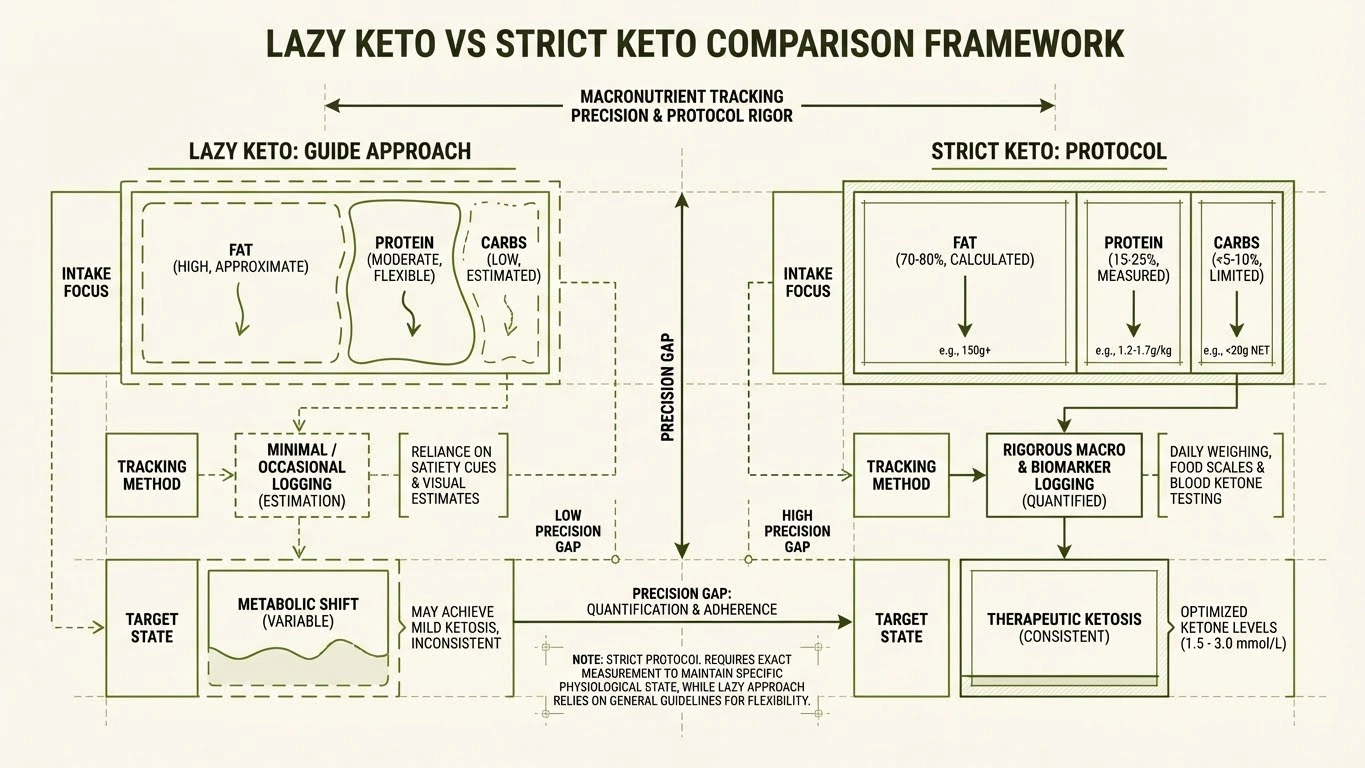
While the convenience of lazy keto is undeniable, there is a significant “precision gap” that clinical practitioners must address. Strict keto involves calculating and tracking all three macronutrients plus total caloric intake. This level of oversight provides several physiological advantages:
- Guaranteed Ketosis: By tracking the fat-to-protein ratio, patients ensure they are providing enough fuel (fats) while avoiding excessive protein.
- Caloric Control: Weight loss ultimately depends on a sustained caloric deficit, which is more easily managed when tracking all macros.
- Nutritional Adequacy: Strict tracking helps prevent the micronutrient deficiencies often seen in restrictive diets.
Conversely, lazy keto dieters may inadvertently consume too much protein or too many calories, which can stall weight loss or prevent the deep state of ketosis required for certain therapeutic benefits. As a physician might observe, lazy keto is a “blunt instrument” compared to the “surgical precision” of a strict protocol.
Why You Must Use a Keto Calculator (Even for Lazy Keto)
Even if you intend to follow a more relaxed approach, it is medically prudent to use a free keto calculator at least once to establish your metabolic boundaries. Relying solely on intuition is often misleading.
- Defining Your Personal Carb Limit: Not everyone enters ketosis at the same threshold. Factors like muscle mass, age, and activity level influence your “carb ceiling”.
- Estimating Protein Requirements: A calculator helps you identify your minimum protein needs to prevent muscle wasting.
- Understanding Caloric Density: Fats are calorically dense (9 kcal/gram). Without a baseline understanding, it is very easy to overconsume energy.
Nutritional Quality: Dirty Keto vs. Clean Keto
Another critical distinction in this lazy keto guide is the quality of the food consumed. This leads us to the debate of dirty keto vs. clean keto.
- Clean Keto focuses on whole, unprocessed foods. This includes grass-fed meats, wild-caught fish, organic leafy greens, and high-quality fats like avocado and olive oil.
- Dirty Keto (often associated with the lazy approach) prioritizes staying within carb limits regardless of food quality. A patient might consume bunless fast-food burgers, processed cheeses, and sugar-free sodas.
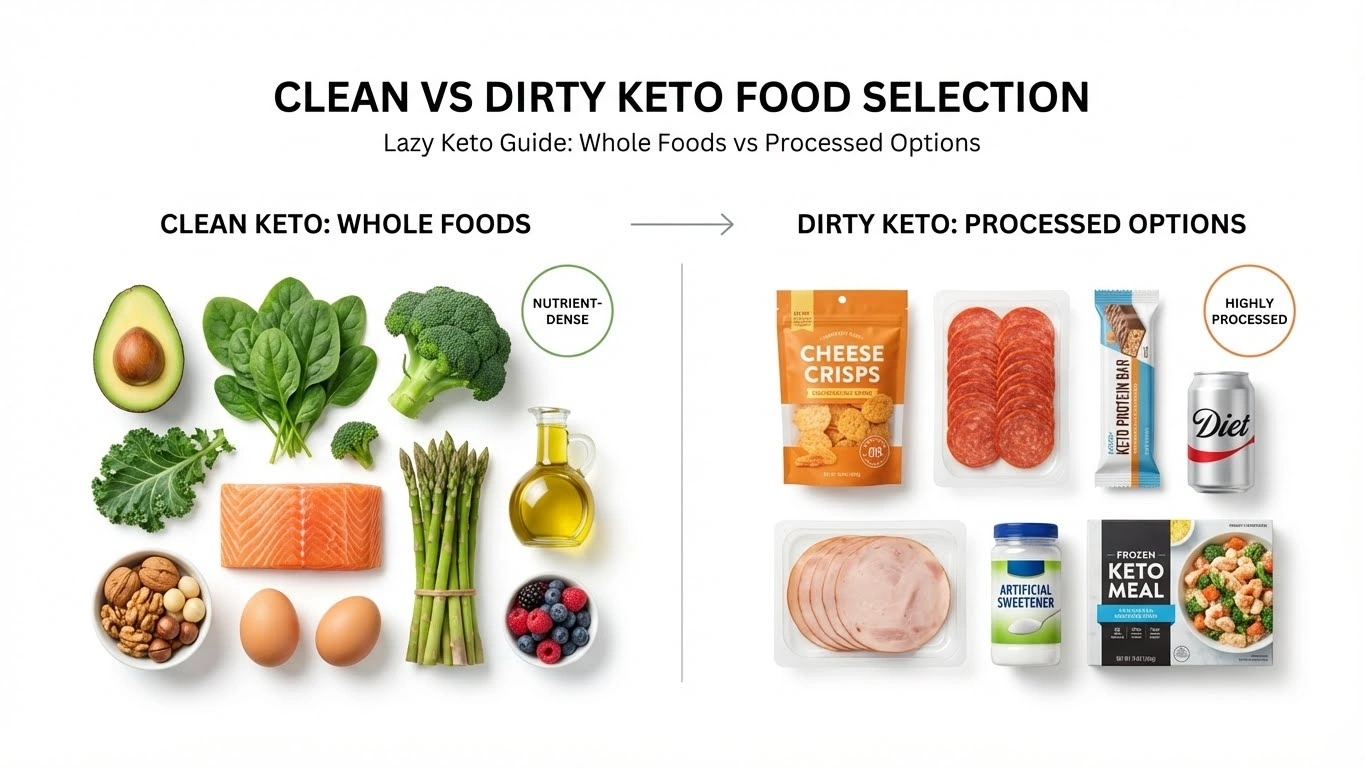
From a clinical standpoint, dirty keto is problematic. Processed meats and inflammatory vegetable oils can lead to systemic inflammation and poor long-term health markers, even if weight loss occurs. Therefore, even if one chooses a “lazy” tracking method, I strongly recommend a “clean” food selection to support cardiovascular and gut health.
The Role of Gluconeogenesis in Lazy Keto
A significant risk for those following a lazy keto guide without tracking protein is a process called gluconeogenesis. When an individual consumes protein in excess of their body’s requirements for tissue repair and enzyme production, the liver can convert those amino acids into glucose.
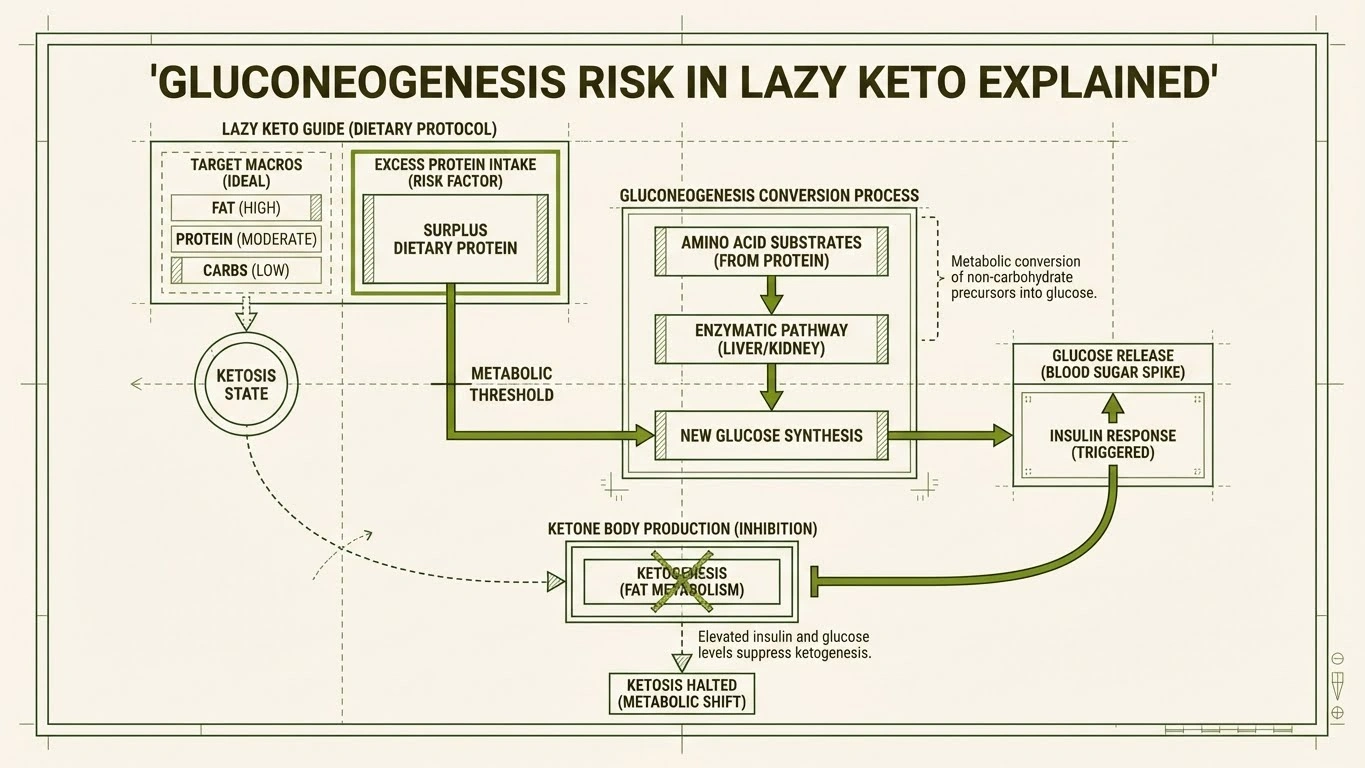
Because lazy keto does not limit protein intake, many patients consume large quantities of meat and eggs. If the resulting glucose production is high enough, it can stimulate an insulin response, thereby inhibiting ketone production and kicking the body out of ketosis. This is why some people on lazy keto experience the “Keto Flu” repeatedly—they are hovering on the edge of ketosis without ever fully adapting.
Comparative Results & Clinical Considerations
When comparing the results of lazy and strict approaches, the outcomes often diverge after the initial “honeymoon phase.”
- Initial Weight Loss: Both groups often see rapid weight loss in the first 7–14 days. This is primarily due to the depletion of glycogen stores, which hold significant amounts of water.
- Middle-Stage Progress: Strict keto users typically maintain a steady rate of fat loss because they are managing caloric deficits and ensuring deep ketosis. Lazy keto users may experience stalls if they find “hidden carbs” in processed foods or overeat fats.
- Mental Clarity and Energy: Those in deep ketosis (often achieved via strict protocols) report superior mental focus and stable energy levels. Lazy keto users may have fluctuating energy if their carb intake is inconsistent.
Side Effects and Risks
Transitioning to a low-carb lifestyle is not without side effects. The most common is the Keto Flu, characterized by headaches, fatigue, and irritability.
- Digestive Issues: A lack of fiber from restricted grains and fruits can lead to constipation.
- Lipid Profiles: While many see improvements in triglycerides and HDL, some individuals (hyper-responders) may see a sharp increase in LDL cholesterol.
- Kidney Health: High protein intake can be taxing for those with pre-existing renal conditions.
A Comprehensive Food List for Success
To ensure that your lazy keto journey remains healthy and productive, focus on the following categories:
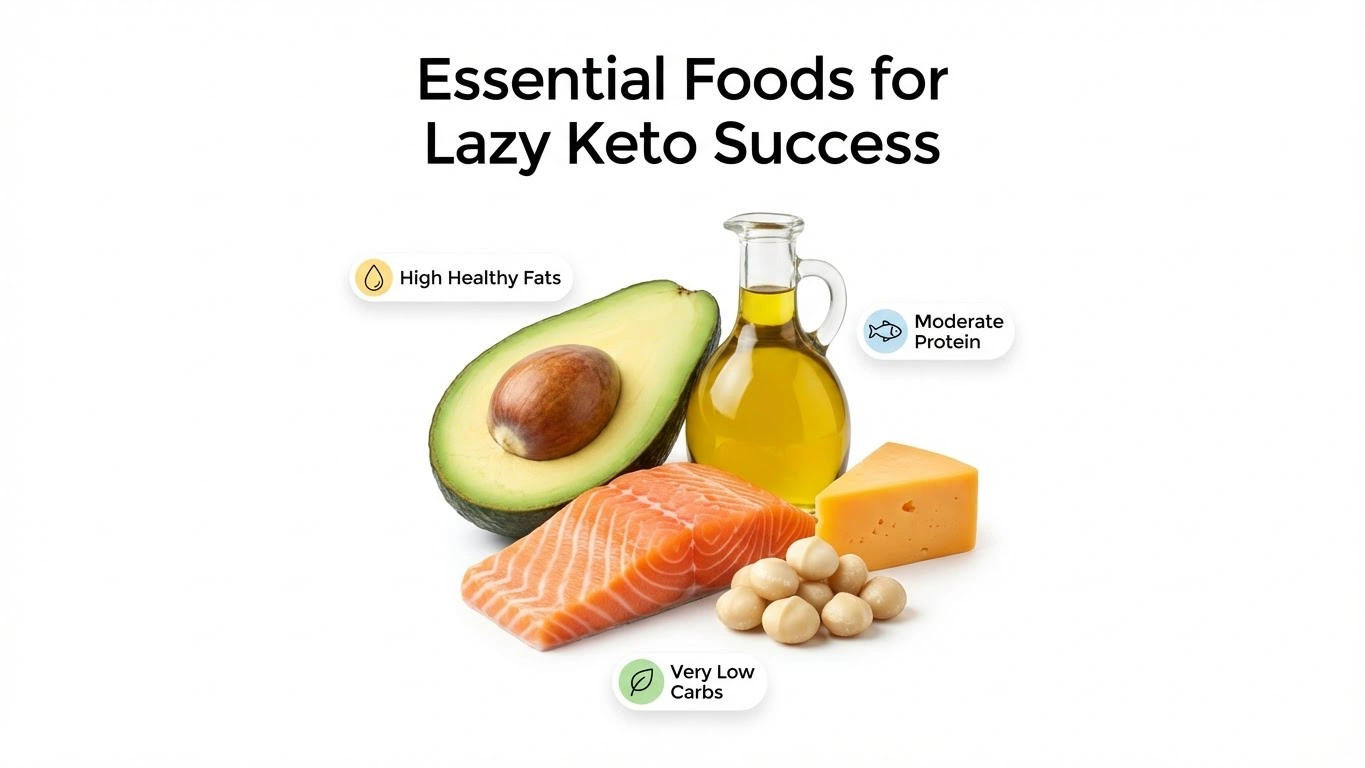
- Proteins (Moderate): Grass-fed beef, poultry with skin, fatty fish (salmon, mackerel), and whole eggs.
- Fats (High): Avocado, extra virgin olive oil, coconut oil, grass-fed butter, and Ghee.
- Non-Starchy Vegetables: Spinach, kale, broccoli, cauliflower, zucchini, and bell peppers.
- Dairy (In Moderation): Hard cheeses (Parmesan, Gouda), heavy cream, and full-fat Greek yogurt.
- Low-Sugar Fruits: Small portions of blackberries, raspberries, and strawberries.
Avoid refined grains (bread, pasta), starchy vegetables (potatoes, corn), high-sugar fruits (bananas, grapes), and legumes.
Is Lazy Keto Right for You?
From a medical perspective, the choice between lazy and strict keto depends on your health goals and personality.
- Lazy Keto is suitable for: Individuals with a history of disordered eating who find tracking stressful, those in a maintenance phase of their diet, or beginners who want to ease into the lifestyle.
- Strict Keto is recommended for: Individuals with significant weight loss goals, type 2 diabetics seeking blood sugar management, or those using keto for therapeutic purposes like epilepsy or neurological support.
Conclusion: The Diagnostic Necessity of the Calculator
While the “lazy” approach offers a psychological reprieve from the rigors of data entry, it does not exempt the body from the laws of thermodynamics and biochemistry. To successfully navigate a ketogenic lifestyle, one must respect the metabolic thresholds of the human body.
Whether you are tracking every macro or simply watching your carbs, utilizing a free keto calculator is an essential diagnostic step. It allows you to move away from guesswork and toward a personalized, science-based approach to health.
Further Reading & Tools
Understand the critical technical knowledge required for the Lazy Keto method.
Establish your personal “carb ceiling” (typically 20-50g) without complex tracking.
A simplified, actionable shopping list to ensure nutritional quality and convenience.
Explore More Resources
For additional information check out these excellent resources on keto and metabolic health: