
Keto for Men vs. Women
The Biological Reality of Gender-Based Ketosis: Why one size does not fit all.
The ketogenic diet has emerged as a powerful therapeutic tool for managing metabolic disorders, obesity, and type 2 diabetes. However, as clinical experience grows, it has become increasingly evident that nutritional physiology is not a “one-size-fits-all” science.
When analyzing keto for men vs. women, we find that biological sex acts as a fundamental determinant of how the body mobilizes fat, regulates hormones, and responds to carbohydrate restriction. While both genders can achieve significant health improvements, the path to ketosis and the resulting male vs. female keto results are shaped by distinct evolutionary adaptations.
Understanding these differences is crucial for anyone using a free keto calculator to set their personal goals. A calculator must account for more than just weight and height; it must recognize the unique metabolic blueprint dictated by gender-specific hormones and body composition.
👇 Adjust Your Activity Level
Find your specific metabolic baseline based on biological sex.
Your Personalized Results
Daily Target
0
kcal / day
The Weight Loss Gap: Why Men and Women Lose Fat Differently
One of the most frequent observations in clinical settings is the weight loss difference that gender profiles exhibit during the initial stages of ketosis. Statistics consistently show that men tend to experience more dramatic and rapid weight loss than women under identical protocols.
In a 45-day clinical trial, for example, men lost an average of 11.63% of their total body weight, whereas women lost 8.95%.
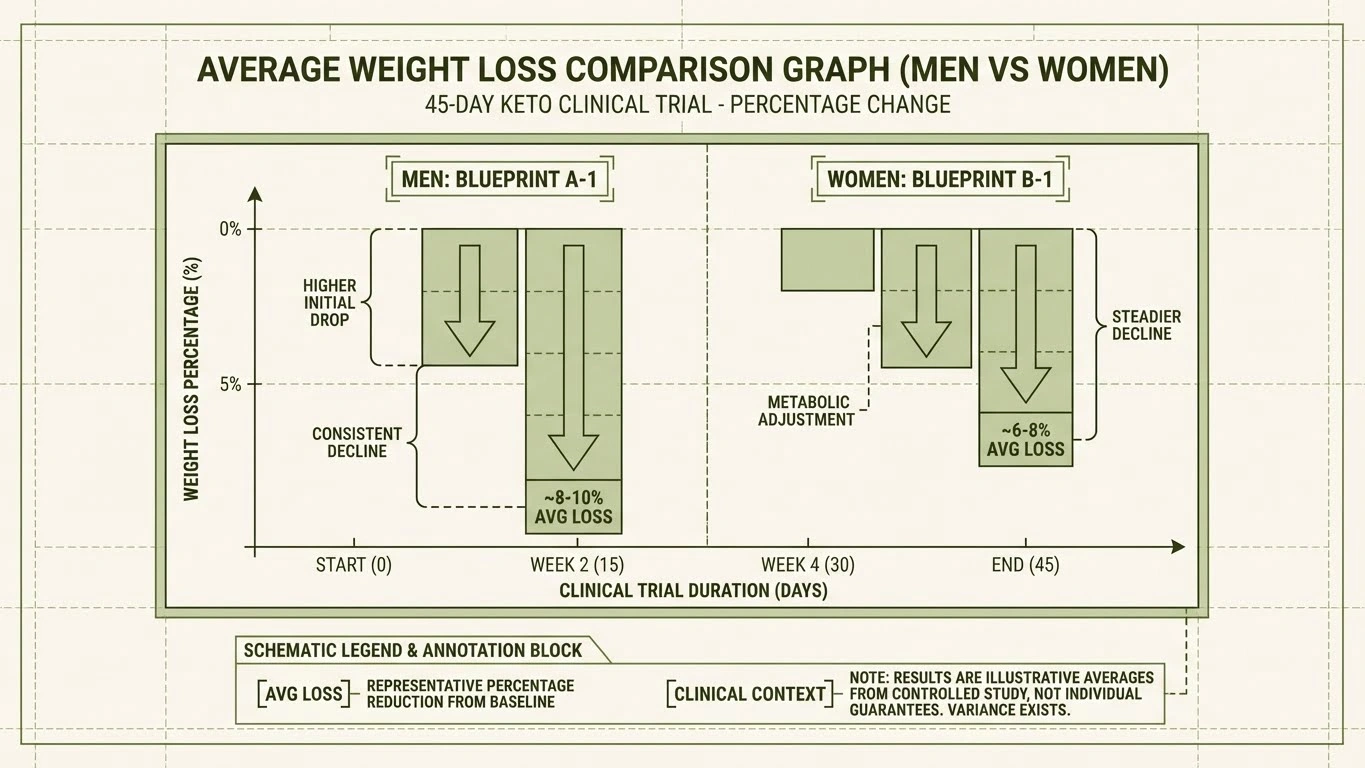
This disparity is not a sign of failure for women but rather a reflection of different physiological priorities. Men are often compared to “high-throughput” engines, while women possess a more “resilient” metabolic system designed to protect reproductive health and energy reserves.
Visceral vs. Subcutaneous Fat Distribution
The primary driver behind the gender weight loss difference is fat distribution. Men typically accumulate visceral fat—the “apple-shaped” profile where fat is stored around the internal organs in the chest and abdomen. Visceral fat is highly metabolically active and more readily mobilized during ketosis for energy.
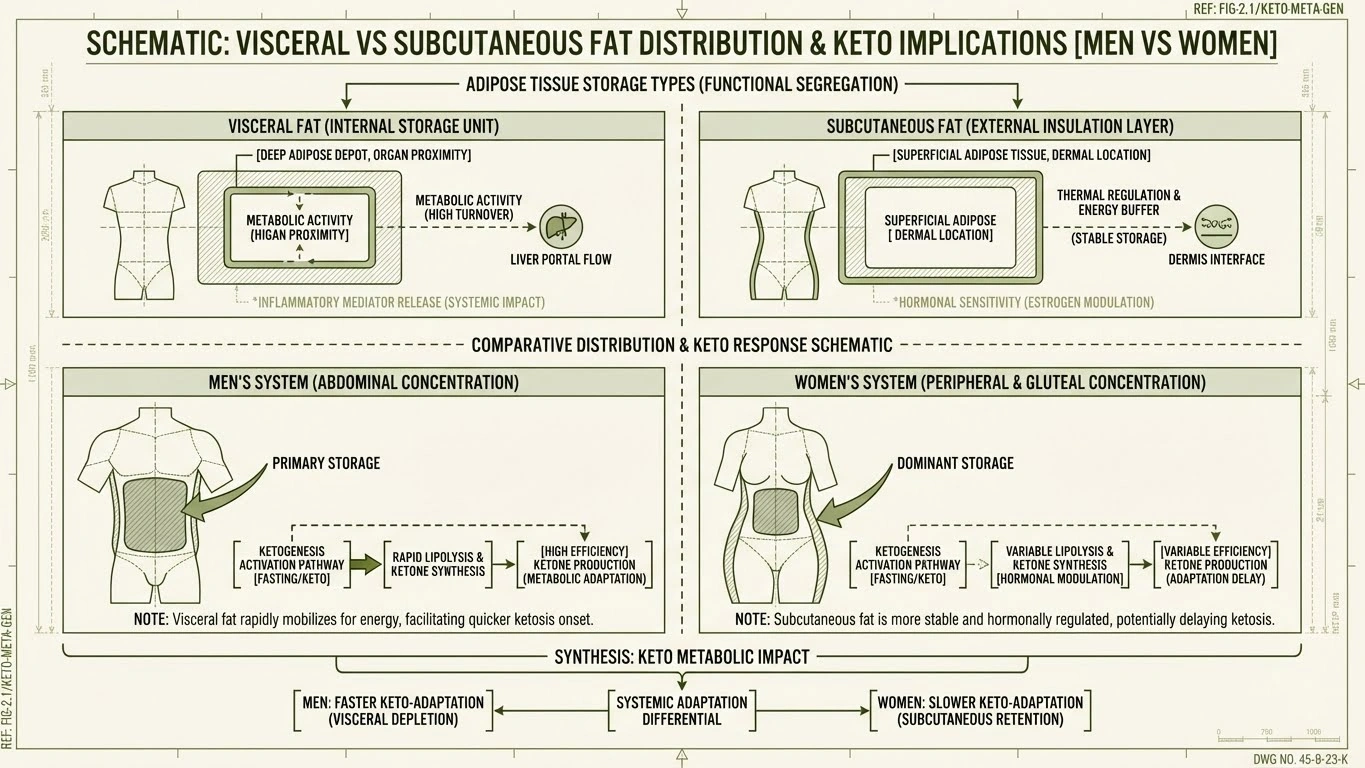
In contrast, premenopausal women generally store more subcutaneous fat—the “pear-shaped” profile where fat is held under the skin in the hips, thighs, and breasts. Subcutaneous fat is metabolically slower and acts as a “metabolic sink,” receiving and sequestering excess lipids rather than burning them rapidly.
Muscle Mass as a Metabolic Engine
Another significant factor in keto for men vs. women is the difference in skeletal muscle mass. Muscle is a metabolically expensive tissue that requires significant energy even at rest. Since men typically possess higher muscle mass starting from puberty, their basal metabolic rate (BMR) is naturally higher, facilitating a greater caloric burn.
In the context of a keto calculator, this means that a man’s “activity level” might lead to a higher caloric requirement compared to a woman of the same weight, simply because his “metabolic engine” is larger.
Hormonal Orchestration: Testosterone and Estrogen
The response to the ketogenic diet is heavily moderated by the endocrine system. The interplay between sex hormones and fat metabolism creates distinct clinical implications for each gender.
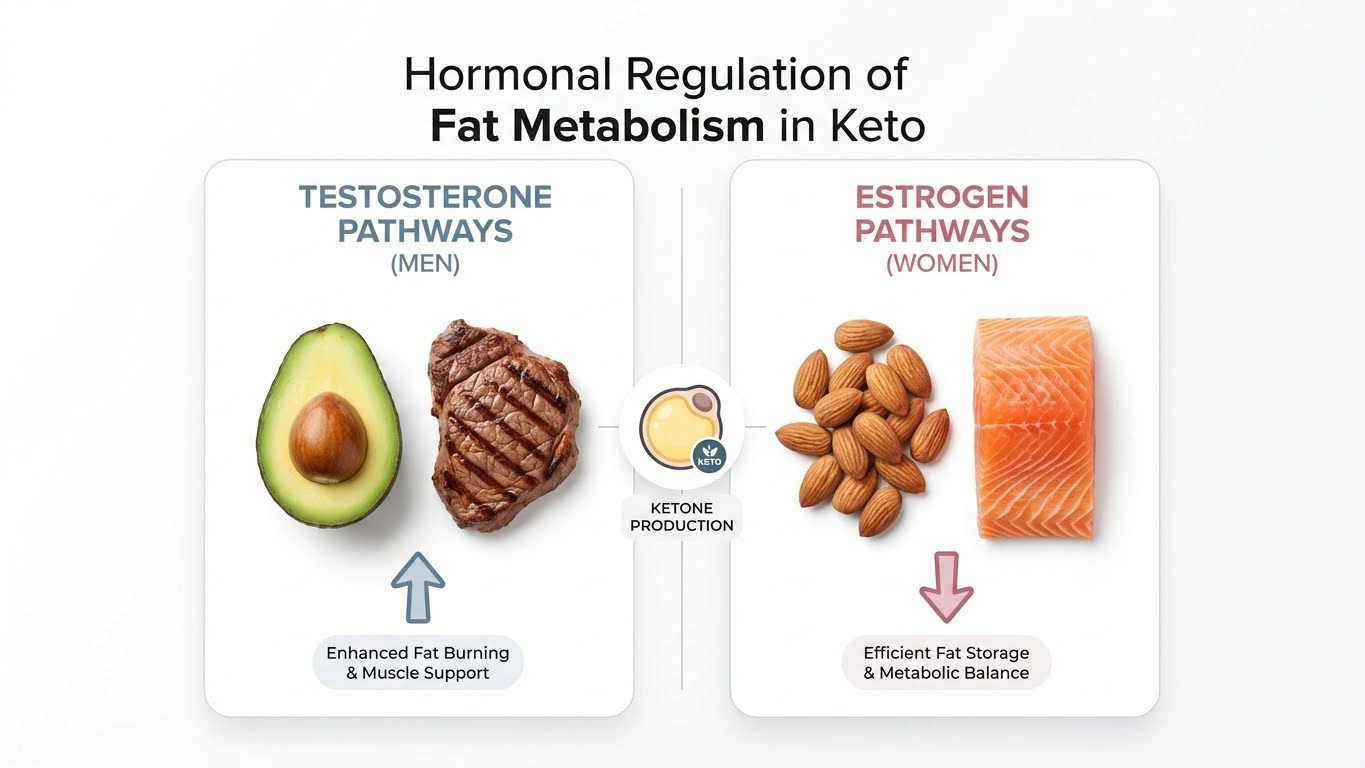
Testosterone: The Male Advantage
In men, testosterone is a central player in lipid metabolism. It enhances fat-burning processes by promoting lipolysis. Clinical research indicates that a well-formulated ketogenic diet can actually boost testosterone levels in men, creating a “virtuous cycle” for fat loss.
Estrogen: The Female Protective Mechanism
For women, estrogen facilitates fat turnover but also protects against the potentially damaging effects of metabolic stress. When estrogen is blocked or absent (post-menopause), women’s bodies respond to keto more like men’s bodies, showing faster fat loss but increased markers of cellular stress.
Stress Sensitivity: Why Women Need a More Flexible Approach
Women are significantly more susceptible to changes in leptin, the “satiety” hormone. Ketosis lowers insulin, which lowers leptin. Levels that drop too low can signal to a woman’s brain that the environment is “unsafe” for reproduction.
This “safety” signal is processed by the hypothalamus and can lead to increased cortisol, thyroid suppression, and cycle disruptions.
Cortisol and “Adrenal PCOS”
For women with “Adrenal PCOS”, stress drives high androgen levels. A strict ketogenic diet that raises cortisol might exacerbate symptoms like fatigue and anxiety.
Adjusting the Free Keto Calculator: The Role of “Activity Level”
Because women have a higher percentage of slow-twitch muscle fibers and lower overall mass, they may burn fewer calories during a workout than expected. Many women tend to overestimate their “Activity Level”.
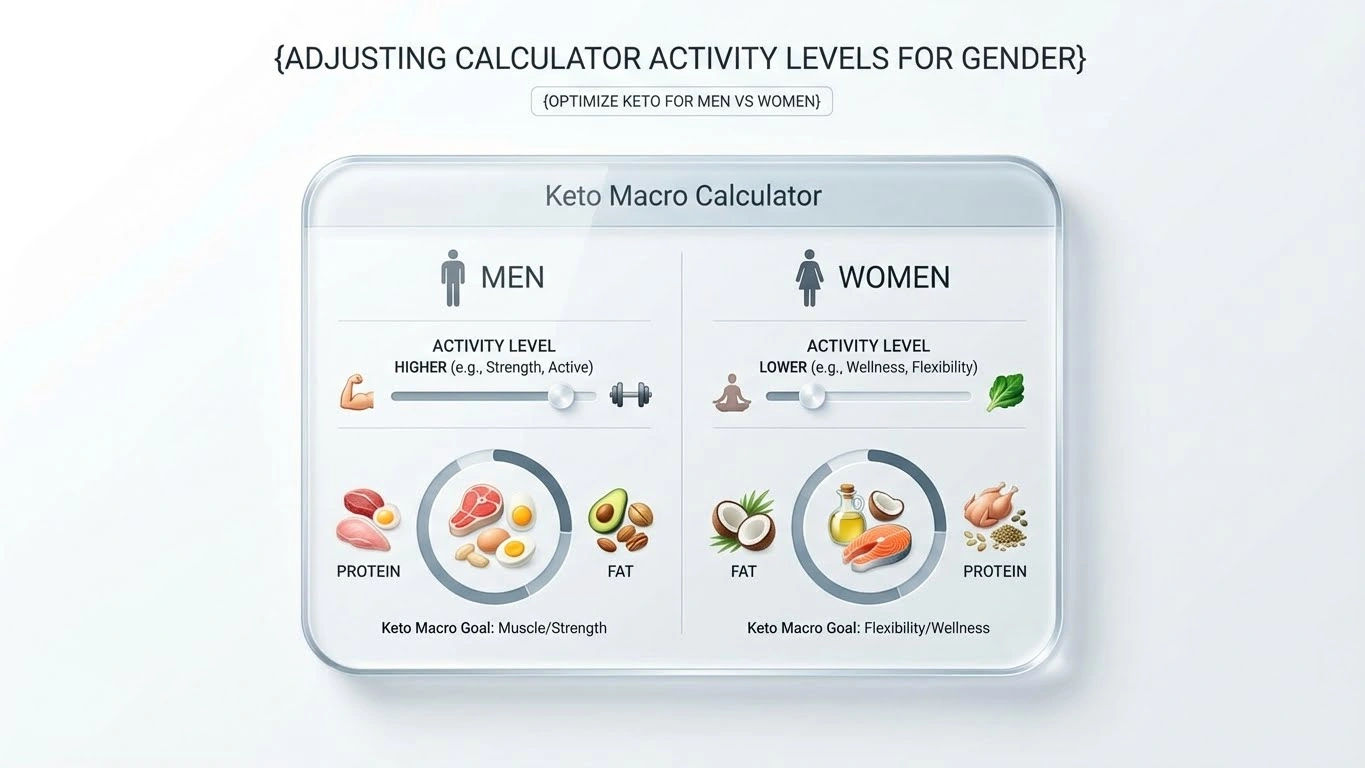
Clinical Recommendation for Women:
- Set the calculator to “Sedentary” or “Lightly Active” even if exercising moderately.
- Focus on strength training to bridge the metabolic gap.
Targeted Strategies for Success
Recommendations for Men
- Focus on Visceral Fat: Monitor waist circumference as a primary success indicator.
- Prioritize Protein: To maintain muscle mass and testosterone.
- Intermittent Fasting: Men respond well to 16:8 protocols.
Recommendations for Women
- Consider “Medium Carb” Phases: Instead of strict keto, a 40% carb / 30% protein / 30% fat approach may work better.
- Carb Cycling: Increase complex carbs during the luteal phase of the cycle.
- Manage Stress: Sleep hygiene is critical due to cortisol sensitivity.
Clinical Conclusion
The evidence is clear: keto for men vs. women is a distinct experience driven by fat distribution, muscle mass, and hormonal regulation. Men often enjoy the “fast lane” of visceral fat loss, while women must navigate a more complex route balancing hormonal safety.
Biological individuality is not a hurdle; it is a roadmap. By understanding your unique needs, whether you are a man looking to maximize testosterone or a woman seeking to balance hormones, you can tailor the ketogenic lifestyle to work for you—not against you.
Further Reading & Tools
Deep dive into hormonal challenges like Adrenal PCOS and cycle adjustments.
Adjust your “Activity Level” inputs based on gender-specific needs.
Actionable steps to troubleshoot stalls caused by metabolic adaptation.
Explore More Resources
For additional information check out these excellent resources on keto and metabolic health: