
Blood vs. Urine vs. Breath: Ketone Testing Accuracy Guide
Accuracy comparison, cost per test, and which method is right for your situation
Quick Answer: Which Ketone Testing Method Is Most Accurate?
Blood ketone meters are the most accurate method. They measure beta-hydroxybutyrate (BHB) directly in the blood with approximately ±10–15% variance versus laboratory values. Urine strips are reliable for the first 2–4 weeks of keto only — they become unreliable after fat-adaptation. Breath analyzers measure acetone trends with ±20–25% variance versus blood BHB, which is useful for directional monitoring but not clinical precision.
All three methods detect different ketone markers. Blood meters measure beta-hydroxybutyrate — the primary ketone fuel circulating in your bloodstream. Urine strips detect acetoacetate being excreted by the kidneys. Breath analyzers detect acetone in exhaled air. Each marker tells a different part of the metabolic story, and each method has a different accuracy ceiling.
For diabetics monitoring DKA risk, or anyone correlating specific mmol/L targets with their calculated macros, only blood testing provides the precision needed to make those correlations meaningful. For trend-checking without needles, breath devices offer a practical alternative. Urine strips are a useful starting tool — and become unreliable after fat adaptation. The comparison table below breaks this down side by side.
Blood vs. Urine vs. Breath: Side-by-Side Accuracy Comparison
The table below compares all three ketone testing methods by accuracy, cost, and practical use. Accuracy figures represent variance compared to laboratory serum BHB values.
| Method | What It Measures | Accuracy | Best For | Main Limitation | Cost Per Test |
|---|---|---|---|---|---|
| Blood ketone meter | Beta-hydroxybutyrate (BHB) in capillary blood | ±10–15% vs lab — clinical gold standard | Precision tracking, diabetes management, DKA risk monitoring | Requires finger prick; strips cost $1.00–$1.50 each | $1.00–$1.50 |
| Urine ketone strips | Acetoacetate (AcAc) excreted in urine | Semi-quantitative — color scale only, no mmol/L reading | First 2–4 weeks of keto; budget screening | Unreliable after fat-adaptation; skewed by hydration level | $0.10–$0.30 |
| Breath ketone analyzer | Acetone concentration in exhaled breath | ±20–25% vs blood BHB | Long-term trend tracking; no blood required | Affected by alcohol, food, and calibration drift over time | ~$0.05–$0.15 after device purchase |
Which Ketone Testing Method Is Most Accurate?
Short answer: Blood ketone meters. They measure BHB — the active ketone fuel — directly in the blood and correlate most closely with laboratory serum values at ±10–15% variance. Urine strips are semi-quantitative and become unreliable after keto-adaptation. Breath analyzers measure acetone trends with ±20–25% variance versus blood BHB.
Among the three available methods for home ketone testing, blood ketone meters consistently demonstrate the closest correlation to laboratory-measured BHB values. These devices measure beta-hydroxybutyrate — the predominant, biologically active ketone circulating in your bloodstream — and deliver a quantitative mmol/L reading within seconds.
Urine strips do not measure BHB at all. They detect acetoacetate in the urine — a ketone produced earlier in the metabolic process. In the first weeks of a ketogenic diet, urine acetoacetate is elevated because the body has not yet adapted to using ketones efficiently. Once fat-adaptation occurs (typically within 3–6 weeks), the kidneys reduce acetoacetate excretion as the body becomes more efficient at converting it to BHB for fuel. This is why experienced keto practitioners often see weaker strip results despite being in deep nutritional ketosis — it signals adaptation, not failure.
Breath analyzers measure acetone, a volatile by-product of acetoacetate breakdown. Acetone does correlate with fat oxidation rates, but it is not a direct measure of blood BHB. The relationship between breath acetone and blood BHB is not consistently linear, and variables including recent alcohol consumption, certain foods, and sensor calibration drift can cause ±20–25% variance compared to blood testing.
For anyone using a keto calculator to set specific macro targets and wanting to verify their metabolic response, blood testing is the only option that delivers the data precision to make those correlations meaningful. For general trend monitoring without needles, a quality breath device is a reasonable long-term alternative.
👇 Calculate Your Keto Macros
Before measuring, know your targets. Calculate your keto macros here.
Your Personalized Results
Daily Target
0
kcal / day
The Physiology of Ketones: What Are We Actually Measuring?
Your body produces three types of ketones — acetoacetate, beta-hydroxybutyrate (BHB), and acetone. Each testing method detects a different one, which is why accuracy varies between blood, urine, and breath tests.
To understand measuring ketosis accurately, one must first understand the underlying biochemistry. When the body restricts carbohydrates or undergoes fasting, insulin levels drop, triggering the liver to break down fatty acids. This process, known as ketogenesis, results in the production of three distinct types of ketone bodies. Each testing method detects a different ketone, which significantly influences the accuracy and relevance of the results.
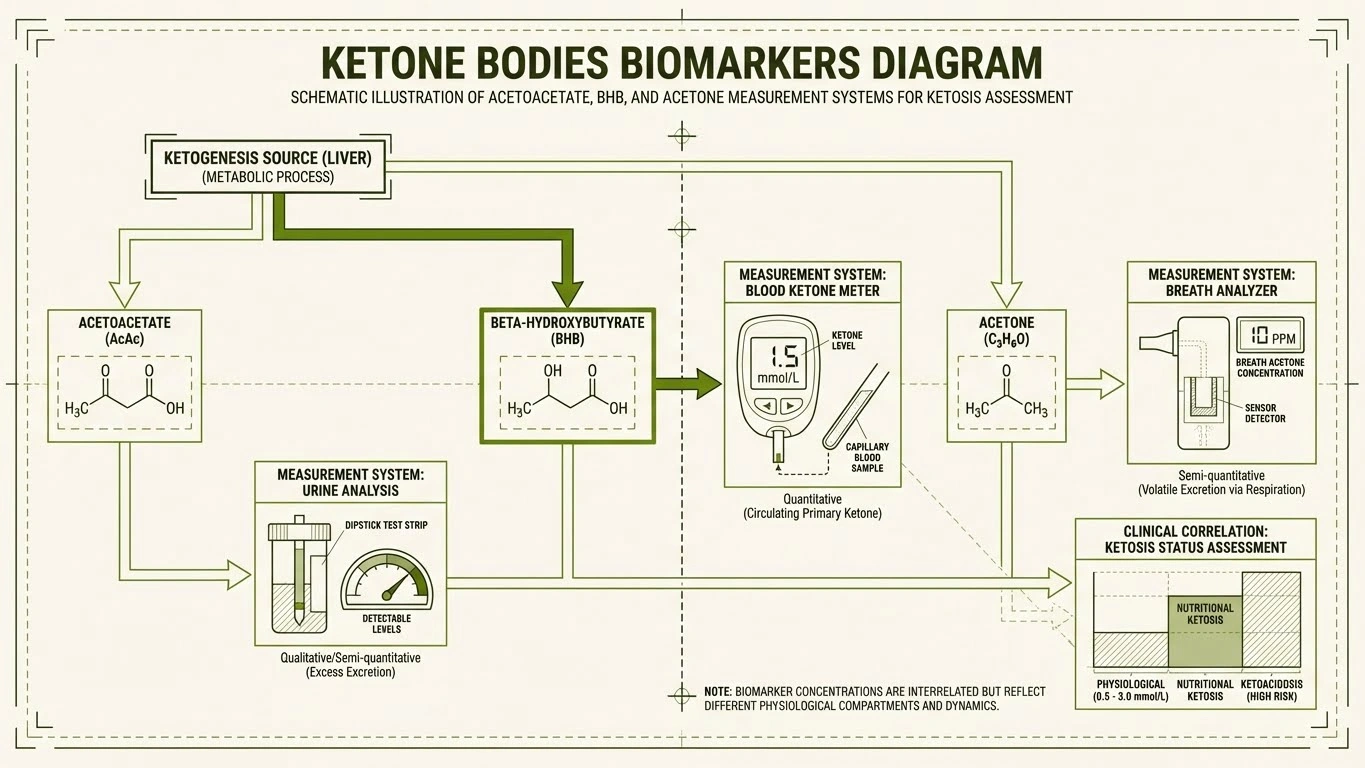
- Acetoacetate (AcAc): This is the first ketone produced by the liver. It is excreted in the urine when concentrations in the blood exceed the renal threshold. This is the marker detected by urine strips.
- Beta-hydroxybutyrate (BHB): This is the predominant and most stable ketone body circulating in the blood. It represents approximately 70% of the available ketone energy and is the primary fuel source for the brain and muscles during ketosis. This is the marker measured by a blood ketone meter.
- Acetone: This is a byproduct of the breakdown of acetoacetate. Because it is volatile and small in molecular size, it diffuses into the lungs and is exhaled. This is the marker detected by breathalyzers.
Understanding this distinction is vital because measuring ketosis via these different markers provides different snapshots of your metabolic state. For a deeper look at what ketosis is and how it works, including the full ketone production pathway, see the dedicated guide.
Method 1: Urine Test Strips (Acetoacetate)
Urine strips detect acetoacetate and are reliable for the first 2–4 weeks of keto. After fat-adaptation, the body uses ketones more efficiently and excretes less in urine — so strips often show weak results even during deep ketosis.
For most beginners, urine strips are the entry point into measuring ketosis after restricting net carbs. They rely on a chemical reaction — specifically the nitroprusside reaction — which causes the paper strip to change color in the presence of acetoacetate.
Ketone Strips Accuracy and Limitations
While popular due to their low cost, ketone strip accuracy is heavily debated in the medical community for long-term use. Urine strips provide a semi-quantitative measure, usually indicated by color changes ranging from beige (negative) to deep purple (high ketones).
However, the presence of acetoacetate in the urine represents excreted energy, not necessarily usable energy. In the early stages of a ketogenic diet, the body produces excess acetoacetate but is not yet efficient at using it, leading to strong positive results on urine strips. As the body becomes “fat-adapted” (usually after a few weeks), it converts acetoacetate more efficiently into beta-hydroxybutyrate (BHB) for fuel. Consequently, you may be in deep nutritional ketosis, yet your urine strips may show a negative or trace result because you are no longer wasting ketones in your urine.
Furthermore, hydration status significantly impacts ketone strip accuracy. Dehydration concentrates the urine, potentially causing a false positive for high ketones, while excessive water intake can dilute the sample, leading to a false negative. Additionally, the result reflects an average of ketone accumulation in the bladder since the last void, rather than a real-time measurement of your current metabolic state.
Cost and Usability
- Cost: This is the most economical method. A bottle of 50 to 100 strips typically costs between $7 and $15.
- Usability: Non-invasive and simple. Requires dipping the strip in urine and waiting 15–40 seconds for a color change.
Practical takeaway
Urine strips are a cost-effective qualitative tool for the first 2–4 weeks of a ketogenic diet. They are less useful for long-term monitoring of nutritional ketosis or for athletes requiring precise data.
Method 2: Blood Ketone Meters (Beta-hydroxybutyrate)
Blood ketone meters measure BHB directly and are the most accurate home method, with approximately ±10–15% variance versus laboratory values. They provide quantitative mmol/L readings in seconds.
The blood ketone meter is widely regarded as the gold standard for measuring ketosis at home. These devices work similarly to glucose meters used by diabetics: a small drop of capillary blood is drawn via a finger prick and applied to an electrochemical test strip.
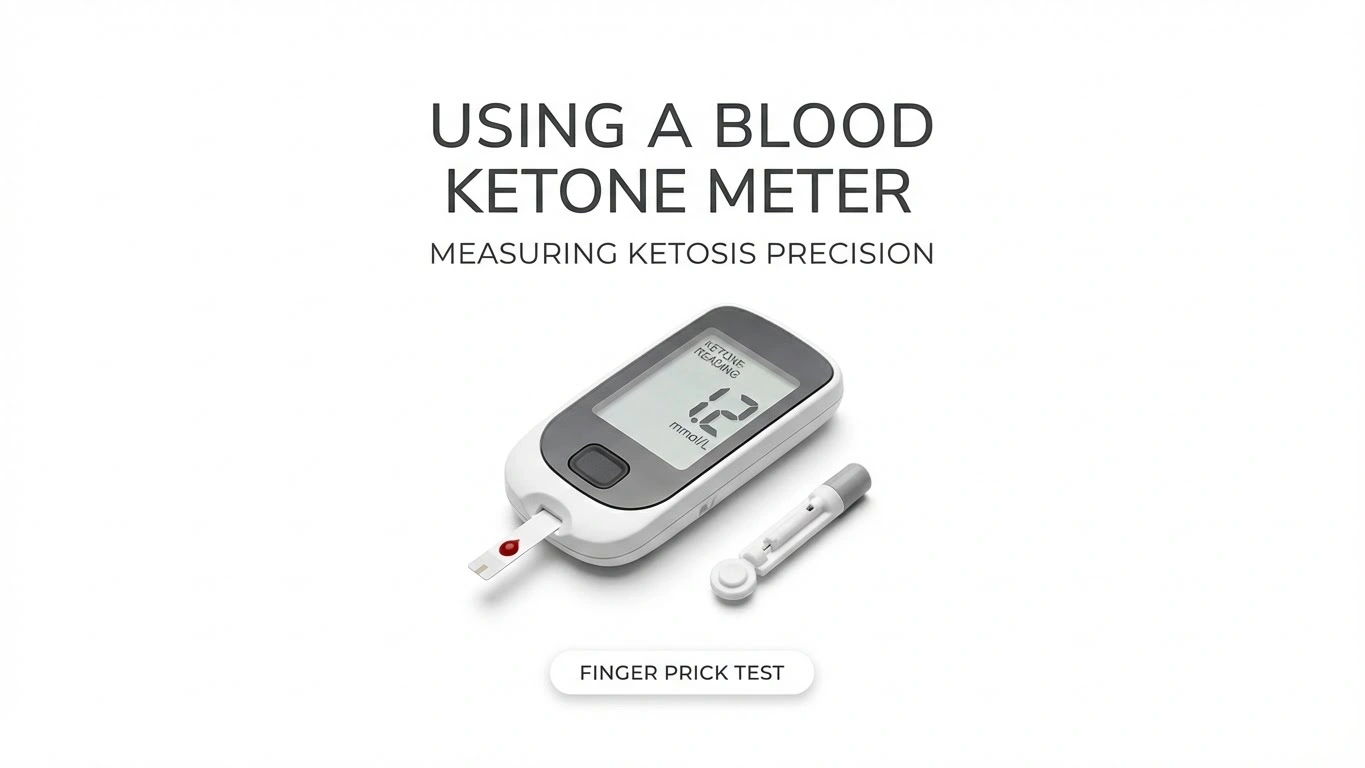
The Precision of the Blood Ketone Meter
A blood ketone meter measures beta-hydroxybutyrate (BHB), the active fuel source circulating in your veins. Unlike urine strips, which measure waste, blood meters measure the actual energy available to your cells at that exact moment.
Studies indicate that point-of-care blood ketone meters generally show strong correlation with laboratory serum values, particularly for assessing metabolic states like diabetic ketoacidosis (DKA) or nutritional ketosis. They tend to produce fewer false positives compared to urine testing.
For users who demand precision, the blood ketone meter offers quantitative data (measured in mmol/L) rather than subjective color ranges. This allows for the tracking of subtle changes in metabolism caused by specific foods or exercise.
However, users should be aware of potential interference. High doses of Vitamin C (ascorbic acid) can interfere with the electrochemical sensors in some meters, potentially causing falsely high or low readings depending on the device brand.
Cost and Usability
- Cost: The device itself is moderately priced ($30–60), but the ongoing cost is significant. Test strips can cost between $1.00 and $1.50 per test. Frequent testing can become expensive.
- Usability: Invasive. Requires a lancet (finger prick). Results are available in seconds.
Practical takeaway
The blood ketone meter provides the most accurate, real-time data for measuring ketosis. It is the preferred method for therapeutic ketosis management and for diabetics monitoring for ketoacidosis.
Method 3: Breath Ketone Analyzers (Acetone)
Breath analyzers measure acetone in exhaled air with ±20–25% variance versus blood BHB. They are non-invasive and cost-effective long-term, but are best for trend tracking rather than precise mmol/L measurements.
Breath testing represents a non-invasive alternative for measuring ketosis by detecting acetone in exhaled air. Acetone is a breakdown product of acetoacetate and correlates with the rate of fat oxidation.
Accuracy and Sensitivity Issues
Breath meters use sensors (often metal oxide semiconductor sensors) to detect volatile organic compounds (VOCs). While convenient, these sensors are prone to interference. Variables such as alcohol consumption, chewing gum, mints, and even toothpaste can distort readings, often leading to false positives.
Furthermore, the correlation between breath acetone and blood BHB is not perfectly linear. While breath acetone is a good indicator of fat burning, it may lag behind changes in blood ketones. Some users find that breath meters are consistent relative to themselves (if you are higher today than yesterday, you are likely deeper in ketosis), but they may not perfectly match the “gold standard” numbers from a blood ketone meter.
Calibration is another factor. High-end devices require periodic calibration to maintain accuracy, while cheaper models may lose sensitivity over time or “drift,” making them less reliable for long-term tracking.
Cost and Usability
- Cost: High upfront investment ($50 to $250+ depending on the model), but zero ongoing cost for strips. This makes it cheaper in the long run for someone who tests multiple times a day.
- Usability: Completely non-invasive. Requires blowing into a tube for a set duration. Some devices require app connectivity.
Practical takeaway
Breathalyzers are useful for trends and motivation but lack the clinical precision of blood testing. They are ideal for users who dislike needles and want to track general fat-burning trends rather than specific mmol/L values.
Comparative Analysis: Accuracy vs. Cost
Blood meters offer the highest accuracy at the highest per-test cost. Breath analyzers are cheapest long-term but less precise. Urine strips are the lowest-cost entry point but become unreliable after fat-adaptation.
The side-by-side accuracy comparison table near the top of this article gives the full quantitative breakdown. The summary below covers the practical trade-offs between price and precision when choosing a method for everyday use.
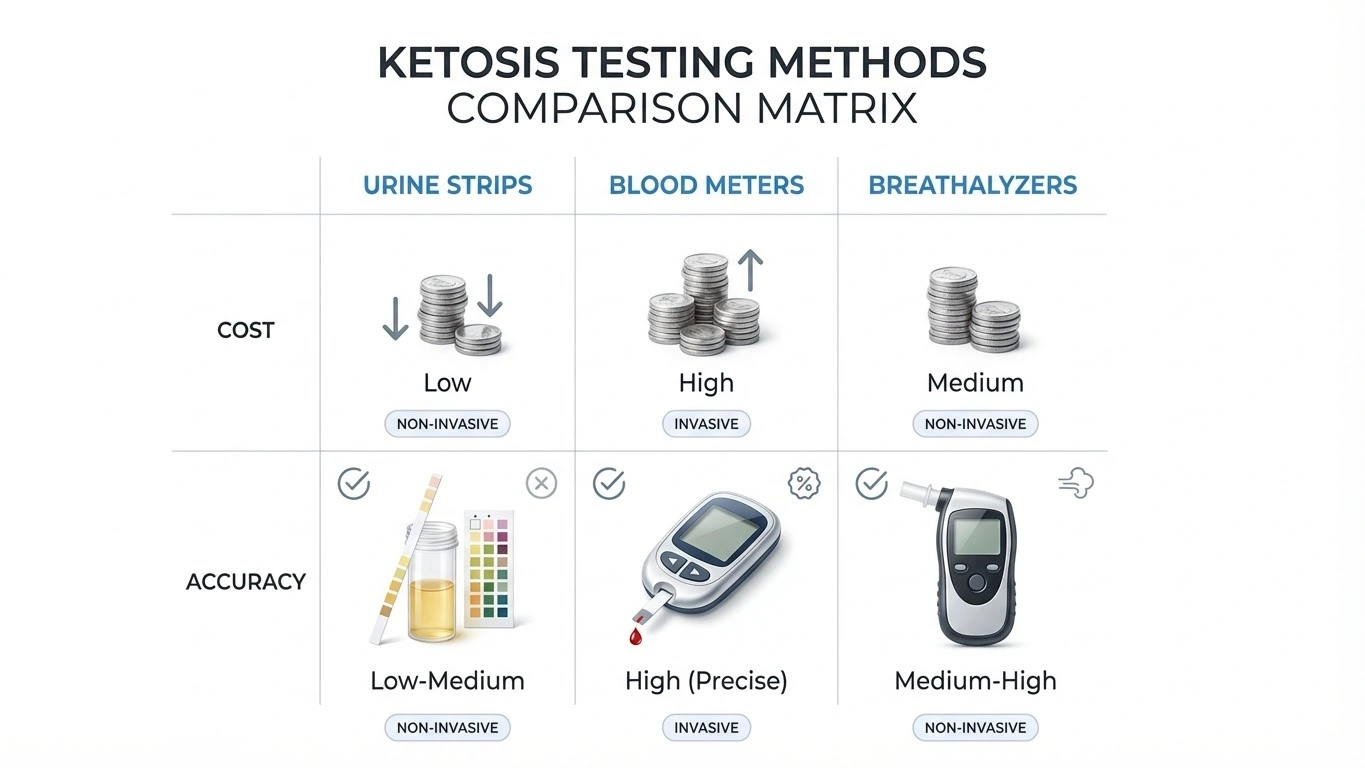
- Urine Strips: Low Accuracy (Subjective), Non-Invasive, Poor Long-term Utility, Low Upfront/Ongoing Cost.
- Blood Ketone Meter: High Accuracy (Gold Standard), Invasive, Excellent Long-term Utility, Medium Upfront Cost / High Ongoing Cost.
- Breathalyzer: Moderate Accuracy (Variable), Non-Invasive, Good Long-term Utility, High Upfront Cost / No Ongoing Cost.
For a user who uses a keto calculator to dial in specific macros, the blood ketone meter offers the data fidelity required to see if 25g vs. 30g of carbohydrates impacts your specific metabolic state. Urine strips simply cannot offer this granularity.
Interpreting the Numbers: What Do the Data Mean?
Nutritional ketosis is generally defined as blood BHB between 0.5 and 3.0 mmol/L. The range most associated with fat-burning and cognitive benefits is 1.0–3.0 mmol/L. Levels above 3.0 mmol/L with elevated blood glucose may indicate DKA — a medical emergency.
Effectively measuring ketosis requires understanding the reference ranges. The concentration of ketones in the blood is measured in millimoles per liter (mmol/L).
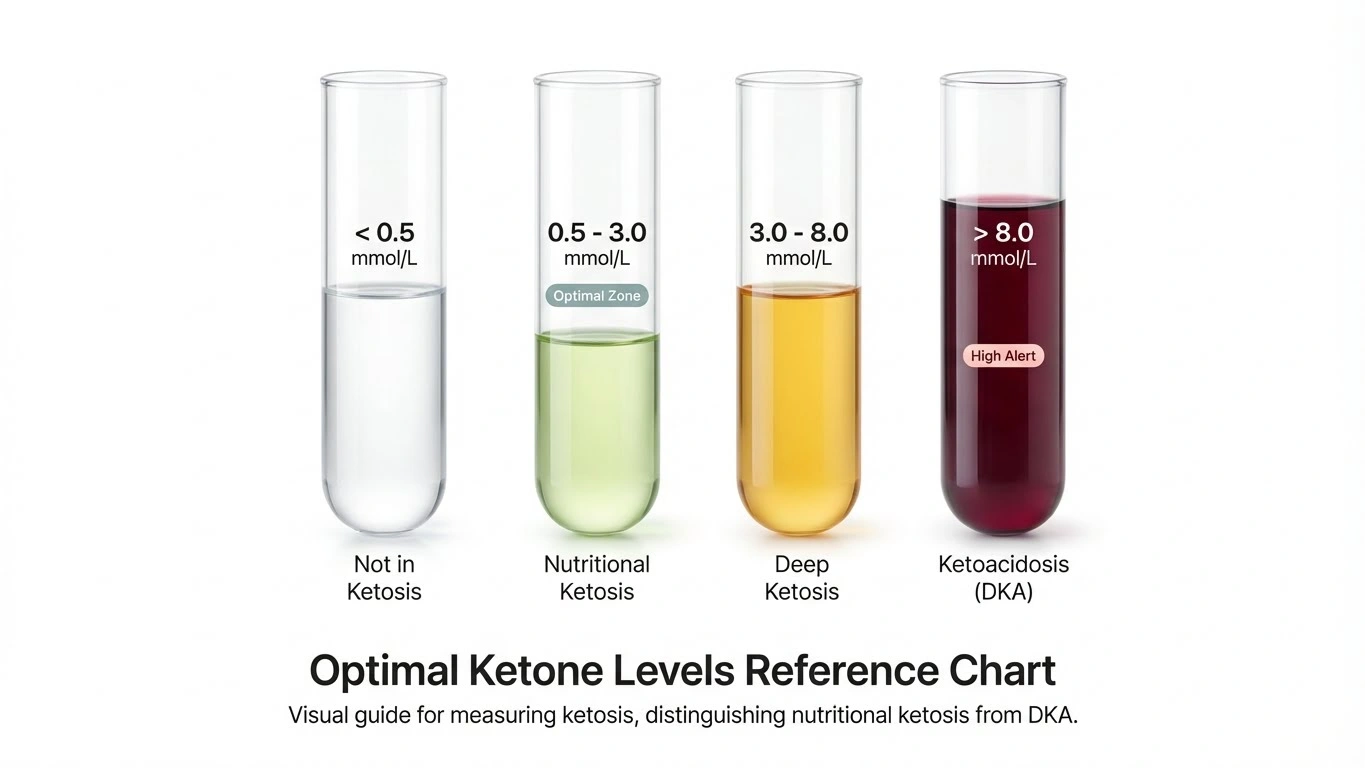
- < 0.5 mmol/L: Negative or trace ketosis. This is the “normal” state for someone on a standard high-carbohydrate diet.
- 0.5 – 1.0 mmol/L: Light nutritional ketosis. This level is often seen when starting the diet or during mild fasting.
- 1.0 – 3.0 mmol/L: Optimal nutritional ketosis. This range is generally associated with effective fat burning, potential cognitive benefits, and weight management support.
- > 3.0 mmol/L: Deep ketosis / Starvation ketosis. Often seen in prolonged fasting or therapeutic keto protocols for epilepsy.
- > 10.0 mmol/L: Diabetic Ketoacidosis (DKA) risk. Note: this is a medical emergency primarily relevant to type 1 diabetics.
A Critical Note on DKA vs. Nutritional Ketosis
It is important to distinguish between nutritional ketosis and diabetic ketoacidosis (DKA). Nutritional ketosis is a controlled, adaptive state. DKA is a dangerous condition involving uncontrolled ketone production combined with high blood sugar and high acidity (pH < 7.3).
If you are a diabetic and your blood ketone meter reads above 3.0 mmol/L while your blood glucose is also high (>250 mg/dL or 13.9 mmol/L), this suggests a dangerous lack of insulin. In such cases, measuring ketosis is not a diet tool but a survival mechanism; immediate medical attention is required. Urine strips can also be used here as a screening tool, but blood testing is superior for preventing hospitalization.
Which Ketone Test Is Best for Diabetics and DKA Monitoring?
Short answer: Blood ketone meters only. DKA requires knowing your BHB in mmol/L — a reading urine strips cannot provide and breath analyzers cannot detect. If blood BHB exceeds 3.0 mmol/L with blood glucose above 250 mg/dL, seek medical attention immediately.
For type 1 diabetics: blood ketone meters are the clinically recommended method for DKA screening. The difference between diabetic ketoacidosis and nutritional ketosis is critical — DKA involves uncontrolled ketone production combined with insufficient insulin and elevated blood glucose. The threshold that typically requires urgent attention is blood BHB above 3.0 mmol/L combined with blood glucose above 250 mg/dL (13.9 mmol/L). Only a blood ketone meter provides the BHB reading needed to assess this at home.
Can urine strips detect DKA? Urine strips can indicate very high ketone excretion — the darkest color bands correspond to significant ketonuria. However, they measure acetoacetate concentration at the time of the last void, not real-time blood levels, and cannot provide the specific mmol/L values that DKA thresholds require. They may also miss early-stage DKA. Blood ketone testing is recommended for DKA screening when available.
Can breath analyzers detect DKA? No. Breath analyzers measure acetone, not BHB. They are not calibrated or validated for DKA detection and must not be used for this purpose by diabetics.
For more context on how keto interacts with diabetes management, see the guide to keto and type 2 diabetes: benefits and risks.
Medical Disclaimer
This information is educational and does not substitute for the guidance of a physician or diabetes care specialist. Diabetics considering a ketogenic diet should consult their healthcare provider before making any dietary changes. Calculator outputs on this site are educational estimates, not medical prescriptions.
Non-Invasive Ketone Monitoring Without Finger Pricks
For users who want to avoid blood draws entirely, breath ketone analyzers are the most established non-invasive alternative. Consumer devices such as the Biosense Breath Ketone Monitor measure acetone in exhaled breath using electrochemical sensors and report results in ACEs (Acetone Count Equivalents) rather than mmol/L — which makes direct comparison to blood BHB data difficult but allows consistent trend tracking over time.
Wearable and transdermal ketone sensors are under active development as of 2026. Several research-stage devices aim to detect ketones through skin without finger pricks or breath samples — but no commercially available wearable ketone sensor has been validated for clinical accuracy at the time of writing.
What this means practically: If you need precision data — for therapeutic keto, diabetes management, or verifying specific mmol/L targets against your calculated macros — blood testing is the only validated option. If trend monitoring without needles is sufficient and you are not managing a medical condition, a quality breath device is a reasonable long-term choice. It will tell you whether ketone production is trending up or down, but not your exact mmol/L value.
Factors That Influence Ketone Readings
Ketone readings can vary based on time of day, recent exercise, alcohol intake, and hydration level. Test under consistent conditions — same time, same fasting state — for the most comparable results.
When measuring ketosis, external variables can skew your data. For the most reliable readings, try to control for these factors:
- The “Dawn Phenomenon”: Ketone levels are often lowest in the morning due to the natural rise in cortisol and glucose upon waking. Do not be discouraged if your morning numbers are lower than your evening numbers. If you are also experiencing fatigue or headaches during early keto, see the guide on keto flu symptoms and remedies.
- Exercise: Post-workout readings can be paradoxical. Anaerobic exercise (like heavy lifting) can temporarily raise blood glucose and lower ketones, while aerobic exercise tends to deplete glycogen and raise ketones.
- Alcohol: As mentioned, alcohol can cause false positives in breath meters. It also temporarily halts fat burning as the liver prioritizes metabolizing the alcohol, though it may eventually lead to deeper ketosis once the alcohol is cleared.
- Hydration: As noted, this drastically affects urine strip concentration but has minimal impact on blood ketone meter readings.
Conclusion: Which Method Should You Choose?
The decision on how to go about measuring ketosis depends entirely on your specific goals and budget.
- For the Data-Driven Biohacker: If you use a keto calculator to calculate macros down to the gram, the blood ketone meter is generally the most suitable option. It offers the precision, consistency, and real-time feedback necessary to correlate your intake with your metabolic state. The cost of strips is the price of accuracy.
- For the Beginner on a Budget: Start with urine strips. They are inexpensive and provide the binary “yes/no” feedback needed in the first few weeks to confirm you have successfully restricted carbohydrates. Once you are fat-adapted, discard them and move to a blood meter if you want to continue tracking. If strips show negative results after 4+ weeks and you want to verify your ketosis status, this is when blood testing becomes necessary.
- For the Long-Term Lifestyle User: If you want to spot-check your status without drawing blood, a high-quality breath analyzer is a reasonable compromise. While less precise than blood, it offers a sustainable way to monitor trends over months or years.
Ultimately, measuring ketosis is about accountability. The method you choose should provide you with actionable data that helps you adhere to your calculated macros and achieve your health objectives. If you have fallen out of ketosis and want to track your return, see the guide on getting back into ketosis after a carb binge for a practical recovery timeline.
Data & Sources
Key factual claims in this article and their basis:
- Blood ketone meter accuracy (±10–15% vs lab): Based on published validation studies of point-of-care BHB meters against laboratory serum assays. Variance depends on meter brand, strip lot, and sample handling.
- Breath analyzer variance (±20–25% vs blood BHB): Based on comparative studies of breath acetone devices against simultaneous blood BHB measurements. Variance is wider than blood meters due to indirect measurement of a volatile by-product.
- Urine strips reliable for first 2–4 weeks only: Reflects the physiological timeline of keto-adaptation, during which the body shifts from excreting excess acetoacetate to efficiently converting it to BHB for fuel.
- Nutritional ketosis range (0.5–3.0 mmol/L): Widely cited reference range in ketogenic diet literature and clinical nutrition guidelines.
- DKA threshold (BHB >3.0 mmol/L + glucose >250 mg/dL): Standard clinical threshold used in diabetes management guidelines for identifying diabetic ketoacidosis risk.
- Fat-adaptation timeline (3–6 weeks): Based on metabolic research showing the typical timeframe for increased mitochondrial fat oxidation capacity after sustained carbohydrate restriction.
MyKetoCalcs is an educational site, not a medical provider. All claims reflect published research and clinical guidelines available at the time of writing. For clinical decisions, consult your healthcare provider.
Frequently Asked Questions: Ketone Testing Methods
Which ketone testing method is most accurate?
Blood ketone meters are the most accurate home method. They measure beta-hydroxybutyrate (BHB) directly in the blood with approximately ±10–15% variance compared to laboratory serum values. Urine strips are semi-quantitative and become unreliable after keto-adaptation. Breath analyzers carry ±20–25% variance versus blood BHB and are best used for trend tracking rather than precise measurements.
Are urine ketone strips accurate for measuring ketosis?
Urine strips are useful for the first 2–4 weeks of a ketogenic diet. During this period, the body produces excess acetoacetate and excretes it in urine, making strips a reliable qualitative indicator. After fat-adaptation, the body converts acetoacetate more efficiently into BHB for fuel, reducing urinary excretion. At this point, strips often show weak or negative results even when the person is in deep nutritional ketosis. Strips cannot report specific mmol/L values.
Can a breath ketone analyzer detect diabetic ketoacidosis (DKA)?
No. Breath analyzers measure acetone — a volatile by-product of fat metabolism — not blood BHB, which is the clinically relevant marker for DKA assessment. They cannot provide the specific mmol/L readings used to identify DKA thresholds (blood BHB above 3.0 mmol/L with elevated blood glucose). Diabetics who need to monitor DKA risk must use a blood ketone meter.
When should I use a blood ketone meter instead of urine strips?
Use a blood ketone meter when: (1) you have been following keto for more than 3–4 weeks and want reliable data after fat-adaptation; (2) you have diabetes and need to assess DKA risk; (3) you want precise mmol/L readings to verify you are within the 1.0–3.0 mmol/L optimal nutritional ketosis range; or (4) you are testing how specific foods or your macro targets affect your ketone levels.
What blood ketone level indicates nutritional ketosis?
Nutritional ketosis is typically defined as blood BHB between 0.5 and 3.0 mmol/L. The optimal range for fat-burning, cognitive benefits, and weight management is generally considered 1.0–3.0 mmol/L. Levels below 0.5 mmol/L indicate the body is not in ketosis. Levels above 3.0 mmol/L in a healthy individual without elevated blood glucose represent deep or starvation ketosis — not inherently dangerous. In a diabetic, levels above 3.0 mmol/L combined with blood glucose above 250 mg/dL may indicate DKA and require immediate medical attention.
Does alcohol affect ketone meter readings?
Yes — differently depending on the method. Breath analyzers can produce false positives when the user has recently consumed alcohol, because they detect volatile organic compounds that include both acetone and ethanol. Blood ketone meters are not affected in the same direct way, though alcohol temporarily halts fat metabolism as the liver prioritizes ethanol clearance, which may cause blood BHB to drop during and shortly after drinking.
Why do my urine strips show negative even though I am in ketosis?
After 3–6 weeks of keto, the body becomes fat-adapted and uses ketones more efficiently. This means less acetoacetate is wasted through urine — not that ketone production has stopped. Experienced keto practitioners often show low or negative urine strip results while simultaneously reading 1.5–2.5 mmol/L on a blood ketone meter. Weak strip results after the first month of keto indicate fat-adaptation, which is the desired metabolic state.
What is the most affordable way to test for ketosis?
Urine strips are cheapest per test at approximately $0.10–$0.30, with a bottle of 50–100 strips costing $7–$15. They are appropriate for the first few weeks. Breath analyzers have a high upfront device cost ($50–$250+) but near-zero per-test cost afterward — making them economical for frequent long-term testing. Blood ketone strips cost $1.00–$1.50 each. Testing blood 2–3 times per week rather than daily is both sufficient and cost-effective for most keto practitioners.
How often should I test my ketone levels?
Testing frequency depends on your goal. Beginners can test once daily in the late afternoon or early evening (when ketones are typically highest) to confirm ketosis and learn how foods affect their levels. After fat-adaptation, daily testing is unnecessary for most people. Athletes and diabetics may need to test before and after exercise or in response to blood glucose changes. Testing too frequently during early keto adaptation can be discouraging because ketone levels fluctuate significantly during the transition period.
Is the Biosense breath ketone meter accurate compared to blood testing?
The Biosense device measures acetone in exhaled breath and reports results in proprietary ACEs (Acetone Count Equivalents) rather than mmol/L, making direct numerical comparison to blood BHB difficult. Clinical studies on breath ketone analyzers generally show ±20–25% variance versus blood BHB measurements. The Biosense shows reasonable correlation with blood ketone trends but is not a substitute for blood testing in clinical or therapeutic contexts. Treat it as a trend-monitoring tool, not a precision instrument.
Further Reading & Tools
Understand the clinical distinction between nutritional ketosis and DKA — essential context before interpreting ketone readings.
Evidence-based guide to keto for diabetics, including ketone monitoring protocols and safety considerations.
Use your ketone meter to track re-entry into ketosis after a dietary lapse, with a practical timeline.
A deep dive into the biochemistry of ketogenesis and metabolic physiology.
Calculate your keto macros and use your ketone readings to verify your metabolic targets.
Manage hydration correctly — poor hydration distorts urine strip readings and affects test reliability.
Explore More Resources
For additional information check out these excellent resources on ketone testing: