
Keto vs Paleo, Mediterranean, and More: Which Diet Is Scientifically Best for You?
An educational comparison of physiological mechanisms, evidence, and long-term sustainability.
In the landscape of modern nutrition, people comparing diet options are often overwhelmed by conflicting protocols promising rapid weight loss and metabolic health. A common question — “Which diet is actually the best?” — rarely has a single one-size-fits-all answer. To make an informed decision, it helps to move beyond marketing claims and look at the physiological mechanisms, evidence base, and long-term sustainability of the most popular dietary approaches.
This educational comparison covers keto vs. paleo, along with the Mediterranean, general low-carb, and carnivore approaches. By examining macronutrient ratios, metabolic effects, and safety considerations, this guide helps readers understand which approach may align with specific health goals such as blood sugar management, cardiovascular health, or fat loss.
Keto is a metabolic strategy that restricts carbohydrates below 50g per day to induce ketosis. Paleo is a food-quality strategy that eliminates grains, legumes, and dairy. The Mediterranean diet emphasizes plants, olive oil, and fish. The “best” choice depends on the individual’s goal — rapid blood glucose improvement, autoimmune sensitivity management, or long-term cardiovascular health — and ability to sustain the approach.
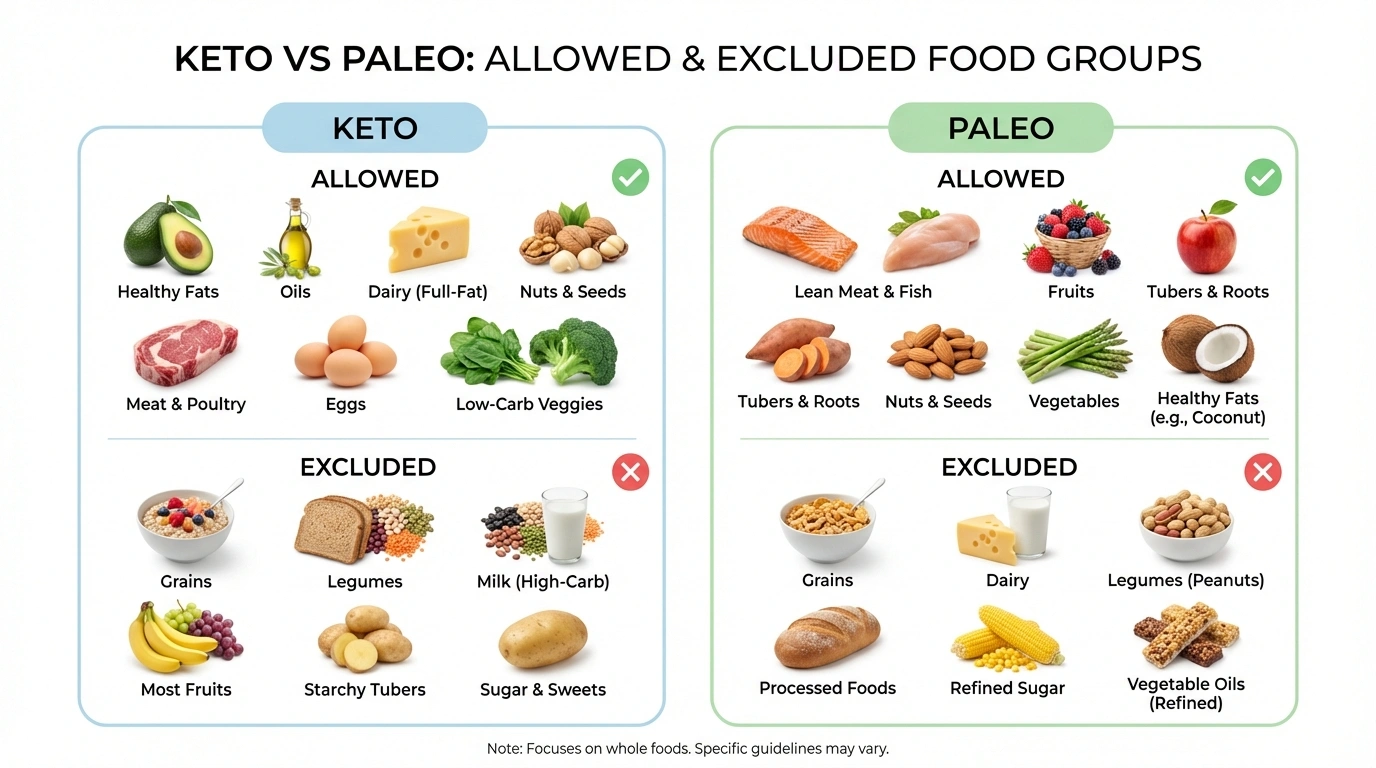
Defining the contenders: a brief overview
Before comparing keto vs. paleo or other variations, it helps to establish clear definitions of each dietary approach. Confusion often arises because these diets share overlapping features — specifically the restriction of processed foods and refined sugars — yet their metabolic goals differ significantly.
The ketogenic diet (keto)
The ketogenic diet is a high-fat, moderate-protein, and very low-carbohydrate nutritional approach. It was originally developed in the 1920s to treat refractory epilepsy.
- Mechanism: The primary goal is to induce a state of nutritional ketosis. By restricting carbohydrates to below 50g per day (approximately 5–10% of total energy), the body depletes glycogen stores and shifts from glucose oxidation to fatty acid oxidation and ketone body production (acetoacetate, beta-hydroxybutyrate, acetone).
- Macronutrients: Typically 70–80% fat, 10–20% protein, 5–10% carbohydrate.
The paleo diet
The Paleolithic diet is based on the premise of evolutionary alignment. It argues that human physiology is best suited to the hunter-gatherer diet of the Stone Age, prior to the agricultural revolution.
- Mechanism: Focuses on food quality and elimination of “neolithic” foods (grains, legumes, dairy). It does not explicitly aim for ketosis, though it is often lower in carbohydrates than the standard Western diet.
- Macronutrients: Flexible, but generally high protein, moderate fat, and moderate-to-low carbohydrate.
The Mediterranean diet
Inspired by the traditional dietary patterns of Southern Europe (Greece, Italy, Spain) in the 1960s, this diet emphasizes plant-based foods and healthy fats.
- Mechanism: Relies on high fiber, antioxidants, and monounsaturated fats to reduce oxidative stress and inflammation. It is not a restrictive weight-loss diet but a lifestyle pattern.
- Macronutrients: Balanced. High in complex carbohydrates, moderate fat (unsaturated), moderate protein.
⚠️ Important: read before making dietary changes
This article is for educational purposes only and is not medical advice. Restrictive diets — including keto, paleo, low-carb, and carnivore — can produce significant metabolic changes (effects on blood glucose, insulin, electrolytes, lipid profile, and medication requirements) that may be unsafe without medical supervision for some people.
Speak with a qualified healthcare provider before starting a restrictive diet if you: have type 1 or type 2 diabetes or take insulin / glucose-lowering medications (including SGLT2 inhibitors — these carry an increased DKA risk on very-low-carb diets), take GLP-1 receptor agonists or other prescription weight management drugs, have kidney disease, liver disease, pancreatitis, or familial hypercholesterolemia, have cardiovascular conditions, are pregnant or breastfeeding, have a history of eating disorders or disordered eating, or are considering this for a child.
Information here is intended to support — not replace — conversations with your own healthcare team.
In this guide
Keto vs. paleo: the ancestral vs. metabolic approach
When comparing keto vs. paleo, the fundamental distinction lies in the intent of each diet. Keto is a metabolic approach designed to alter the body’s fuel source; paleo is a food-quality approach designed to eliminate foods introduced after the agricultural revolution.
Keto changes how the body produces energy (shifting from glucose to ketones). Paleo changes which foods are eaten (excluding grains, legumes, and dairy). They can overlap, but their guiding principle is different: keto targets a metabolic state; paleo targets food quality and ancestral compatibility.
Macronutrient differences
In a direct keto vs. paleo comparison, carbohydrate intake is the deciding factor. A strict paleo diet allows natural sugars from fruits, honey, and starchy vegetables like sweet potatoes. These foods are generally excluded on keto because they would prevent ketogenesis. Conversely, paleo strictly excludes dairy products, while the ketogenic diet often includes full-fat dairy (cheese, butter, cream) as a primary source of fat.
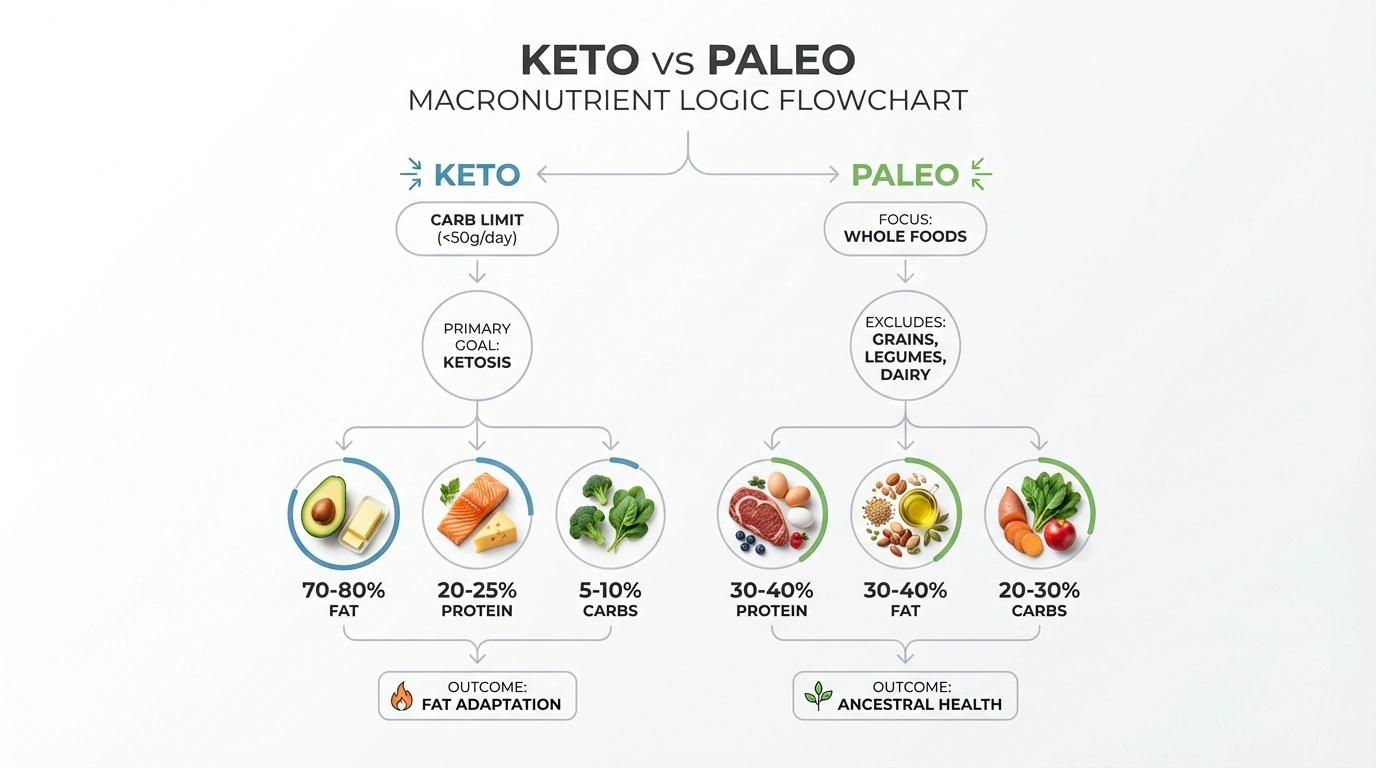
Therapeutic applications
- Keto: May offer benefits for conditions requiring strict blood glucose control, such as type 2 diabetes, and has an established therapeutic role in pharmaco-resistant epilepsy. Suppressed insulin levels facilitate lipolysis (fat breakdown).
- Paleo: Often preferred by people with autoimmune conditions or suspected food sensitivities, since it eliminates common reactive foods such as gluten-containing grains, dairy proteins (casein), and legume lectins.
Weight loss effectiveness
Both diets can support weight loss by eliminating processed foods. Keto tends to produce faster initial results due to the diuretic effect of glycogen depletion and the appetite-suppressing effect of ketone bodies. Paleo may be more sustainable for people who find the strict carbohydrate restriction of keto socially difficult or physically demanding to maintain.
🧮 Personalized Macro Calculator
Keto vs. Mediterranean: the cardiovascular debate
While the keto vs. paleo debate focuses on food groups, the keto vs. Mediterranean comparison centers on long-term cardiovascular health and sustainability. The Mediterranean diet is widely considered one of the most evidence-supported dietary patterns in preventive health.
Fat quality and source
The keto diet, particularly “dirty keto,” often allows high intakes of saturated fats (bacon, butter, lard). While some evidence suggests saturated fat is not as harmful as once believed, high intake may lead to increased LDL cholesterol in some people. The Mediterranean diet focuses on monounsaturated fats (olive oil, nuts) and polyunsaturated fats (fatty fish). Research consistently associates this pattern with reduced cardiovascular mortality and improved endothelial function.
Blood glucose control and diabetes
A Stanford University study compared keto and Mediterranean diets in people with type 2 diabetes. Both diets improved blood glucose control (HbA1c reduction) and supported weight loss. However, the keto diet was associated with a greater increase in LDL cholesterol, while the Mediterranean diet lowered it. Notably, participants found the Mediterranean diet easier to sustain long-term. (See Data & sources for verification notes on the underlying citation.)
The takeaway
For rapid improvement in elevated blood glucose, keto can be an effective short-term approach. For lifelong cardiovascular health and general health maintenance without restrictive tracking, the Mediterranean diet remains the most evidence-supported pattern for the general population.
Low-carb vs. keto: is ketosis necessary?
People often confuse a general low-carbohydrate diet with the specific metabolic state of ketosis. Understanding the low-carb vs. keto distinction helps set realistic expectations.
Ketosis is a measurable metabolic state, not just “eating fewer carbs.” Most people require carbohydrate intake below approximately 50g per day to enter and maintain nutritional ketosis. A general low-carb diet (under 100–150g/day) reduces insulin spikes and may support weight loss, but does not necessarily produce therapeutic ketone levels.
The threshold of ketosis
- Keto: Requires <50g of carbohydrates daily. It is a binary state: you are either in ketosis or you are not. It requires consistent tracking.
- Low carb: Generally defined as <100–150g of carbohydrates daily. This approach reduces insulin spikes but does not necessarily deplete glycogen stores fully or produce therapeutic levels of ketones.
Flexibility and adherence
The low-carb diet allows for “human error.” You can eat a piece of fruit or a serving of legumes without “breaking” the diet. On keto, such an action stops ketogenesis, potentially requiring days to re-enter the metabolic state. Research suggests that while keto produces faster initial weight loss, the differences between keto and general low-carb diets narrow significantly after 12 months, suggesting that caloric restriction and adherence are the true drivers of weight loss, not ketosis itself.
Keto vs. carnivore: the extreme elimination
The carnivore diet is an extension of the keto vs. paleo concept, taken to its absolute extreme. It eliminates all plant matter, relying exclusively on animal products (meat, fish, eggs, and sometimes dairy).
Nutritional risks
While carnivore is technically a ketogenic diet (as it is near-zero carb), it lacks the phytonutrients, fiber, and antioxidants found in the plant-based components of a well-formulated keto diet.
- Gut health: The lack of fiber can disrupt the gut microbiome and cause constipation.
- Micronutrients: Deficiencies in vitamin C and folate are potential risks unless organ meats are consumed regularly.
Evidence and practical considerations
The carnivore diet currently lacks robust controlled trials. Anecdotal reports suggest some people find relief from severe autoimmune symptoms (an extension of the paleo elimination approach), but the long-term cardiovascular impact of very high saturated fat and heme iron intake has not been adequately studied. For these reasons, it is generally not recommended as a long-term dietary pattern outside of carefully supervised individual experimentation.
Side-by-side comparison: at a glance
The following table summarizes the key distinctions between these dietary approaches to support an informed personal decision.
| Feature | Keto | Paleo | Mediterranean | Low Carb | Carnivore |
|---|---|---|---|---|---|
| Primary Focus | Metabolic state (ketosis) | Food quality (ancestral) | Heart health & balance | Carbohydrate reduction | Elimination / zero carb |
| Carbohydrate Limit | Strict (<50g/day) | Moderate (no limit) | Moderate to high | Flexible (<150g/day) | Near zero |
| Fat Intake | Very high (70–80%) | Moderate | Moderate (unsaturated) | Moderate to high | High |
| Protein Intake | Moderate (20%) | High | Moderate | High | Very high |
| Key Exclusions | Grains, sugar, fruit | Grains, dairy, legumes | Processed meat, sugar | Sugar, refined grains | All plants |
| May suit | Blood sugar management, weight loss | Food sensitivities | Heart health, longevity | Sustainable fat loss | Extreme elimination |
| Primary Risk | “Keto flu”, deficiency | Calcium deficiency | Caloric excess | Slower results | Fiber deficiency |
| Sustainability | Low | Medium | High | High | Very low |
GLP-1 medications vs. dietary intervention
A current comparison of dietary approaches would be incomplete without mentioning GLP-1 receptor agonists (e.g., semaglutide/Wegovy). Unlike the diets discussed in this guide, GLP-1 medications are pharmacological interventions prescribed and monitored by a healthcare provider — not dietary patterns.
GLP-1 medications can effectively reduce appetite and support weight loss for many people, but they do not teach long-term nutritional habits. People who stop taking these medications may experience weight regain if they have not established a sustainable dietary pattern. For this reason, a dietary approach — whether Mediterranean for long-term health or low-carb for maintenance — is often discussed alongside these medications to support long-term outcomes and preservation of lean muscle mass. Any decisions about starting, adjusting, or stopping a GLP-1 medication should be made with the prescribing healthcare provider.
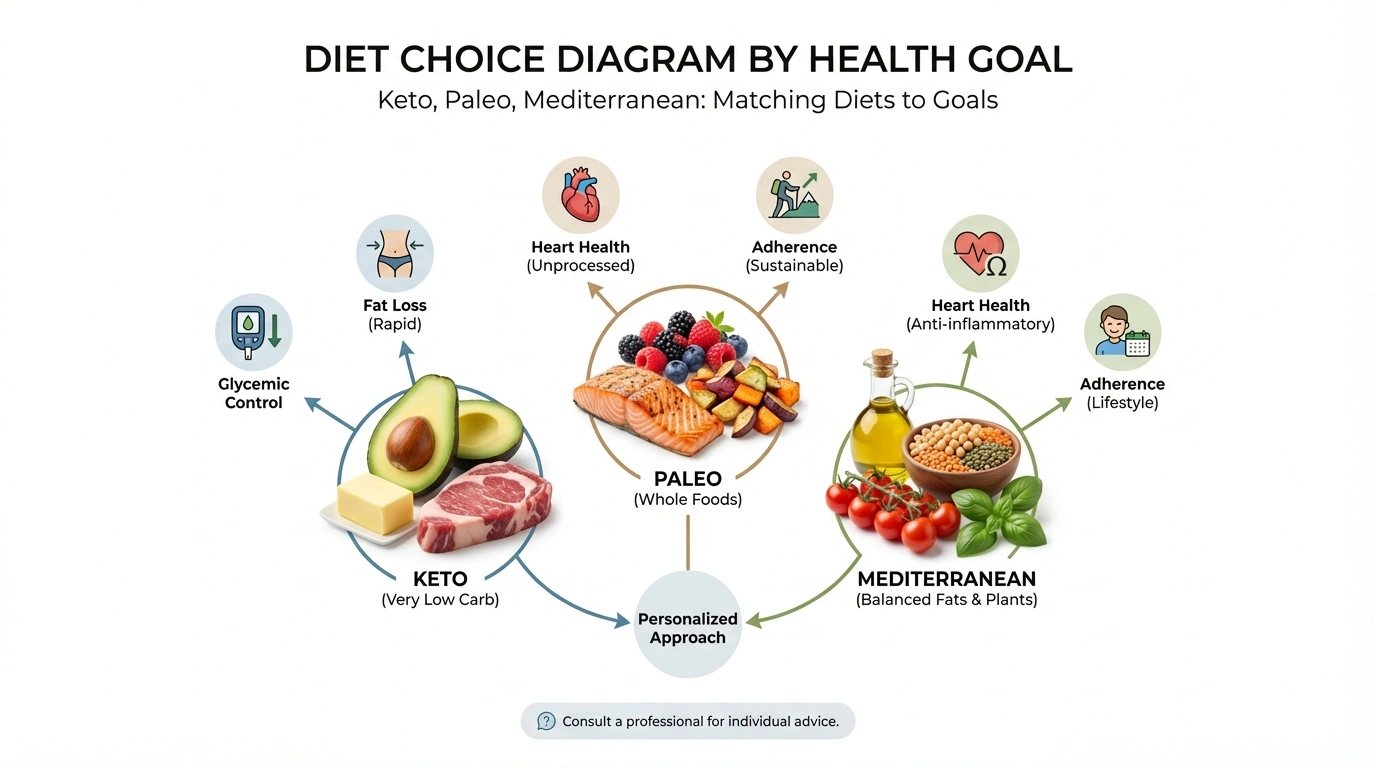
Which diet for which goal: a practical framework
After reviewing the evidence on keto vs. paleo, Mediterranean, and other dietary approaches, there is no universal “best” diet. The effectiveness of a diet is largely determined by individual adherence, metabolic flexibility, and personal health history.
Research consistently shows that diet effectiveness depends more on adherence than on macronutrient ratios. The most effective diet for any individual is the one that fits their goals, preferences, and lifestyle — and that they can maintain over time.
1. For rapid weight loss and blood sugar control: keto
Research suggests the ketogenic diet may produce stronger short-term results for weight reduction and blood glucose control in people with type 2 diabetes compared with some other dietary approaches. The appetite-suppressing effect of ketosis can be helpful for people who struggle with satiety on higher-carbohydrate diets. Medical supervision is important for managing electrolytes, lipid changes, and any medication adjustments.
2. For long-term health and prevention: Mediterranean
For people focused on cardiovascular risk reduction, healthy aging, and reduced chronic disease risk, the Mediterranean diet has the strongest long-term evidence base. It offers a balanced nutrient profile and is widely considered one of the most sustainable patterns for lifelong adherence.
3. For autoimmunity and food sensitivity: paleo
If someone is dealing with undefined inflammatory symptoms or suspected sensitivities to dairy or legumes, paleo serves as a useful elimination framework. It prioritizes nutrient density without the rigid tracking required by keto.
4. For sustainable weight management: low-carb / high-protein
For many people, the strictness of keto is a barrier. A general low-carb, high-protein approach offers many of the benefits of keto (reduced insulin, weight loss) with considerably less restriction, making it a pragmatic choice for long-term maintenance.
Navigating risks and side effects
Regardless of which dietary approach you choose, it’s helpful to understand the physiological adaptations and potential risks involved.
- The “keto flu”: When transitioning to keto (and to a lesser extent, strict paleo or carnivore), people often experience fatigue, headache, and dizziness. This is largely due to electrolyte imbalance (natriuresis) and glycogen depletion. Symptoms are temporary and can typically be eased with sodium, potassium, and magnesium replacement. See: Keto flu symptoms & remedies and electrolytes & hydration guide.
- Nutrient deficiencies: Restrictive diets (keto, carnivore, paleo) eliminate entire food groups. This increases the risk of micronutrient deficiencies (e.g., calcium on paleo/keto, vitamin C on carnivore, fiber on keto/carnivore). Supplementation or careful meal planning is essential.
- Lipid profile changes: While keto may lower triglycerides and raise HDL (“good” cholesterol), it can also increase LDL in some individuals. People with familial hypercholesterolemia should be especially cautious and consult a healthcare provider — a Mediterranean-style pattern is generally a more appropriate starting point for this group.
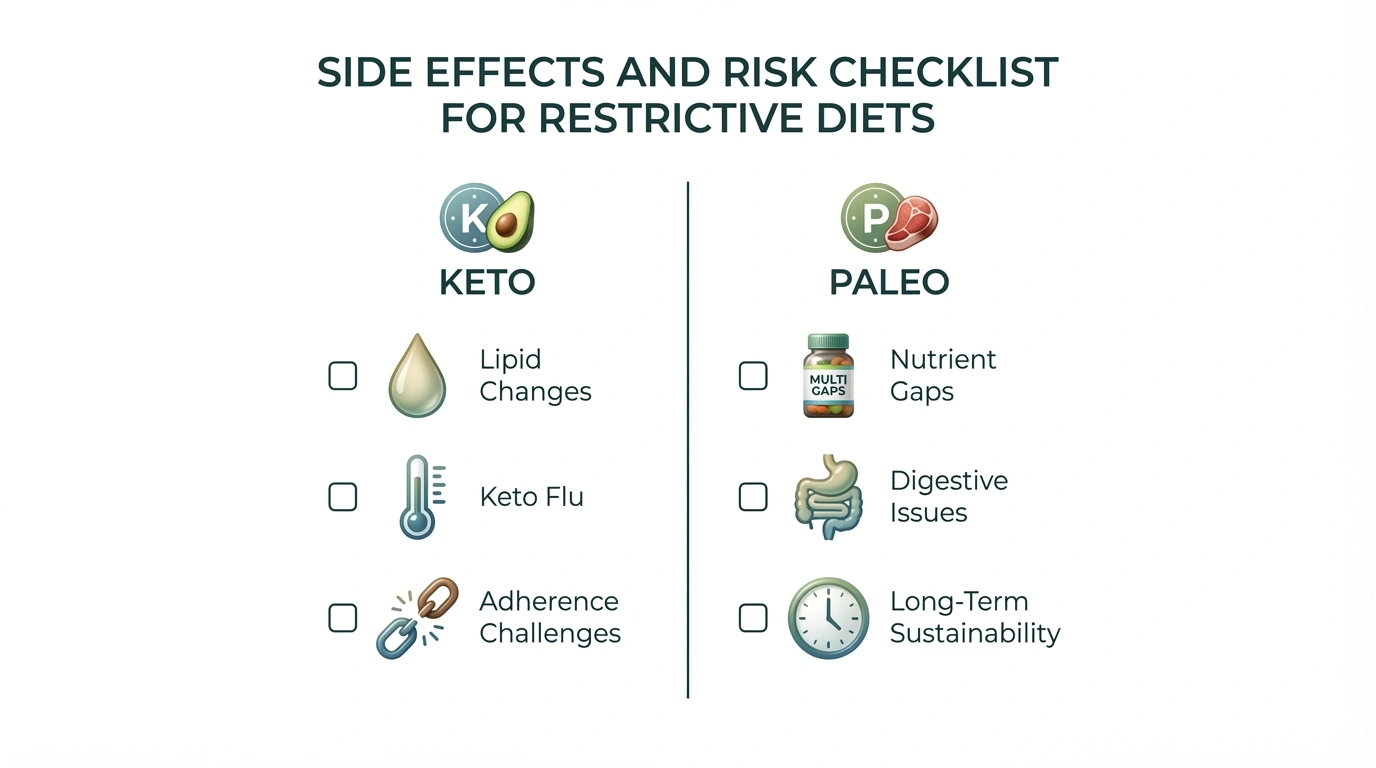
Final practical takeaway
When using tools like a keto calculator, it helps to remember that the numbers are only part of the equation.
If the goal is a significant metabolic shift — for example, supporting blood sugar management or breaking through a stalled weight loss period — the ketogenic diet may be a powerful (though demanding) approach. It produces a metabolic transition that less restrictive diets generally do not.
If you find the restrictions of keto or paleo unsustainable, that’s not a failure. Shifting to a low-carb or Mediterranean approach is not “quitting”; it is moving toward an evidence-based, sustainable pattern for long-term health. The “best” diet is ultimately the one that provides adequate nutrition, supports your metabolic health markers, and — most importantly — is one you can maintain over the long term.
Disclaimer: This article is for educational purposes only and is not medical advice. Always consult a qualified healthcare provider before starting a restrictive dietary protocol, especially with pre-existing conditions like diabetes, kidney disease, or cardiovascular issues.
Frequently asked questions
What is the main difference between keto and paleo?
Keto is a metabolic strategy that restricts carbohydrates below 50g per day to induce ketosis — a state where the body burns fat and produces ketones for fuel. Paleo is a food-quality approach that eliminates grains, legumes, and dairy in favor of foods available before agriculture. Keto restricts carbohydrate quantity; paleo restricts food groups by category.
Which diet produces faster weight loss: keto or paleo?
Keto typically produces faster initial weight loss, largely due to glycogen-bound water loss in the first weeks and the appetite-suppressing effect of ketones. Over longer periods (around 12 months), research suggests the difference between keto and other low-carb or whole-food approaches narrows substantially, with overall calorie intake and adherence becoming the main drivers.
Is the Mediterranean diet better than keto?
For long-term cardiovascular health, sustainability, and general population guidance, the Mediterranean diet has stronger evidence and is generally easier to maintain. For rapid blood glucose improvement or significant short-term weight loss, keto may be more effective in some people. The “better” diet depends on individual goals, medical history, and ability to adhere long-term.
Can you combine keto and paleo?
Yes — a “paleo-keto” approach restricts both carbohydrates (below 50g per day) and the food groups paleo excludes (grains, legumes, dairy). This combination is more restrictive than either diet alone and may be harder to sustain. Some people use it when exploring elimination diets for suspected food sensitivities while also targeting ketosis.
Who should not follow a ketogenic or restrictive diet without medical guidance?
People with type 1 or type 2 diabetes on insulin or SGLT2 inhibitors, those with kidney disease, liver disease, pancreatitis, or familial hypercholesterolemia, pregnant or breastfeeding individuals, people with a history of eating disorders, and children should consult a qualified healthcare provider before starting any restrictive dietary protocol.
Data & sources
The following claims and comparisons in this article are drawn from published clinical and nutritional literature. Where no direct citation is provided, the statement reflects the general scientific consensus summarized in the references listed.
- Ketogenic diet — clinical mechanism and applications — overview of metabolic effects, ketogenesis mechanism, and therapeutic applications: Clinical Review of Ketogenic Diet (PubMed / PMC).
- Keto vs. Mediterranean — long-term cardiovascular and adherence comparison — general review of the ketogenic diet in the context of broader dietary patterns: Ketogenic Diet Review (Harvard T.H. Chan School of Public Health — The Nutrition Source). The specific Stanford comparison referenced in the body should be verified against the underlying journal citation before being presented as a precise figure.
- Weight loss equivalence at 12 months — finding that low-carbohydrate and other approaches converge over longer periods, with adherence as the primary driver: Obesity Reviews (Wiley).
- Low-carbohydrate vs. low-fat dietary comparison — early peer-reviewed analysis of weight loss and metabolic outcomes: Annals of Internal Medicine.
- GLP-1 receptor agonists and dietary intervention — observations about weight maintenance after discontinuing GLP-1 medications reflect general clinical observations widely reported in the literature. Specific journal citation pending verification; do not present as a precise figure without primary source confirmation.
General references: PubMed / PMC · Harvard T.H. Chan · Wiley Obesity Reviews · Annals of Internal Medicine
Explore More Resources
Further Reading & Tools
Guide to supporting the “ketosis threshold” angle.
Apply the comparison and build your keto macro plan.
Next step to implement keto safely and realistically.