
Keto drink calculator & alcohol analyzer
Coffee, cocktails, or smoothies? Build your drink recipe and instantly reveal the hidden carbs — get a Green Light or Red Light verdict for ketosis safety.
Why you need a keto drink calculator
Liquids are often called the “silent killer” of keto. While most people diligently count the carbs in their meals, it is surprisingly easy to consume 30g or more of sugar in a single “healthy” smoothie or latte without realizing it. Research covered by Healthline notes that liquid sugar is particularly harmful because it fails to trigger the satiety signals that solid food does — meaning you can drink a significant carb load and still feel hungry.
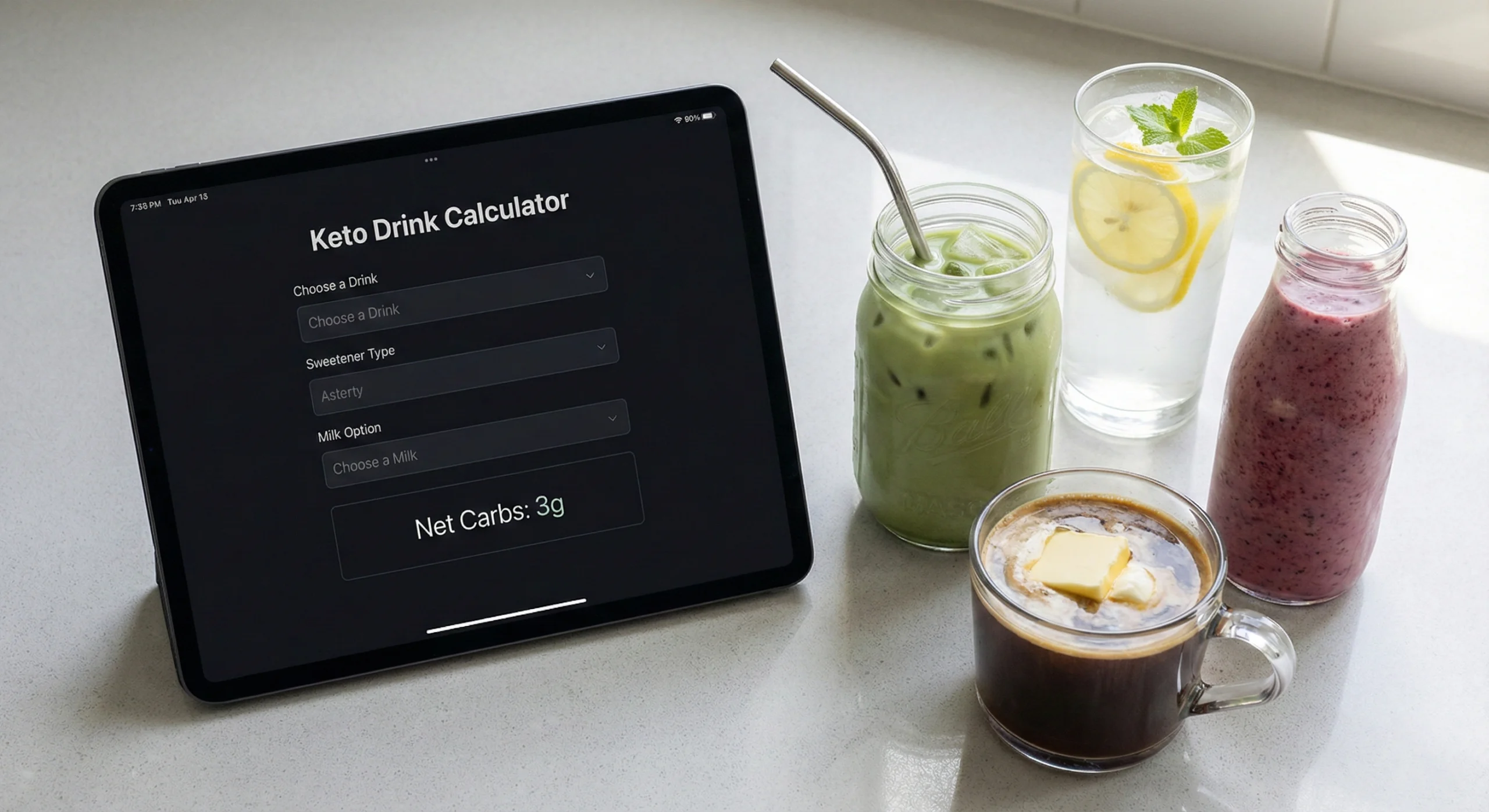
Unlike solid food, liquid carbohydrates are absorbed rapidly by the body, causing a fast spike in insulin that can pause fat burning and disrupt ketosis. Use the interactive Keto Drink Calculator below to build your recipe ingredient by ingredient. It accounts for hidden sugars in dairy, the metabolic impact of alcohol on fat oxidation, and gives you a clear safety verdict.
What the calculator checks
👇 Build Your Recipe
Add each ingredient below to see the total net carbs and macros.
The 3 golden rules of keto drinks
Watch the milk — lactose is sugar
Many beginners assume all milk is nutritionally neutral. It is not. Cow’s milk contains lactose, a form of sugar, with whole milk running at roughly 5g of carbs per 100ml. A standard 16oz latte made with whole milk delivers nearly 15g of carbs — almost your entire daily keto limit in a single drink. You can verify exact nutritional values for any ingredient using the USDA FoodData Central database.
The fix: swap cow’s milk for unsweetened almond milk, macadamia nut milk, or heavy whipping cream in moderation. Run each alternative through the calculator above to confirm your numbers. For a broader list of approved options, see our keto drink recipes guide.
Alcohol “pauses” fat burning
Pure spirits — vodka, tequila, whiskey, gin — contain zero carbs and will not technically kick you out of ketosis on their own. However, your liver treats alcohol as a priority toxin. According to the Mayo Clinic, the liver prioritizes metabolizing alcohol over all other fuel, including fat. This means fat burning is paused — not stopped permanently, but suspended — while alcohol is present in your system.
You remain in ketosis provided you avoid sugary mixers, but your fat loss rate will slow for the duration. Always check your mixer carbs with the calculator. If you’re considering alcohol in the context of a structured keto plan, our keto alcohol guide covers the best and worst options ranked by carb count.
Electrolytes are non-negotiable
The ketogenic diet has a natural diuretic effect — lower insulin levels cause the kidneys to excrete more water and essential minerals. Add coffee (a mild diuretic) or alcohol (a potent diuretic) and dehydration compounds rapidly. This is the primary driver of the “Keto Flu”: headaches, fatigue, muscle cramps, and brain fog that many beginners experience in the first weeks of keto.
Add a pinch of pink Himalayan salt to your water, use an electrolyte supplement, or prioritize high-electrolyte foods like avocado and leafy greens from our low-carb vegetables guide. For a structured approach, see our dedicated electrolytes and hydration guide below.
🚫 Drinks to avoid on keto
These beverages are among the most common carb traps that silently disrupt ketosis:
- Beer (standard): often called “liquid bread” for good reason. Most regular beers contain 10–20g of carbs per serving. Stick to specifically labelled “low carb” or “ultra light” options and check with the calculator.
- Sweet wines: Moscato, Port, Sherry, and dessert wines are concentrated sugar bombs. Dry red and white wines are significantly lower in carbs.
- Tonic water: one of the most common traps in cocktail culture. Standard tonic contains as much sugar as a regular soda. Always request “diet tonic” or soda water explicitly.
- Vitamin water (regular): unless labeled “Zero,” these are typically loaded with fructose — marketed as health drinks but nutritionally comparable to juice.
- Oat milk: trendy but carb-heavy. A single cup can contain 16g of net carbs — nearly an entire day’s allowance on strict keto.
Frequently asked questions
Is diet soda keto-friendly?
Technically yes. Diet sodas contain zero calories and zero carbs, so they will not directly disrupt ketosis. However, some research reviewed by the Mayo Clinic suggests that artificial sweeteners may increase sugar cravings or affect gut bacteria in sensitive individuals. Sparkling water with a squeeze of lemon or lime is generally a cleaner alternative for daily hydration.
How do I order keto coffee at Starbucks?
Order an Americano, cold brew, or brewed coffee. Ask for a splash of heavy cream — not “sweet cream,” which contains added syrup. Use sugar-free vanilla syrup if you need sweetness, and bring your own stevia or erythritol packets. Avoid all standard flavored syrups, Classic Syrup, oat milk, and standard whipped cream. Many keto-compatible customizations are possible once you understand what to ask for.
Will one beer ruin my ketosis?
It depends on the beer. A regular heavy stout can contain 15–20g of carbs, which would likely pause or disrupt ketosis for most people. A standard light beer runs 2–4g, which can fit within keto macros if you have planned for it. Use the keto drink calculator above with the beer option to estimate the impact of specific choices. For a full comparison of beer types and other alcoholic options, see our keto alcohol guide.
How does drinking affect getting back into ketosis?
If a high-carb drink has pushed you out of ketosis, alcohol and dehydration can both slow your return. Prioritize electrolyte replenishment, keep carbs at or below 20g the following day, and allow 24–48 hours for your body to clear glycogen and resume ketone production. Our detailed guide on getting back into ketosis covers the full recovery process.