
Vegan Keto Calculator: Free Plant-Based Macro Targets
Enter your stats — get free fat, protein, and net carb targets for plant-based keto in seconds. No sign-up, no apps required.
The Challenge of Plant-Based Keto
Combining a vegan lifestyle with a ketogenic diet is powerful, but it requires precision. Getting your macros wrong can lead to either too many carbs (kicking you out of ketosis) or not enough protein (muscle loss).
Unlike generic tools, our specialized vegan keto calculator below helps you find your exact numbers without relying on animal products. If you are not following a plant-based diet, please use our Standard Keto Calculator instead. If you follow a vegetarian diet that includes eggs and dairy, see also our vegetarian keto plan for a protein approach adapted to lacto-ovo eating.
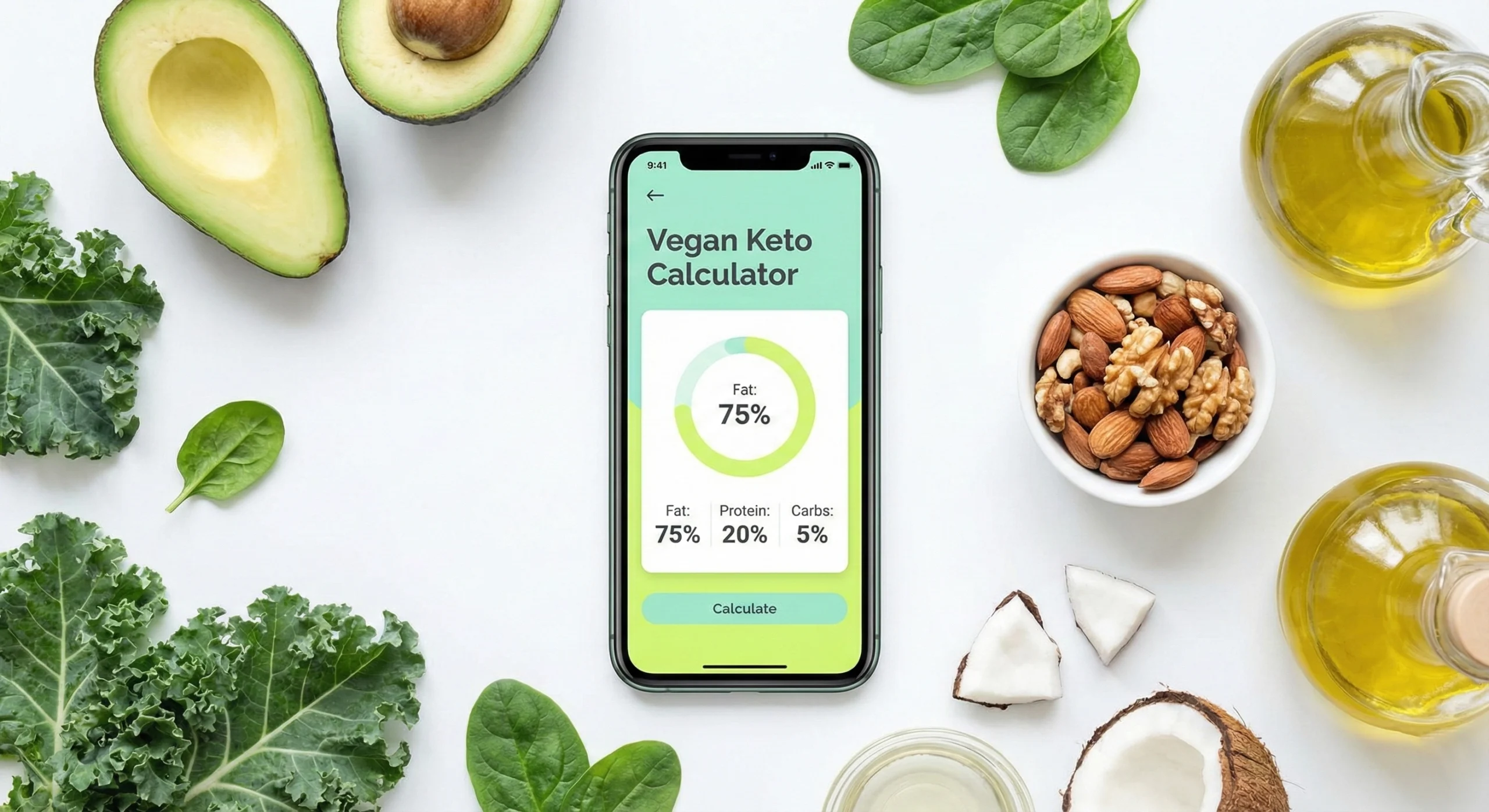
👇 Use the Vegan Keto Calculator
Calculate your plant-based macros accurately.
Your Vegan Keto Plan
Daily Target Calories
0
kcal / day
🌱 Vegan Protein Tip: Once you have your protein number, do NOT try to get it from carbs. Use Tofu, Seitan, Tempeh, and Hemp Seeds to hit this goal without exceeding your carb limit.
How to Succeed on Vegan Keto
While this free vegan keto calculator handles the math, your food choices determine your success. The biggest mistake beginners make is relying too much on “net carbs” from processed bars and shakes.
Are you over 50? Check our Keto Calculator for Women Over 50.
1. Protein Sources (Low Carb)
- Seitan: The “wheat meat” is almost pure protein and very low carb.
- Tofu & Tempeh: Excellent staples, but count the carbs.
- Nutritional Yeast: Adds cheesy flavor and protein.
- Protein Powders: Pea or rice protein isolates are essential.
2. Healthy Fats (No Butter)
- Avocado & Avocado Oil
- Coconut Oil & MCT Oil
- Macadamia Nuts & Pecans
- Olive Oil (liberal use on salads)
Critical Supplements for Vegan Keto
Vitamin B12
B12 is primarily found in animal products. Use a high-quality methylcobalamin supplement daily.
Iron & Zinc
Eat iron-rich foods like spinach with Vitamin C (lemon juice) to improve absorption.
Omega-3 Fatty Acids
Consider an algae-based Omega-3 supplement to support brain health.
Sample 1-Day Vegan Keto Menu
- Breakfast: Tofu Scramble with spinach, nutritional yeast, and avocado slices.
- Lunch: Large salad with hemp seeds, macadamia nuts, and a tahini-lemon dressing.
- Snack: A handful of pecans or a vegan keto protein shake.
- Dinner: Zucchini noodles (Zoodles) with avocado-basil pesto and baked tempeh.
Frequently Asked Questions: Vegan Keto Calculator
How accurate is this vegan keto calculator?
It uses the Mifflin-St Jeor equation for total daily energy expenditure and applies standard ketogenic macro ratios (70–75% fat, 20–25% protein, 5% net carbs). If you provide body fat percentage, it switches to the Katch-McArdle formula using lean mass — generally more accurate for people who know their body composition. Results are educational estimates; individual metabolism varies.
How many carbs for vegan keto?
Standard ketogenic diets target 20–50g of net carbs per day. For vegan keto, many practitioners find success with 30–40g of net carbs daily because plant-based whole foods like leafy greens, nuts, seeds, and low-carb vegetables contribute fiber that reduces net carb impact. Count net carbs (total carbs minus fiber) rather than total carbs. See the full guide to net carbs vs total carbs on keto.
Can I eat beans on vegan keto?
Most beans and lentils are too high in net carbs for strict ketogenic dieting — black beans (20g net carbs per 100g), lentils (15g per 100g), and chickpeas (22g per 100g) would exhaust most of a daily carb budget in one serving. Lower-carb exceptions include green beans (~4g net carbs per 100g) and edamame (~5g per 100g), which can be used in moderation.
How many grams of protein do I need on vegan keto?
On vegan keto, protein needs are typically 10–20% higher than on standard keto because most plant-based proteins have lower digestibility and bioavailability than animal proteins. The calculator already applies a conservative protein multiplier. In practice, aim for the calculator’s protein output and prioritize complete protein sources: tofu, tempeh, seitan, edamame, hemp seeds, and pea protein isolate.
Can I reach ketosis on a vegan diet?
Yes. Ketosis is achieved by restricting net carbohydrate intake below the threshold where your liver begins producing ketone bodies (typically 20–50g net carbs per day), regardless of protein source. The metabolic mechanism is the same on a vegan diet. The main challenge is sourcing adequate fat and protein without animal products — which is exactly what this calculator and the protein guide above are designed to address.
What are the best protein sources for vegan keto?
The best vegan keto protein sources combine high protein density with low net carbs. Top options: seitan (~75g protein per 100g, ~2g net carbs — avoid if gluten-sensitive), firm tofu (~8g protein per 100g, ~1g net carbs), tempeh (~19g protein per 100g, ~5g net carbs), edamame (~11g protein per 100g, ~5g net carbs), hemp seeds (~31g protein per 100g, ~5g net carbs), and pea protein isolate powder.
How is this vegan keto calculator different from the standard keto calculator?
The core macro calculation is identical — Mifflin-St Jeor or Katch-McArdle for TDEE, applied with ketogenic ratios. The differentiation is practical: this calculator is paired with vegan-specific protein sources, supplement guidance (B12, Omega-3, Iron), and a plant-based meal example. Ketosis is the same physiological state regardless of diet style. For comparison, see the standard keto calculator.
Can I do vegan keto if I am vegetarian but not fully vegan?
Yes, and it is generally easier. Vegetarians who include eggs and dairy have access to high-quality, low-carb protein sources: eggs (~6g protein, 0g net carbs), hard cheeses, Greek yogurt, and cottage cheese. These significantly simplify hitting protein targets without exceeding carb limits. See the vegetarian keto plan for a macro guide adapted specifically to lacto-ovo eating.