
The definitive guide to fruits with the lowest carbs for the ketogenic diet
Maximize nutrient intake and satisfy natural cravings without compromising ketosis — a ranked analysis of every keto-compatible fruit by net carbohydrate content.
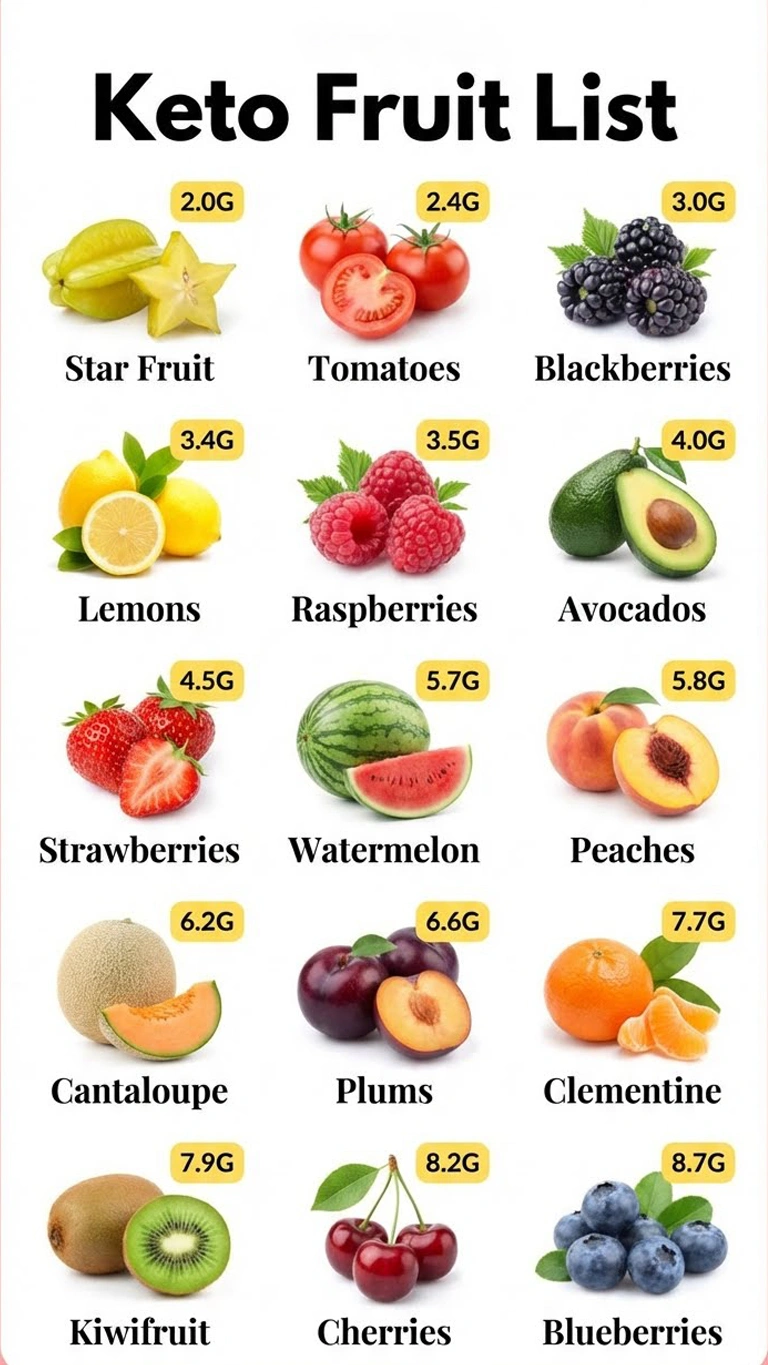
Can you eat fruit on keto?
Fruits are universally recognized as essential components of a healthy diet, providing vital vitamins, minerals, and disease-fighting antioxidants. However, fruit naturally contains sugar — primarily fructose — which contributes directly to the daily carbohydrate count. For those on a ketogenic diet, where carbohydrate intake is severely restricted to 20–50 grams of net carbs per day, selecting the right fruits with the lowest carbs is critical for maintaining ketosis.
This analytical guide examines the fruits with the lowest carbs across every category — berries, botanical fruits, melons, and citrus — and outlines the crucial principles for including them strategically in a low-carb eating plan without compromising metabolic goals. For broader context, see our complete keto fruit medical guide.
Understanding carbohydrates and ketosis: why fruit selection matters
The role of fructose in ketosis
Fruits contain a combination of natural fructose, sucrose, and glucose. Fructose is metabolized almost exclusively by the liver — unlike glucose, which all tissues can use. For those in ketosis, consuming fructose-heavy fruits means the liver bears the entire metabolic load, which can directly affect ketone production and potentially halt lipolysis (fat burning).
This is why simply avoiding refined sugar is insufficient on keto: the type and quantity of carbohydrate in whole fruit must also be actively monitored. Choosing fruits with the lowest carbs and highest fiber helps mitigate this effect by slowing fructose absorption and reducing the blood sugar response.
Net carbs: the correct metric for fruit on keto
When assessing fruits for a low-carb diet, net carbs — not total carbs — is the correct metric.
Net Carbs = Total Carbohydrates − Dietary Fiber
Fiber is a complex carbohydrate that the human digestive system largely cannot break down or absorb, so it does not impact blood sugar levels. Fruits high in fiber yield significantly lower net carbohydrate counts, making them far more compatible with carbohydrate restriction than their total carb numbers suggest. For a deeper understanding, see our guide on net carbs vs. total carbs.
The berry advantage: best fruits with the lowest carbs
Berries are consistently the “best” low-carb fruits on keto. They offer a uniquely favorable ratio of low sugar to high fiber, delivering a high concentration of beneficial phytonutrients and antioxidants while providing minimal digestible carbohydrates.
Raspberries — the fiber powerhouse
Raspberries are celebrated for their impressive fiber content — approximately 8 grams of fiber per cup — making them one of the most satiating fruits available at any carb budget.
Nutritional profile (per 100g):
Health benefits: rich in antioxidants, potassium, and Vitamin C. The flavonoids they contain have been linked to improving age-related cognitive decline. A small serving of half a cup (60g) contains only approximately 3g of net carbohydrates — making raspberries a safe option even on a strict keto protocol.
Blackberries — rich in antioxidants
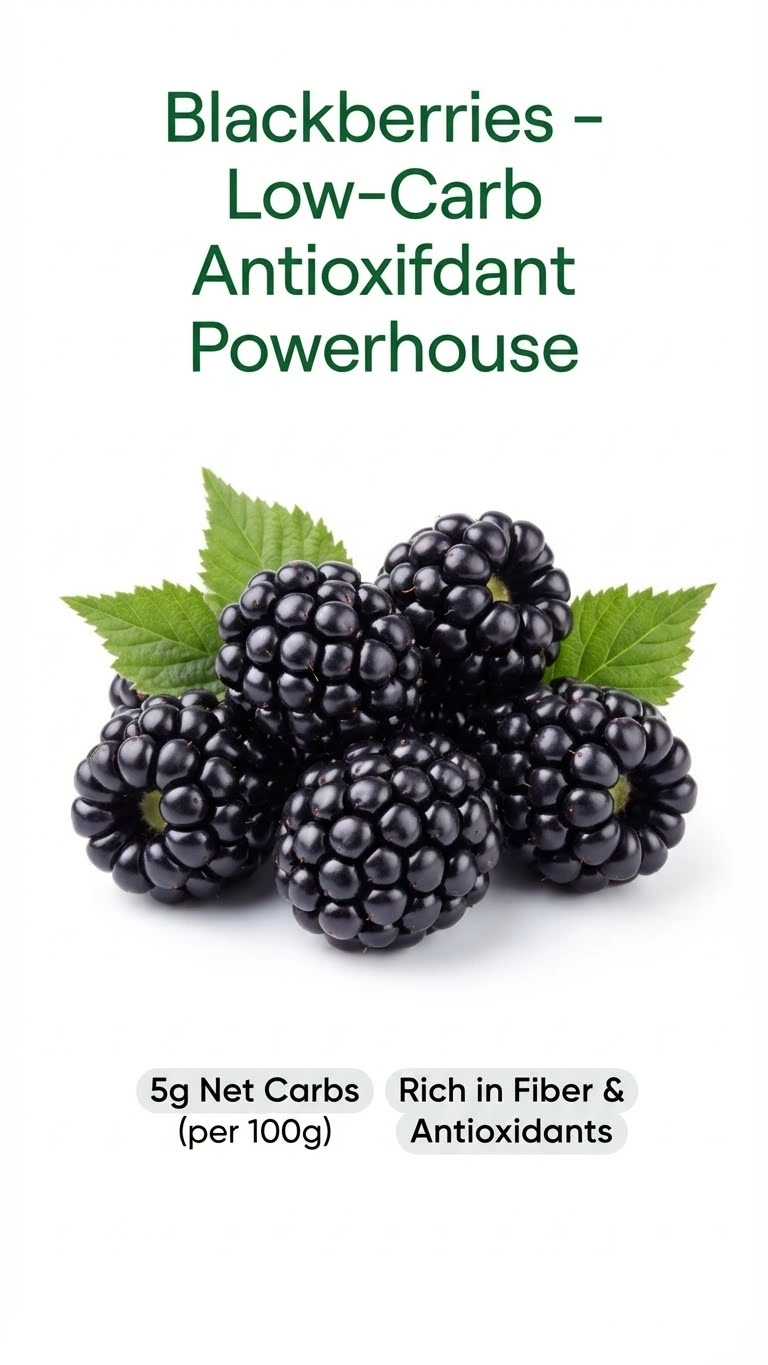
Blackberries are nearly tied with raspberries in low net carbohydrate content. Their deep dark color signals a high concentration of anthocyanins — antioxidants that fight systemic inflammation and protect against chronic disease.
Nutritional profile (per 100g):
Health benefits: vital sources of Vitamin C, Vitamin K, and manganese — essential for bone health and collagen production. Their high fiber content promotes digestive regularity and feeds healthy gut bacteria. Half a cup (70g) contains approximately 4g of net carbohydrates.
Strawberries — low in sugar, high in Vitamin C
Strawberries are among the most popular low-carb berries. They are low in calories and fat, yet rich in water, fiber, vitamins, and antioxidants — making them a nutrient-dense keto-compatible option.
Nutritional profile (per 100g):
Health benefits: strawberries deliver nearly as much Vitamin C as an orange (163% of the daily value per cup sliced) and are loaded with anti-cancer, anti-inflammatory, and heart-protective phytonutrients. Consumption may also help regulate blood sugar levels. A generous serving — one cup of sliced strawberries — equates to approximately 7g of total carbohydrates.
Blueberries — moderate, not free
While highly nutritious, blueberries contain roughly twice the carbohydrates of strawberries.
Nutritional profile (per 100g):
Health benefits: packed with anthocyanin contributing to anti-inflammatory properties. Sources of potassium, calcium, and magnesium — supporting blood pressure regulation and healthy aging. For beginners on strict keto (<20g/day), blueberries should be treated as an occasional treat only. Half a cup (75g) contains approximately 9g of net carbohydrates — a meaningful portion of the daily budget.
The unexpected keto allies: low-carb botanical fruits
Several items commonly regarded as vegetables are botanically classified as fruits — and they possess incredibly low net carbohydrate counts, making them ideal keto staples.

Avocado — the king of keto-friendly fruits
Avocado stands out as the ultimate low-carb option because it is calorie-dense due to healthy fats rather than carbohydrates.
Nutritional profile (per 100g):
Health benefits: over 75% of an avocado’s calories come from healthy monounsaturated fatty acids (MUFAs) — primarily oleic acid — which lower LDL cholesterol and support cardiovascular health. They are superior to bananas in potassium content and provide Vitamins K, E, and C. Avocados are highly effective for keto because they simultaneously provide the fat macros the diet requires, support fat-soluble vitamin absorption, and contain negligible digestible carbohydrates.
Olives — the highly recommended low-carb snack
Olives are technically classified as stone fruits. They are exceptionally low in carbohydrates and high in healthy fats — similar in metabolic profile to avocados.
Nutritional profile (per 8 olives / ~21g):
Health benefits: rich in monounsaturated fats, Vitamin E, and antioxidants, supporting heart health and protecting against chronic inflammation. Olives are suitable for even the strictest keto protocol. Note: their high sodium content from brining means individuals managing blood pressure should be mindful of quantity.
Tomatoes — a versatile low-carb option
Tomatoes, commonly used as vegetables, are botanically fruits. They are safely included in low-carb diets in moderation.
Nutritional profile (per 100g):
Health benefits: tomatoes are the most important dietary source of lycopene — a potent antioxidant associated with reducing the risk of certain cancers and cardiovascular disease. Lycopene absorption is significantly enhanced when tomatoes are consumed with healthy fats (olive oil or avocado). Important: concentrated tomato products (paste, sun-dried) have far higher carb density and require careful portion control.
Hydrating and low-carb melons
Melons offer high water content, making them low in calories and excellent for hydration — but they generally contain slightly more digestible sugar than berries and must be portioned carefully.
Watermelon — high water content, low-calorie volume
Watermelon is frequently cited as the fruit with the lowest carbohydrate count by volume — due to its composition of over 90% water — but the net carb density per 100g is higher than most berries.
Nutritional profile (per 100g):
Health benefits: good source of Vitamins A, C, and lycopene. It can create genuine feelings of fullness while providing minimal calories. A one-cup serving (154g) contains approximately 11g of net carbohydrates — manageable as an occasional treat within a moderate keto plan (30–50g/day) but too high for strict (<20g) protocols at normal serving sizes.
Cantaloupe and honeydew: sweetness with caution
- Cantaloupe (per 100g): 7.26–7.3g Net Carbs. A one-cup serving (177g) offers significant volume for approximately 12.9g of net carbs. Rich in Vitamins A and C.
- Honeydew (per 100g): 8.29–9g Net Carbs. Notably higher in potassium — key for maintaining healthy blood pressure and preventing keto-related electrolyte depletion. See our keto flu guide for electrolyte strategies.
Both melons must be consumed with caution on strict keto. They fit within moderate low-carb limits (30–50g/day) in small portions but should be tracked carefully.
Citrus fruits: flavor enhancement and micronutrient density
The most keto-useful citrus fruits are best applied as flavor agents — their juice and zest deliver powerful flavor and key nutrients with a minimal total carbohydrate impact.
Lemons and limes — minimal carbs for maximal flavor
- Lemons (per 100g): 6–7g Net Carbs
- Limes (per 100g): 4.9–7.7g Net Carbs
Lemon and lime juice can be used freely in dressings, marinades, or added to water for hydration — one tablespoon contains only approximately 0.5g of carbohydrates. Both are excellent sources of Vitamin C, essential for collagen production and immune function. The focus should be on using juice and zest, which deliver potent flavor and nutrients without consuming the whole fruit.
Grapefruit: balancing benefits and carb load
Nutritional profile (per 100g):
High in Vitamin C, antioxidants, and beta-carotene. The compound naringin found in grapefruit may significantly improve insulin sensitivity — a relevant benefit for those using keto therapeutically for metabolic health. For strict keto, consumption should be limited to 1/4 to 1/2 of a fruit as an occasional treat. Important clinical note: grapefruit can interact with many common medications, including statins — check with a physician.
Other notable fruits with the lowest carbs
A variety of other fruits, consumed in small measured portions, can fit into a moderate keto plan. Track each carefully against your daily net carb target.

Kiwi and star fruit (carambola)
Kiwi (per 100g): 9.1–10.8g Net Carbs. A single medium kiwi contains approximately 10g total carbohydrates. Notable for containing twice the Vitamin C of an orange. A good source of fiber, Vitamin E, and Vitamin K. Best consumed as a single-fruit serving, not in quantity.
Star fruit / Carambola (per 100g): 3.9–4.9g Net Carbs. Very low in calories (31 kcal/100g) and high in Vitamin C, copper, and pantothenic acid. Due to its low net carb count, star fruit is one of the more permissive tropical options for restrictive keto protocols.
Coconut — incorporating healthy fats and fiber
Coconut is technically a fruit highly valued in the keto community for its high content of medium-chain triglycerides (MCTs) and fiber.
Nutritional profile (per 100g flesh):
Health benefits: MCTs are rapidly converted to ketones by the liver, directly supporting ketone production and energy. Also provides manganese, iron, and magnesium. The high fiber content slows carbohydrate absorption and supports the gut microbiome. Important: always choose unsweetened coconut products — desiccated or processed coconut often contains added sugars that dramatically raise the carb count.

Rhubarb — a culinary exception
Nutritional profile (per 100g):
Rhubarb is botanically a vegetable but used culinarily as a fruit. It stands out as one of the single lowest-carb “fruits” available. However, its intensely sour flavor typically requires significant sugar in traditional preparation — which defeats the purpose on keto. Always use zero-carb sweeteners (erythritol, stevia, monk fruit) when incorporating rhubarb to preserve its low-carb advantage.
Strategic consumption: integrating low-carb fruits into a keto diet
The importance of pairing fruit with fats and protein
Eating fruit alone can trigger quicker blood sugar spikes than when consumed alongside other macronutrients. Recommendation: always combine low-carb fruits with a source of protein or healthy fat — Greek yogurt, nuts, seeds, avocado, or heavy cream. This slows fructose absorption, reduces the glycemic spike, and significantly enhances satiety. Low-carb berries with unsweetened Greek yogurt is the gold-standard keto fruit pairing.
Fruits to avoid entirely on keto
🚫 Highest carb — avoid completely
Bananas (20–21g), Grapes (15.6–17g), Lychee (17g) — rapid glucose and insulin spikes immediately block fat burning and risk exiting ketosis.
⚠️ High carb — limit strictly to small occasional portions
Mango (13–15g), Pineapple (12–13g), Cherries (10–13g), Apple (11–12g) — significantly higher in carbs, should be treated as rare treats, not daily staples.
🚫 Processed forms — always avoid
Fruit juices, smoothies, dried fruits (raisins, dates, prunes) — juices remove fiber entirely, creating a glycemic response comparable to soft drinks. Dried fruits concentrate the sugar load to extreme levels: prunes contain 64g of carbs per 100g — a carb bomb incompatible with any ketogenic protocol.
Summary: top 10 fruits with the lowest carbs
The following table ranks the best low-carb fruits suitable for a ketogenic diet, based on net carbohydrate content per 100 grams, along with their primary keto advantage.
| # | Fruit | Net Carbs / 100g | Primary Keto Advantage |
|---|---|---|---|
| 1 | Avocado | 1.8–2.7g | Highest fat, lowest sugar — keto macro-ideal |
| 2 | Rhubarb | 1–3.3g | Extremely low carb culinary fruit |
| 3 | Olives | ~0.5g | Near-zero carbs, rich in MUFAs |
| 4 | Blackberries | 4.3–5g | High anthocyanin, high fiber |
| 5 | Star fruit | 3.9–4.9g | Very low calorie and sugar density |
| 6 | Raspberries | 4.8–5.4g | Excellent fiber-to-carb ratio |
| 7 | Coconut (flesh) | 3.7–6g | MCT fat source, high fiber |
| 8 | Strawberries | 5.5–6g | Rich in Vitamin C, low sugar |
| 9 | Lemons / Limes | 4.9–7g | Best as flavor agent — 0.5g/tbsp |
| 10 | Watermelon | 7.2–8.3g | High water volume, low calorie density |
Conclusion: fruit on keto — strategic, not forbidden
By prioritizing the lowest-carb fruits and focusing on net carbohydrate intake, individuals new to keto can enjoy the nutritional benefits and natural sweetness of fruit without derailing their pursuit of ketosis. Berries, avocado, olives, and coconut are the most reliably keto-compatible options across both strict and moderate protocols.
The key principles remain constant: choose high-fiber, low-sugar varieties; pair with fat or protein to blunt the glycemic response; track by net carbs, not total carbs; and always avoid processed forms — juice, smoothies, and dried fruit — regardless of which fruit they contain. Calculate your precise daily carb budget with the free keto macros calculator.
FAQ: fruits on keto — clinical answers
The most common questions beginners have about eating fruit on a ketogenic diet — answered with metabolic precision and practical guidance specific to this topic.
Yes — but only with selective, measured choices. The majority of common fruits contain too much fructose and glucose to be compatible with strict keto (under 20g net carbs/day). The exceptions are low-sugar, high-fiber options: primarily raspberries, blackberries, and strawberries among sweet fruits, and botanical fruits like avocado, olives, and tomatoes, which have very low net carbs. A small measured portion of berries — for example, half a cup of raspberries at approximately 3g net carbs — can be incorporated daily on strict keto without disrupting ketosis. The key is portion control: what is safe in a 50g serving can be problematic in a 200g serving of the same fruit.
Among commonly eaten fruits, avocado has the lowest net carbs — approximately 1.8 to 2.7g per 100g — because the majority of its carbohydrates are fiber (6.7g fiber vs. 8.5g total carbs). Olives are even lower at around 0.5g net carbs per 100g, and rhubarb at 1–3.3g, but both are rarely consumed in quantity as a standalone fruit. Among sweet, palatable fruits, raspberries (4.8g/100g) and blackberries (4.3–5g/100g) are the top choices for someone seeking to satisfy a sweet craving without significantly impacting their daily carb budget.
Berries have a uniquely favorable fiber-to-sugar ratio that distinguishes them from other fruits. A cup of raspberries provides approximately 8g of dietary fiber — more than many vegetables — while containing only 5–6g of net carbs total. This fiber serves two critical functions on keto: it slows the absorption of any fructose present, significantly blunting the blood sugar response and reducing the insulin impact; and it feeds beneficial gut bacteria, addressing the microbiome diversity that can decline when grains and most fruits are eliminated. Berries are also among the most antioxidant-dense foods available per calorie, providing flavonoids, anthocyanins, and ellagitannins that have documented anti-inflammatory and cardiovascular benefits.
Yes — avocado is botanically a single-seeded berry (a large-seeded drupe to be precise). It has such low net carbs because it evolved as a high-fat fruit rather than a high-sugar one: over 75% of its calories come from monounsaturated fats (primarily oleic acid, the same fat found in olive oil), not from carbohydrates. Its total carb count of 8.5g per 100g is almost entirely fiber (6.7g), leaving only 1.8–2.7g of net carbs. This makes it exceptional in two ways simultaneously: it provides the dietary fat macros the ketogenic diet requires in abundance, while simultaneously contributing almost nothing to the daily carb budget. It also contains more potassium per gram than a banana — without any of the sugar load.
No. Fruit juice is incompatible with keto regardless of which fruit it comes from, and this is a non-negotiable boundary. The juicing or blending process destroys the fiber structure — the exact component that makes whole berries manageable on keto by slowing fructose absorption. What remains after removing fiber is concentrated fructose and glucose with a glycemic response comparable to sugar-sweetened beverages. Fresh-squeezed orange juice contains approximately 25g of net carbs per cup. A fruit smoothie made with a banana, mango, and apple juice could deliver 60–80g of carbs — three to four times the entire daily allowance on strict keto. The only exception is using small amounts of fresh lemon or lime juice as a cooking or drinking additive — approximately 0.5g of carbs per tablespoon, which is entirely manageable.
The following should be strictly avoided: bananas (20–21g net carbs/100g), grapes (15–17g), lychee (17g), mango (13–15g), pineapple (12–13g), cherries (10–13g), and apples (11–12g). These fruits are high enough in fructose and glucose to trigger significant insulin responses that directly block ketone production and exit the fat-burning state. The category to be most vigilant about is dried fruits: raisins, dates, figs, and prunes. The dehydration process removes water while concentrating all the sugar — prunes contain 64g of carbs per 100g, making them among the most carbohydrate-dense foods available in any category. A single tablespoon of raisins contains approximately 8g of carbs — more than a cup of raspberries.
Related resources & tools
The complete clinical guide to every fruit category — from metabolic mechanisms to serving strategies.
If limiting fruit is challenging, vegetables provide equivalent vitamins and fiber with far fewer carbs.
Calculate your precise daily carb budget to know exactly how much fruit fits your personal targets.
Understand the fiber subtraction formula that determines which fruits are truly keto-compatible.
Build a complete keto pantry around the foods — including avocado and berries — that make adherence sustainable.
A zero-carb morning alternative to fruit — how butter and MCT oil start the day in deep ketosis.
Explore more low-carb fruit resources
For additional information check out these excellent external resources on low-carb fruits: