
Low Carb Vegetables: The Definitive Database and Metabolic Guide
Prioritize non-starchy, above-ground vegetables to maintain ketosis—while avoiding root vegetables and legumes that function as dense glucose reservoirs.
Quick Answer
To maintain ketosis, prioritize non-starchy, above-ground low carb vegetables like leafy greens (spinach, lettuce) and cruciferous plants (broccoli, cauliflower). These provide essential electrolytes and fiber without spiking insulin. Strictly limit or avoid below-ground root vegetables (potatoes, parsnips) and legumes, which function as dense glucose reservoirs that easily disrupt fat oxidation.
Executive Scientific Summary
Optimizing metabolic health on a ketogenic diet requires precise carbohydrate management, particularly regarding plant-based foods. This comprehensive evaluation of low carb vegetables stratifies produce by net carbohydrate density, glycemic load, and fiber-to-starch ratios. Botanically, a plant’s anatomy dictates its metabolic impact: above-ground vegetative structures (leaves, stems, flowers) lack energy storage demands, resulting in high fiber and low net carbohydrate profiles that preserve the ketogenic state. Conversely, below-ground structures (roots, tubers) function as evolutionary energy reservoirs, storing glucose and starch that precipitate post-prandial insulin spikes and inhibit hepatic ketogenesis.
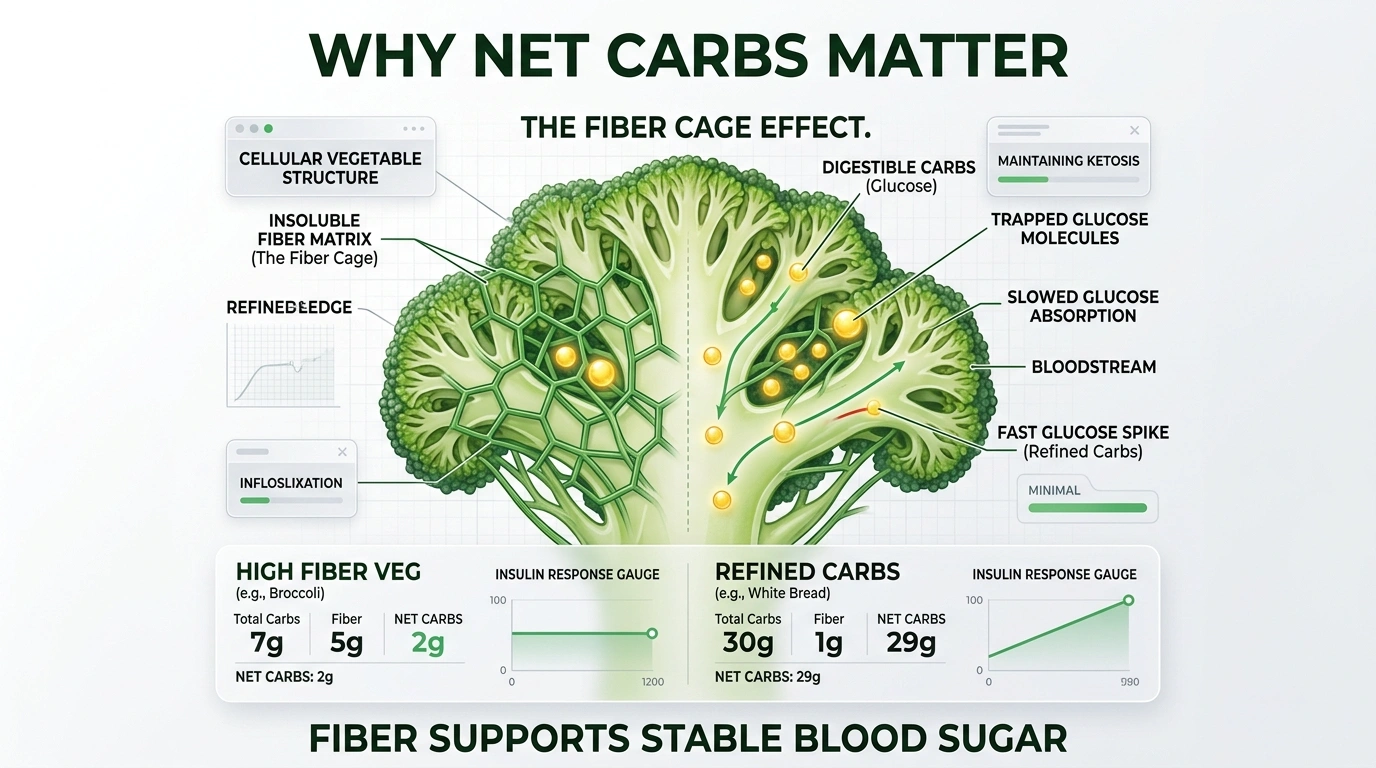
Understanding the “fiber cage” concept—where intact cellular matrices slow carbohydrate absorption—is crucial for glycemic control. By integrating specific low carb veggies rich in potassium, magnesium, and prebiotic fiber, individuals can mitigate the electrolyte imbalances of the adaptation phase, support gut microbiome diversity, and sustain fat oxidation while meeting absolute micronutrient requirements.
Rapid Data Matrix: Metabolic Impact of Key Vegetables
The following matrix stratifies the most common vegetables by their keto compatibility, metabolic impact, and practical recommendations for daily integration into a ketogenic protocol.
| Item / Concept | Keto Compatibility | Metabolic Impact | Practical Recommendation |
|---|---|---|---|
| Spinach | Yes (Always) | Negligible glucose response; high magnesium supports electrolyte balance. | Consume liberally. Use raw for volume or cooked down in healthy fats. |
| Cauliflower | Yes (Always) | Low glycemic load; provides glucosinolates for liver detoxification. | Excellent starch substitute (rice/mash); track portions to avoid carb creep. |
| Avocado | Yes (Always) | High monounsaturated fat and fiber blunt any insulin response. | Consume daily for potassium replenishment and satiety. |
| Bell Pepper (Green) | Yes (Moderate) | Mild glucose impact; highly rich in vitamin C. | Prefer green over red/yellow, as sugar content doubles during ripening. |
| Carrots | Limit | Moderate starch content; raw form has lower glycemic index (GI) than cooked. | Restrict to small amounts (e.g., shredded in salads); avoid boiling. |
| Onions | Limit | High sugar density by weight; concentrates further when cooked. | Use sparingly strictly as a flavor base; avoid caramelizing. |
| Peas & Corn | Avoid | High starch and sugar loads; trigger rapid insulin secretion. | Eliminate from daily intake; botanically grains/legumes, not vegetables. |
| Potatoes | Avoid | Massive starch reservoir; completely incompatible with ketogenesis. | Eliminate entirely to prevent disruption of fat oxidation. |
Scientific Deep Dive: Ketosis, Adaptation, and Plant Biochemistry
The Mechanics of Net Carbs and the “Fiber Cage”
In clinical ketogenic nutrition, evaluating vegetables requires distinguishing between total carbohydrates and net carbs. Net carbs represent the digestible carbohydrate content of a food after subtracting dietary fiber. Because human digestive enzymes cannot hydrolyze the beta-bonds present in plant cellulose and other fibers, these carbohydrates pass through the small intestine unabsorbed, exerting zero impact on blood glucose levels.
However, the biochemical benefit of fibrous vegetables extends beyond simple arithmetic. Whole vegetables utilize a structural framework known as the “fiber cage”. The intact cellular matrix of raw or lightly cooked vegetables acts as a physical barrier that traps naturally occurring sugars and starches. This structure delays the digestive process, blunting the post-prandial glucose spike and preventing the subsequent insulin surge that would otherwise halt ketone body production in the liver. Consequently, 5 grams of net carbohydrates derived from fibrous broccoli elicits a vastly different, far more stable metabolic response than 5 grams of carbohydrates from refined dextrose.
Keto Adaptation and Electrolyte Replenishment
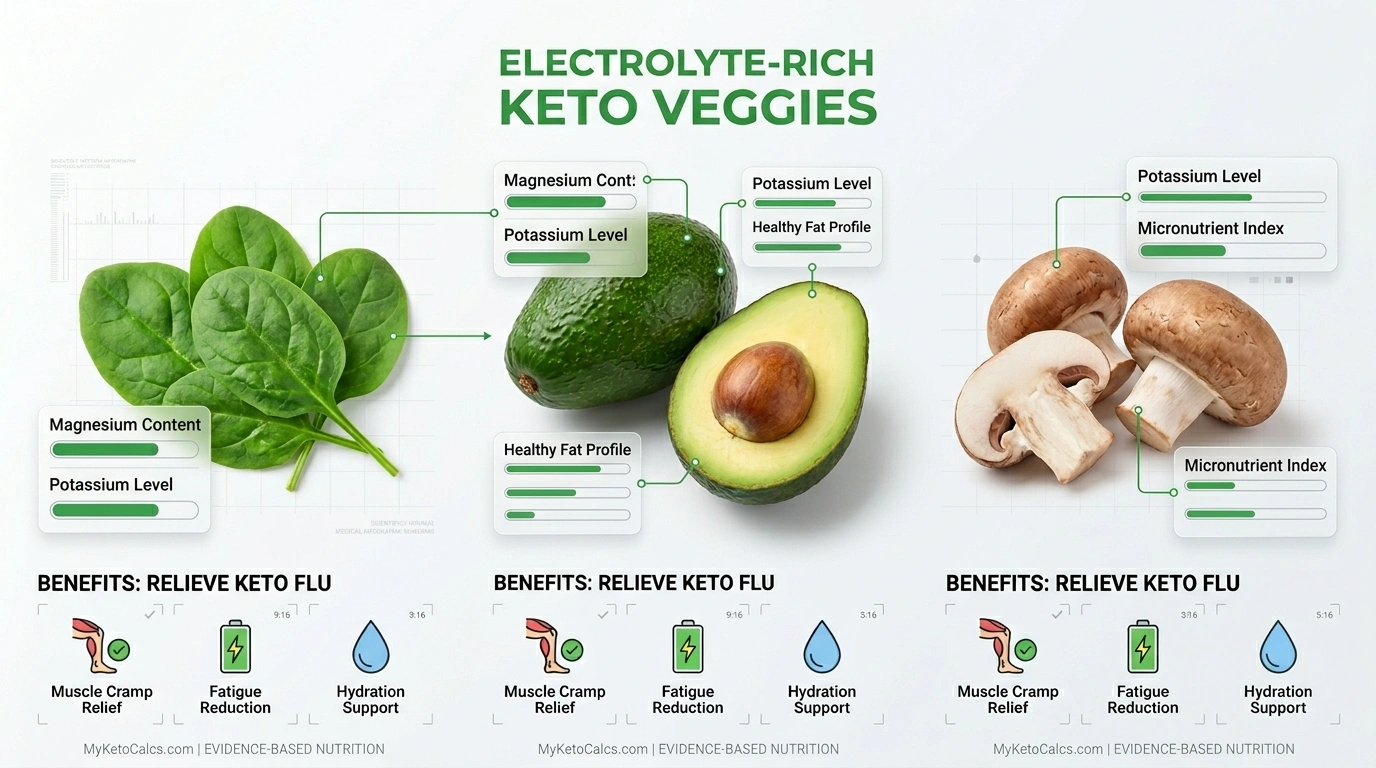
During the initial phase of ketogenic adaptation, the suppression of insulin signaling prompts the kidneys to excrete sodium, potassium, and magnesium at an accelerated rate. This diuretic effect often leads to the “keto flu,” characterized by fatigue and muscle cramps. A scientifically formulated low-carb vegetables list functions as a natural dispensary for these critical electrolytes. Dark leafy greens act as primary magnesium donors, essential for muscle relaxation and cardiovascular rhythm. Meanwhile, avocados and mushrooms supply robust doses of potassium, effectively bypassing the heavy fructose load associated with traditional potassium sources like bananas.
Methodology: Interpreting the Keto Vegetables Database
The classification of vegetables into ketogenic tiers is not arbitrary; it relies strictly on nutritional database logic, glycemic index (GI) principles, and botanical anatomy.
The “Above-Ground” vs. “Below-Ground” Heuristic
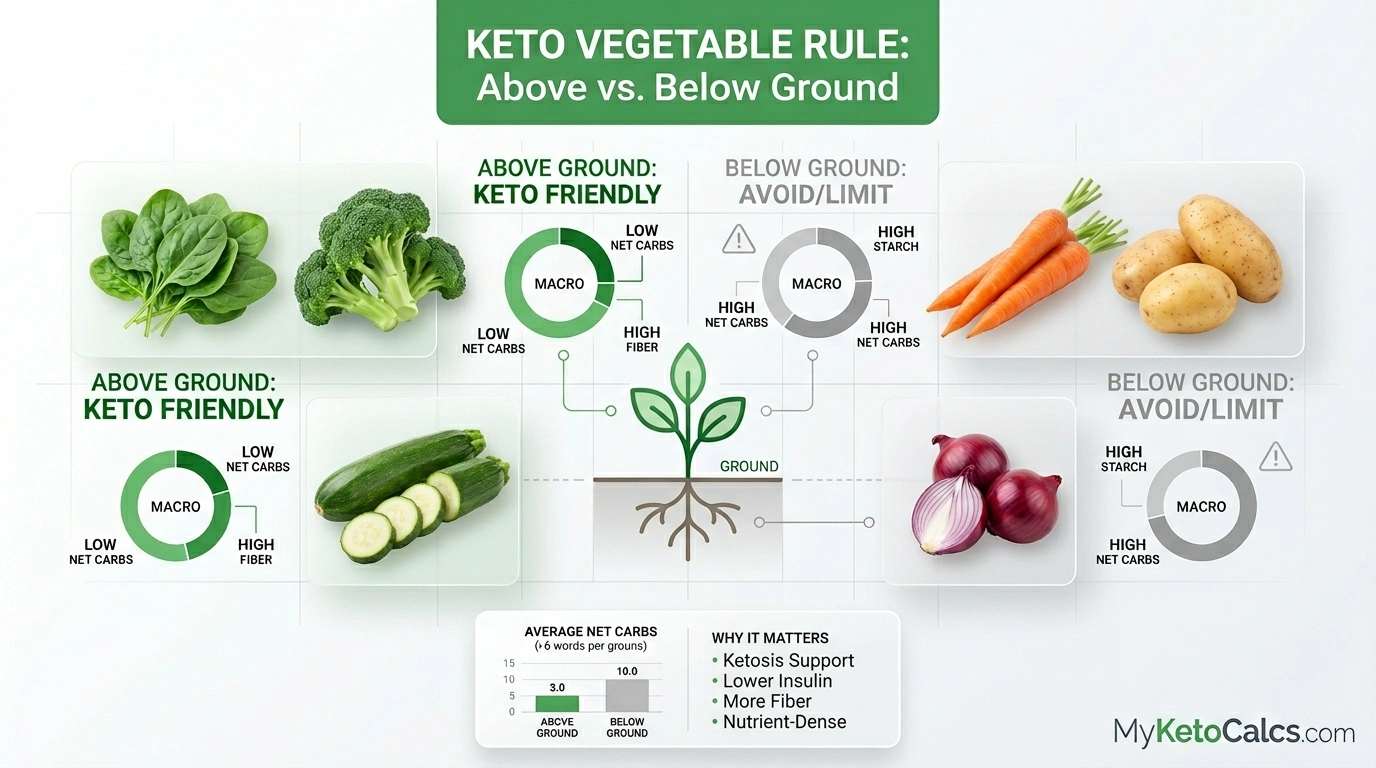
From a botanical and evolutionary standpoint, a plant’s anatomy determines its starch density. Vegetables that grow above ground—such as leaves, stems, and flowers—are biologically engineered for photosynthesis and reproduction. They do not require massive energy storage, resulting in a nutritional profile high in water and fiber but exceptionally low in starches. Conversely, root vegetables and tubers growing below ground serve as the plant’s overwintering energy reservoirs. They stockpile glucose in the form of dense starches, which rapidly elevate human blood glucose upon digestion. Therefore, above-ground vegetables are broadly keto-compliant, while below-ground roots are largely excluded.
Glycemic Alterations via Thermal Processing
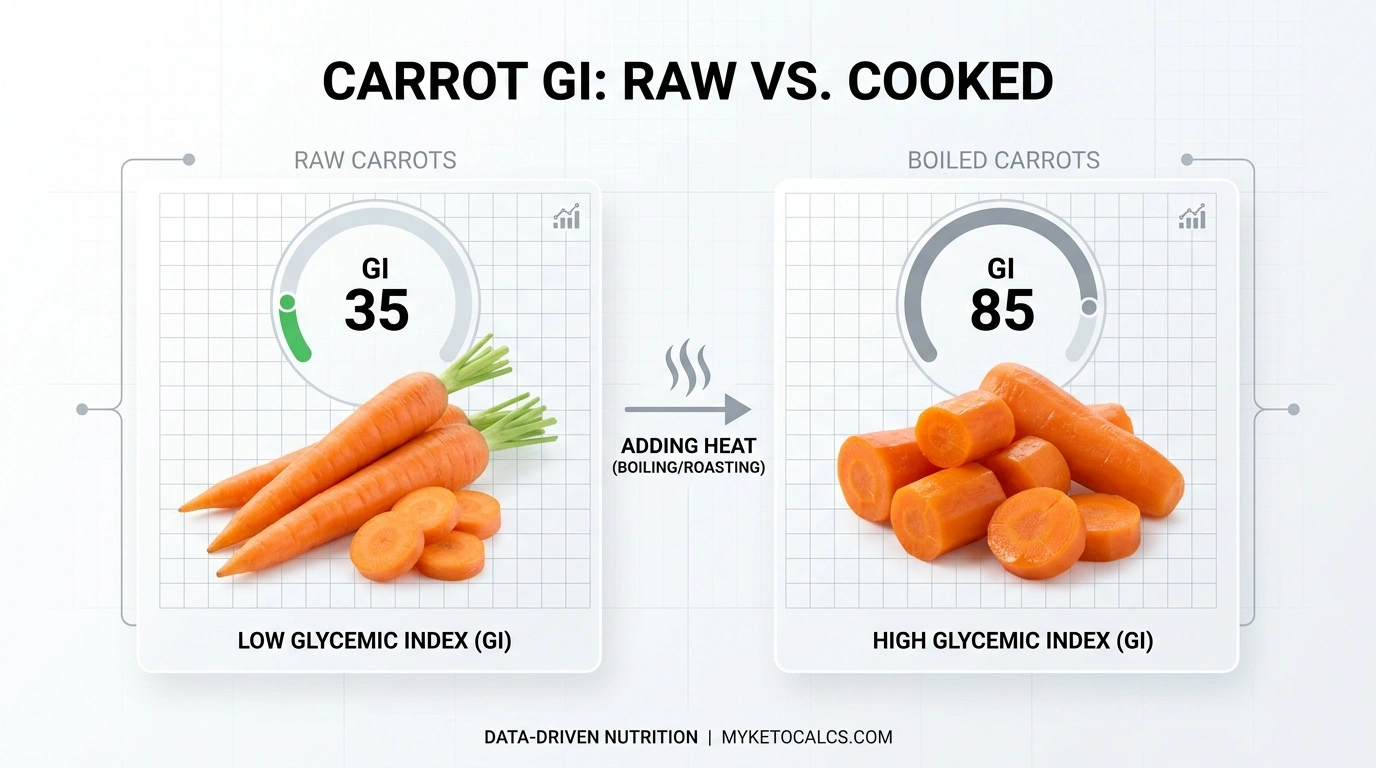
The metabolic impact of a vegetable is also heavily influenced by preparation. Applying heat alters the physical structure of starches—a process called starch gelatinization. For example, raw carrots possess a relatively low glycemic index of approximately 35, as the rigid fiber matrix slows digestion. However, boiling carrots breaks down this cellular wall, gelatinizing the starches and skyrocketing the glycemic index to 85, rendering them highly disruptive to blood sugar. Furthermore, cooking leafy greens drastically reduces their water volume, inadvertently concentrating the net carbohydrate payload per cup (e.g., 100g of raw spinach has ~1.4g net carbs, but cooked spinach tightly packs into a cup, raising the density to ~3g–7g depending on volume).
Contrarian Analysis: Debunking Common Keto Vegetable Myths
Myth: Corn and peas are healthy vegetables suitable for any diet.
Scientific Reality: Botanically and metabolically, corn is a grain and peas are starchy legumes. Corn contains up to 19g of net carbs per 100g, while peas contain roughly 10–16g of net carbs per half-cup. Both deliver a high-starch payload that spikes insulin similarly to refined bread, making them strictly contraindicated for nutritional ketosis.
Myth: Carrots are entirely forbidden on keto due to high sugar.
Scientific Reality: While carrots are root vegetables, they contain approximately 4.8g to 7g of net carbs per 100g, which is significantly lower than potatoes. They can be integrated into a targeted keto framework if consumed raw and in strictly controlled, small quantities (such as shredded in a salad). The danger lies in boiling or roasting them in large portions.
Myth: You can eat unlimited quantities of “keto-friendly” vegetables.
Scientific Reality: Even low-carb vegetables obey the laws of thermodynamics and carbohydrate accumulation. This phenomenon, known as “carb creep,” occurs when individuals consume massive volumes of moderately low-carb vegetables. For instance, consuming 500g of broccoli yields roughly 20g of net carbs—exhausting the entire daily carbohydrate allowance for strict keto protocols in a single sitting.
Category Deep Dives: The Definitive Database
1. Leafy Greens (Spinach, Lettuce, Arugula, Kale)
- Metabolic Profile: Exceptionally low glycemic load. Net carbs range from 0.4g to 1.5g per 100g (raw). Negligible insulin response.
- Practical Keto Use: Ideal for creating high-volume meals that trigger gastric distension and mechanical satiety without adding caloric or carbohydrate density. Perfect carriers for high-fat dressings (olive oil, avocado oil).
- Biochemical Justification (Always Eat): Spinach contains thylakoids, specialized cellular compartments clinically demonstrated to increase satiety and suppress hedonic hunger pathways. Kale provides vast amounts of vitamin K and antioxidants like quercetin.
- Edge Cases: Kale is slightly more carbohydrate-dense (up to 4–5g net carbs per cup) than spinach and contains oxalates, which may inhibit mineral absorption in sensitive demographics. Cooking greens causes massive volume shrinkage; measure macros by raw weight before cooking to avoid accidental carb loading.
2. Cruciferous Vegetables (Cauliflower, Broccoli, Cabbage, Brussels Sprouts)
- Metabolic Profile: Moderate net carbs (3g to 5g per 100g). Highly fibrous, resulting in a delayed, blunted glucose release.
- Practical Keto Use: The ultimate culinary chameleons. Cauliflower acts as a low-glycemic starch substitute for rice or mashed potatoes. Cabbage is utilized as a robust noodle alternative.
- Biochemical Justification (Always Eat / Limit Volume): Broccoli is a rich source of sulforaphane, an active phytocompound that triggers the Nrf2 pathway, radically upregulating the body’s endogenous antioxidant and anti-inflammatory defenses. Brussels sprouts supply alpha-lipoic acid (ALA), an antioxidant clinically linked to enhanced insulin sensitivity. Cabbage is highly concentrated in glutamine, a crucial amino acid for repairing and maintaining the intestinal barrier (gut lining).
- Edge Cases: Boiling broccoli leaches its water-soluble vitamins; steaming or roasting is metabolically superior. Brussels sprouts sit at the higher end of the low-carb spectrum (~5g net carbs per 100g) and require strict portion control.
3. Fruiting Vegetables (Avocado, Zucchini, Cucumber, Tomatoes, Bell Peppers)
- Metabolic Profile: Botanically fruits, these range from highly ketogenic (avocado: ~2g net carbs) to moderately ketogenic (tomatoes/peppers: 3g–5g net carbs).
- Practical Keto Use: Avocados provide the lipid foundation of the diet. Zucchini is spiralized into “zoodles” to replace high-carb pasta. Cucumbers offer rapid hydration and act as crunchy vehicles for high-fat dips.
- Biochemical Justification (Always Eat / Limit): Avocados are a rare lipid-fiber matrix, providing heart-healthy monounsaturated oleic acid alongside 7g of fiber per 100g, neutralizing any glucose response. Bell peppers deliver immense doses of vitamin C, lutein, and zeaxanthin, protecting retinal health against oxidative stress.
- Edge Cases: Ripeness dictates sugar content. A green bell pepper has significantly less fructose than a fully ripened red or yellow bell pepper. Tomatoes must be portion-controlled, and concentrated tomato products (pastes, purees) must be heavily scrutinized for absent fiber and added sugars.
4. Fungi (Mushrooms)
- Metabolic Profile: Extremely low carbohydrate density (~2.2g net carbs per 100g). Near-zero insulin stimulation.
- Practical Keto Use: Mushrooms act as porous flavor sponges. Sautéing them in saturated fats (tallow, butter, bacon fat) allows them to absorb necessary dietary lipids.
- Biochemical Justification (Always Eat): Fungi provide unique micronutrients absent in many plants, including bioavailable selenium and vitamin D. They contain beta-glucans, specialized polysaccharides that act as potent immune system modulators.
- Edge Cases: Commercially breaded or sweet-glazed mushrooms negate their ketogenic benefits. They must be prepared in pure fats.
5. Root and Allium Vegetables (Onions, Garlic, Carrots, Potatoes)
- Metabolic Profile: High to extreme carbohydrate density. Onions/Carrots (7g–9g net carbs per 100g). Potatoes/Yams (15g–20g+ net carbs per 100g). Provoke rapid, sustained insulin secretion.
- Practical Keto Use: Potatoes, yams, and parsnips are strictly avoided. Onions and garlic are utilized exclusively in micro-doses for flavoring.
- Biochemical Justification (Limit / Avoid): Roots function as biological starch reserves. Once consumed, salivary amylase rapidly cleaves these starches into free glucose, instantly disrupting the delicate fat-adaptation phase and halting ketone body synthesis.
- Edge Cases: Caramelizing onions evaporates their water content, creating a hyper-concentrated sugar reduction that will easily spike blood glucose. Garlic, while having ~1g net carb per clove, is safe due to the minute quantities utilized in standard recipes.
👇 Free Keto Macros Calculator
To avoid “carb creep,” use a precision tool to calculate your daily vegetable and macro allowance. Find your baseline.
Your Personalized Results
Daily Target
0
kcal / day
FAQ: Clinical Insights on Keto Vegetables
Are tomatoes considered low carb vegetables?
Yes, but dosage is the limiting factor. Botanically a fruit, fresh tomatoes contain roughly 3 to 4 grams of net carbs per 100g. A few slices in a salad easily fit into a ketogenic protocol. However, sundried tomatoes, tomato paste, and commercial tomato sauces condense the natural sugars and frequently contain added sucrose, making them hazardous to ketosis.
Can I eat unlimited spinach and lettuce on keto?
While it is practically difficult to consume enough leafy greens to exit ketosis due to their vast water content and fiber, they are not strictly “unlimited”. A standard cup of raw spinach contains less than 1g of net carbs. However, cooking reduces their volume drastically; consuming multiple cups of cooked, heavily condensed spinach can result in unintended “carb creep” and gastrointestinal distress.
Do I count total carbs or net carbs for vegetables?
For vegetables, you should track net carbs. The formula is total carbohydrates minus dietary fiber. Because the human body lacks the enzymatic machinery to break down vegetable fiber, it does not convert to glucose or stimulate insulin release. Tracking net carbs provides an accurate representation of the physiological metabolic impact.
Are onions and garlic safe for ketosis?
Yes, provided they are utilized as aromatic flavorings rather than bulk ingredients. Onions possess a higher sugar density (around 7–9g net carbs per 100g). Adding a tablespoon of diced onion or a clove of minced garlic (less than 1g net carb) to a recipe is metabolically safe. Avoid eating whole baked onions or caramelized onions, which aggressively concentrate fructose.
Why does cooking change the carbohydrate impact of vegetables?
Thermal processing physically alters plant cellular architecture. Cooking reduces water weight, thereby concentrating the carbohydrate density per cup. More importantly, heat causes starch gelatinization in root vegetables like carrots, dismantling the “fiber cage” and dramatically accelerating the speed at which the starches are converted to blood glucose, raising the vegetable’s glycemic index.
Are carrots completely forbidden on a ketogenic diet?
Carrots are not entirely forbidden, but they require strict monitoring. As root vegetables, they contain about 5g to 7g of net carbs per 100g. They can be incorporated into a low-carb diet if eaten raw in small, measured quantities, such as grated over a salad. Boiling carrots should be avoided as it drastically spikes their glycemic impact.
How many cups of vegetables should I eat per day on keto?
A well-formulated ketogenic diet targets roughly 12 to 15 grams of net carbohydrates derived entirely from non-starchy vegetables. In practice, this equates to the “plate method”: filling half of your plate with leafy greens or cruciferous vegetables, yielding roughly 3 to 5 cups of raw salad greens or 1 to 2 cups of cooked fibrous vegetables daily.
What is the difference between green and red bell peppers?
The difference lies in the ripening process. Green bell peppers are harvested earlier and contain approximately 2.9g of net carbs per 100g. As the pepper stays on the vine to ripen into a yellow or red pepper, its natural sugar concentration essentially doubles (around 6g net carbs per 100g). Green peppers are the optimal ketogenic choice.
Further Reading & Tools
Explore More Resources
For additional information on low carb vegetables and ketogenic nutrition, check out these excellent resources: