
Top keto veggies by carbs: best low-carb vegetables for optimal ketosis
An analytical overview of the best and worst vegetable choices — ranked by net carbohydrates across three tiers to help you stay within daily macro limits without sacrificing nutrient density.
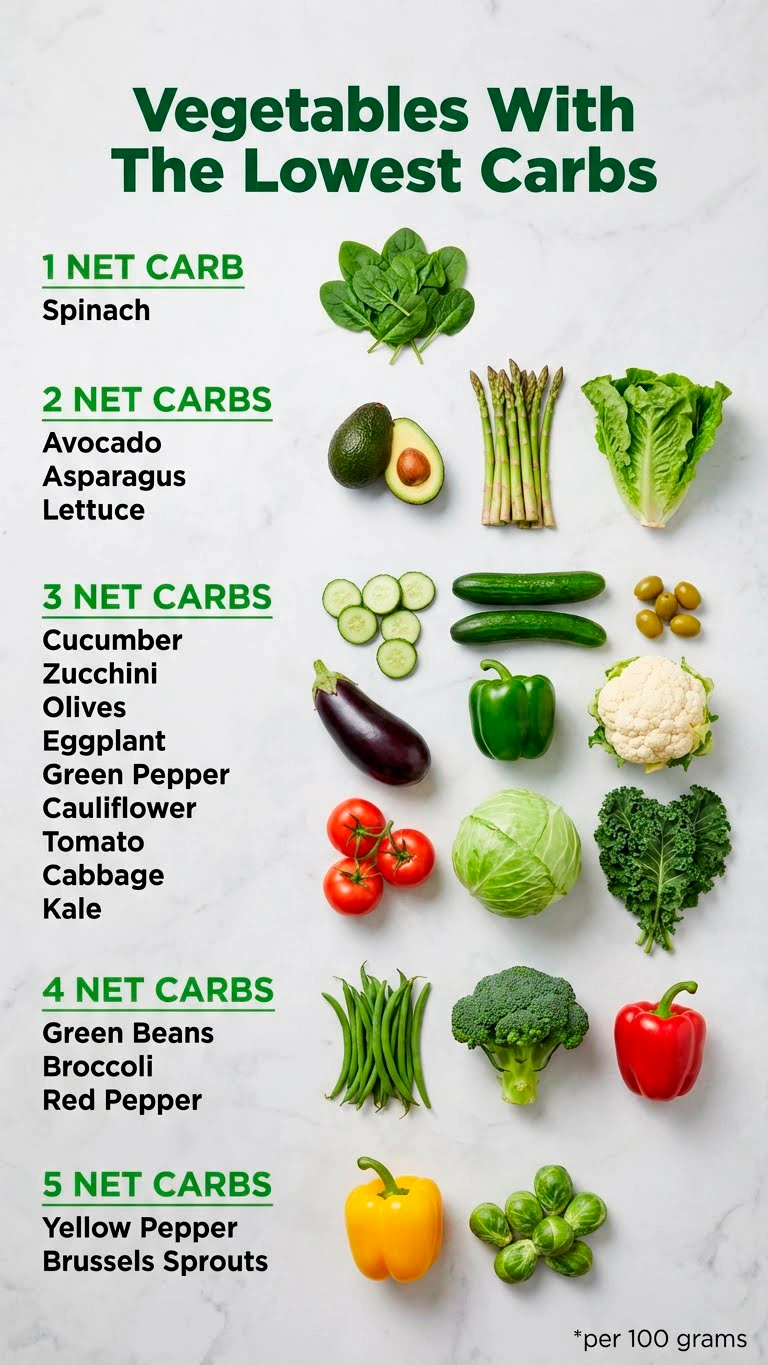
Why vegetable selection matters on keto
The ketogenic diet necessitates a significant reduction in carbohydrate intake — typically limiting consumption to 20 to 50 grams of net carbs daily, with stricter protocols aiming for fewer than 20 grams. For newcomers navigating this dietary change, selecting appropriate vegetables is crucial: they are essential sources of vitamins, minerals, fiber, and protective phytonutrients, but their carb content varies enormously by type and preparation.
While meat, poultry, and certain dairy products primarily supply protein or fat, vegetables supply the majority of carbohydrates in a whole-food keto approach. Understanding the TOP KETO VEGGIES BY CARBS and their nutritional profiles is foundational for achieving and maintaining ketosis while staying micronutrient-sufficient. See the full reference guide: keto vegetables list ranked by net carbs.

The core principles of keto vegetable selection
A structured approach based on where the vegetable grows and its net carb count is the most reliable framework for navigating the produce aisle without a chart in hand.
Defining net carbs: fiber’s role in low-carb diets
“Net carbs” refers to the carbohydrates that are absorbed and digested by the body — the ones that contribute to calorie intake and impact blood sugar levels. The formula is simple:
Net Carbs = Total Carbohydrates − Dietary Fiber
Since fiber is a form of carbohydrate that is largely indigestible and does not raise blood glucose, it does not prevent the body from entering or maintaining ketosis. For those on a ketogenic diet, focusing on net carbs is the correct method for determining a vegetable’s compatibility. For more detail, see our guide on net carbs vs. total carbs.
Above-ground vs. below-ground: a quick rule
A reliable rule of thumb for selecting keto vegetables is to favor those that grow above the ground.
- Above-ground vegetables (leafy greens, broccoli, cauliflower, zucchini, peppers) are generally lower in carbs — typically under 5g net carbs per 100g. They grow for photosynthesis and reproduction, not energy storage.
- Below-ground vegetables (root vegetables) serve as the plant’s energy reserve, storing large amounts of starch for dormancy or winter. They typically contain 6–19g of net carbs per 100g and should be limited or avoided on strict keto.
A secondary guideline: leafy greens are the safest choices, and green-colored vegetables tend to be lower in carbs than red, orange, or yellow varieties of the same species.
Ultra-low carb champions (0–2g net carbs)
Vegetables in this category can often be eaten generously on a ketogenic diet because their net carbohydrate content is negligible even in large portions. These are the definitive keto staples.

Spinach (0–1g net carbs per cup, raw)
Spinach is widely recognized as the single best low-carb vegetable to stock in quantity — in some raw servings it rounds to near-zero digestible carbohydrates.
Nutritional profile — 1 cup raw:
Clinical benefits: spinach is an excellent source of Vitamin A, Vitamin K, iron, and magnesium. It may support heart health, lower blood pressure, and decrease the risk of common eye diseases. The thylakoid compounds in spinach have also been clinically shown to increase satiety and reduce hedonic cravings. Sauté in butter or olive oil for maximum fat-soluble vitamin absorption.
Lettuce varieties (0–1g net carbs)
Butter Lettuce — 1 cup:
Romaine / Chopped Lettuce — 1 cup:
Butter lettuce leaves are hearty enough to serve as low-carb wraps for meats and cheeses. Romaine provides over 30% of daily folate needs and approximately 10% of daily potassium per 1.5-cup serving — critical electrolytes during the keto adaptation phase.
Leafy green heroes: arugula, bok choy, Swiss chard
Arugula (Rocket): with only 1.5g of carbohydrates per 2-cup serving, arugula adds a peppery, mustard-like complexity to salads. It contains carotenoids, flavonoids, and phenolic antioxidants associated with reduced cardiovascular and cancer risk.
Bok choy (3/4 cup, raw):
One of the best keto choices for calcium and Vitamin K — essential for bone formation and blood clotting regulation.
Swiss chard (1 cup, raw):
Typically cooked due to raw bitterness — sauté with butter, garlic, and bacon for a simple side dish. Swiss chard is a superior source of kaempferol, a phytonutrient with potent antioxidant activity and emerging anti-cancer research.
Celery, mushrooms, and radishes
Celery (1 cup, chopped, raw): 16 Calories | 3g Total Carbs | 2g Fiber | 1g Net Carbs. A 100g serving of raw celery contains only 2.97g total carbs. Rich in potassium, calcium, and the anti-inflammatory compound apigenin — which may contribute to cancer prevention through apoptosis.
Mushrooms (1 cup, raw): 20 Calories | 2g Total Carbs | 1g Fiber | 1–2.2g Net Carbs. Mushrooms add earthy complexity when roasted or sautéed in rendered meat fat. Rich in B vitamins and selenium, with documented anti-inflammatory, antioxidant, and immune-modulating benefits from beta-glucan compounds.
Radishes (1 cup, raw): 2g Net Carbs. Contain anthocyanins — phytonutrients that may help regulate blood sugar. Can be sliced raw for dipping or roasted as a lower-carb stand-in for baby potatoes.
Foundation keto vegetables (2–4g net carbs)
These are the workhorses of a well-rounded ketogenic diet. Slightly higher in carbs than Tier 1, but their culinary versatility, satiety value, and nutritional density make them essential daily staples.

Cauliflower and broccoli: cruciferous staples
Cauliflower — 1 cup, raw:
Cauliflower is perhaps the most versatile keto vegetable in existence. It replaces rice, mashed potatoes, and pizza crust — reducing the carbohydrate count of these dishes by over 90%. Rich in Vitamin K, Vitamin C, and sulfur-containing glucosinolates that may reduce inflammation and protect against cardiovascular disease and certain cancers.
Broccoli — 1 cup, chopped, raw:
Broccoli contains sulforaphane — a compound activated by chewing or chopping that supports the body’s natural detoxification pathways (Nrf2 activation) and may help decrease insulin resistance. Steam or roast until al dente to preserve the fiber matrix; overcooking leaches key nutrients.
Zucchini, summer squash, and asparagus
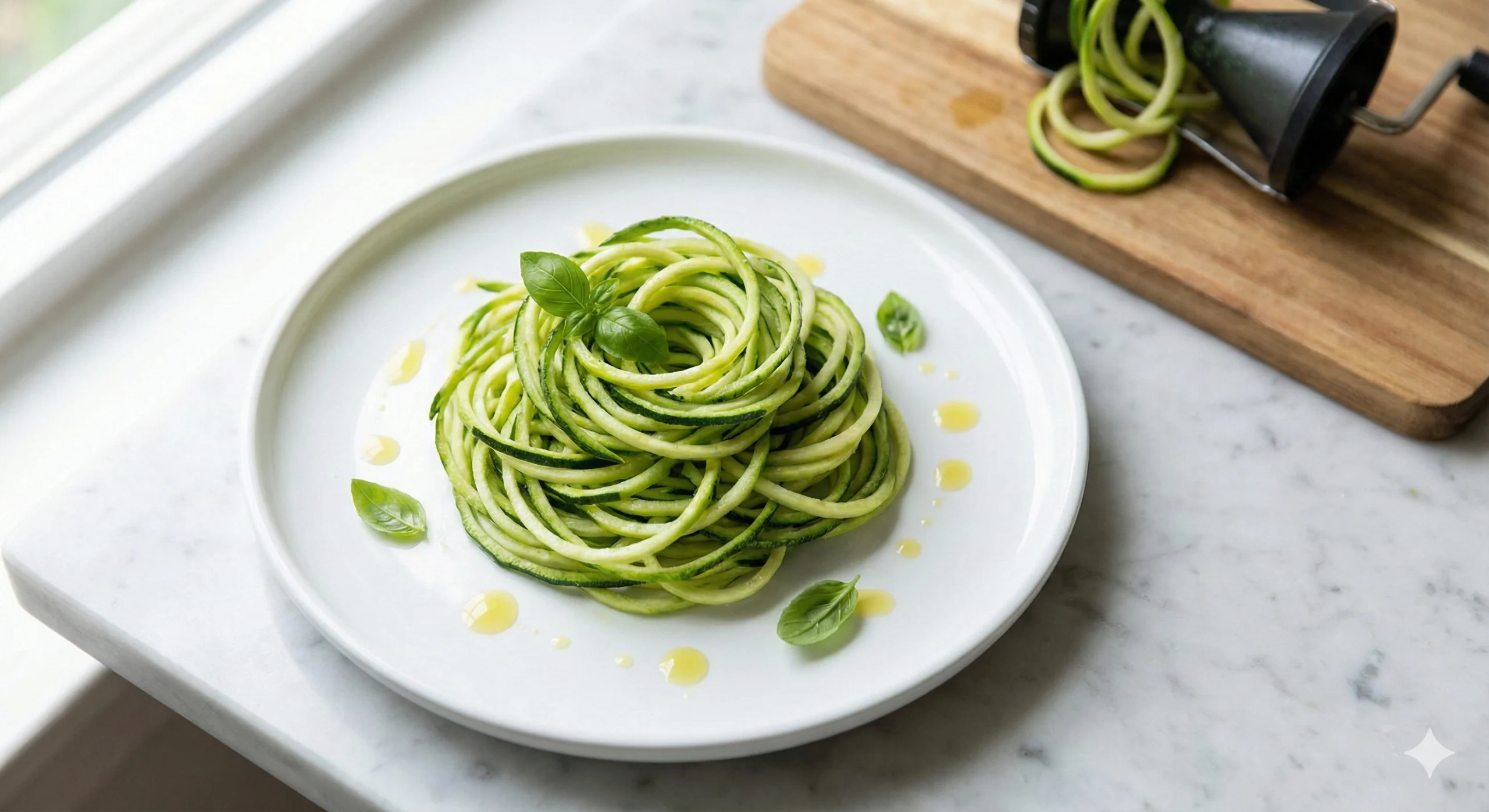
Zucchini (1 cup, raw): 2.1–2.4g Net Carbs. The definitive pasta substitute — spiralized into “zoodles,” it reduces the carbohydrate count of a spaghetti dinner from ~40g to under 4g. Rich in Vitamin A, potassium, and high in water content, which supports mechanical satiety through stomach distension. Neutral flavor pairs well with rich, high-fat sauces.
Yellow summer squash (1 cup, raw): 2.6g Net Carbs. Functionally similar to zucchini in texture and use.
Asparagus — 1 cup, raw:
Asparagus contains inulin — a prebiotic fructan fiber that feeds beneficial Bifidobacteria in the colon, supporting microbiome diversity that can be reduced when grains are eliminated on keto. Acts as a natural diuretic, helping shed early-phase water retention. Approximately half its carbohydrates come from fiber.
Cabbage and eggplant
Cabbage (1 cup, chopped, raw): 3g Net Carbs. Rich in the amino acid glutamine, which is crucial for maintaining the integrity of the intestinal lining — a key consideration on keto, where grain-based fiber sources are eliminated. A cruciferous vegetable that may help reduce the risk of certain cancers. Use as noodle substitute (sliced thin and sautéed), as a taco wrap, or fermented as sauerkraut — fermentation reduces the carb count further as bacteria consume residual sugars.
Eggplant (1 cup, cubed, raw): 3g Net Carbs. A hearty, filling substitute for noodles in lasagna or as a pizza crust base. Animal research suggests eggplant may help lower cholesterol. Its dense texture provides mechanical satiety that helps meet fat macro targets when cooked in olive oil or butter.
Vegetables requiring moderate caution (4–6g+ net carbs)
Nutritionally excellent, but their higher net carb density means portion size must be actively tracked — especially if targeting fewer than 20g of total daily net carbs.
Bell peppers, green beans, Brussels sprouts, and tomatoes
Green bell peppers (1 cup, chopped): 4g Net Carbs. The lowest-carb pepper color — as peppers ripen from green to yellow to red, their sugar concentration effectively doubles. Red bell peppers contain 6g net carbs per 100g. For strict keto, use green peppers as flavor vehicles rather than eating large quantities raw.
Green beans (1/2 cup): 2g Net Carbs. Botanically legumes, but harvested young before the starch-heavy seeds fully develop, keeping the carb load low. A 1-cup serving reaches 4.3g net carbs — so serving size matters. Contain carotenoids associated with improved cognitive function during aging.
Brussels sprouts (4 oz / ~1 cup): 4.6g Net Carbs. A dense cruciferous vegetable rich in alpha-lipoic acid (ALA), which may improve insulin sensitivity. High in Vitamin K and C. Their bitter profile is best addressed by roasting with bacon or cooking in lard — which also adds necessary dietary fat. Monitor portion size carefully.
Medium tomato:
Tomatoes are botanically a fruit, but used as a vegetable on most keto plans. Fresh tomatoes at 3–4g net carbs per 100g are manageable in moderate portions. The risk lies in concentrated forms — tomato paste can deliver 10–14g net carbs per 2 tablespoons. Their lycopene content offers strong antioxidant and cardiovascular protection.
Specialty vegetables approaching 5–6g net carbs
- Spaghetti squash (1 cup, cooked): ~5.5g Net Carbs. An excellent pasta substitute. The stringy flesh mimics noodle texture when scraped with a fork. Track per cup as it can accumulate quickly in larger portions.
- Jicama (3.5 oz): 4g Net Carbs. A keto-friendly root exception with very high fiber relative to its total carbs. Cut into sticks for dipping or chopped for crunch — sometimes used as an apple texture substitute.
- Artichoke (1 medium): ~6g Net Carbs after subtracting 5–7g of fiber from 11–14g total carbs. May help lower blood pressure, cholesterol, and blood sugar. Count carefully — a single artichoke can use a significant portion of the daily carb budget.
High-carb vegetables to limit or avoid
Achieving ketosis requires the body to burn fat instead of carbohydrates for fuel. Consuming high-starch vegetables can undermine this by providing excessive glucose substrate. These categories must be strictly limited or eliminated on a standard ketogenic protocol.
🚫 Below-ground starchy vegetables
- White potatoes (1 medium): 24g Net Carbs. A 100g serving contains 16g carbs. One medium potato exceeds an entire day’s carb allowance on strict keto.
- Sweet potatoes (1 medium): ~17g Net Carbs.
- Yams (1 medium): 32g Net Carbs. A 100g serving of cooked yam contains 27.4g carbs.
- Parsnips (1 cup): 13g Net Carbs. 10.5g net carbs per 1/2 cup.
- Beets / Beetroot: 7–9g Net Carbs per 100g, with a glycemic index of 64. The high nitrate content and natural sugar load make it incompatible with strict keto.
🚫 Legumes and grains mistaken for vegetables
- Corn (2/3 cup): 20g Net Carbs. Botanically a grain — one medium ear contains 19.1g carbs. A 100g serving contains 16g net carbs.
- Peas (1/4 cup): 9g Net Carbs. One cup of green peas contains 20.9g total carbohydrates.
- Cassava / Yuca (100g): 36g Net Carbs. Among the highest carb density of any “vegetable.”
- Most beans: black beans contain 13g net carbs per 1/2 cup; kidney beans contain 14g per 1/2 cup. All mature beans are generally incompatible with strict keto.
Exceptions and moderation: carrots and onions
- Carrots: a medium-sized carrot contains 6–7g net carbs. While technically a root vegetable, they are lower in carbs than potatoes and can fit into a targeted or cyclical keto diet in small quantities. Important clinical note: cooking breaks down the cellular matrix of carrots (starch gelatinization), raising their glycemic index from ~35 (raw) to ~85 (boiled). If consumed, raw and portioned is superior.
- Onions: despite growing underground, onions are typically used sparingly as a seasoning base — 8g net carbs per 100g raw. In small quantities (1/4 onion in a soup or dish), they fit within keto macros. The danger is caramelized or sautéed onions, where volume reduction concentrates the sugars significantly.
Strategic consumption: maximizing nutrient intake
Simply counting carbs is insufficient — a successful keto diet must also prioritize micronutrient and fiber density. The best keto vegetables should be integrated strategically to maximize their health benefits.
The importance of leafy greens and fiber
- Fiber intake: keto-friendly vegetables provide essential fiber for digestive health. Asparagus has about half its carbohydrates as fiber. Without grain sources, daily fiber intake must come primarily from vegetables, nuts, seeds, and avocados.
- Micronutrient density: kale provides lutein and zeaxanthin to protect against macular degeneration. Broccoli, cauliflower, and Brussels sprouts are vital for Vitamin K and C, which can be insufficient on very low-carb diets without strategic vegetable choices.
Cooking methods to support ketosis and nutrient absorption
- Fat as a vehicle: cooking vegetables in healthy fats — butter, ghee, coconut oil, avocado oil, lard — serves two simultaneous purposes: adding the dietary fat macros the keto diet requires, and enabling absorption of fat-soluble vitamins A, D, E, and K that would otherwise pass through unabsorbed.
- Versatile preparations: zucchini spiralized into zoodles, cauliflower riced or mashed, Brussels sprouts roasted until caramelized — varied cooking methods prevent flavor fatigue, which is one of the primary drivers of keto abandonment.
- Track cooked vegetables by weight: a cup of cooked spinach is far denser than a cup of raw spinach — and contains proportionally more carbs. Always track by grams, not volume, for accuracy.
Quick-reference summary: top keto veggies by net carbs
The table below summarizes the top keto-compatible vegetables ranked by net carbohydrate content, along with their best keto applications.
| Vegetable (standard serving) | Net Carbs | Best Keto Use |
|---|---|---|
| Spinach (1 cup, raw) | 0.4g | Salads, creamed sides, smoothies |
| Butter lettuce (1 cup) | 0g | Wraps, salad base |
| Swiss chard (1 cup) | 0g | Sautéed in butter & garlic |
| Bok choy (¾ cup) | 1g | Stir-fries, roasted sides |
| Celery (1 cup, chopped) | 1g | Crudités & dipping |
| Radish (1 cup) | 2g | Salads, potato alternative (roasted) |
| Mushrooms (1 cup) | 2g | Sauces, umami base |
| Cucumber (½ cup) | 2g | Snacking, refreshing salads |
| Zucchini (1 cup) | 2.4g | Zoodles (pasta replacement) |
| Asparagus (1 cup) | 2.4g | Grilled, roasted, bacon-wrapped |
| Cauliflower (1 cup) | 2–3g | Rice, mash, pizza crust |
| Cabbage (1 cup) | 3g | Slaws, wraps, soups |
| Eggplant (1 cup, cubed) | 3g | Lasagna noodle substitute |
| Broccoli (1 cup, raw) | 4g | Roasted, casseroles, sides |
| Bell pepper, green (1 cup) | 4g | Stir-fries, stuffed peppers |
| Brussels sprouts (1 cup) | 4.6g | Roasted with bacon |
| Tomato (1 medium) | 4g | Salads, caprese — portion carefully |
| Spaghetti squash (1 cup) | 5.5g | Pasta substitute — track portions |
Conclusion: vegetables as a strategic keto tool
Consistently choosing top keto veggies by carbs — focusing on above-ground, non-starchy options and incorporating healthy cooking fats — ensures adherence to ketogenic macro targets while maximizing vital micronutrient intake. By prioritizing vegetables with low net carbohydrate density across three tiers, both beginners and experienced practitioners can successfully navigate carb restriction without sacrificing nutrient sufficiency or culinary variety.
The goal is not merely to count carbs but to build a micronutrient-rich, fiber-adequate, fat-compatible vegetable palette that sustains ketosis long-term. Use the free keto macros calculator to determine your specific daily vegetable carb budget.
Disclaimer: this guide is intended for informational purposes. Always consult a registered dietitian or healthcare professional before making significant dietary changes, particularly if taking medications such as Warfarin, which can be affected by changes in Vitamin K intake from vegetables like kale, spinach, and broccoli.
FAQ: keto vegetables — clinical answers for beginners
The most common questions about choosing, tracking, and preparing vegetables on a ketogenic diet — answered with practical clinical precision specific to this topic.
Net carbs are the carbohydrates your body actually absorbs and metabolizes — the fraction that raises blood glucose and impacts ketosis. The formula is: Net Carbs = Total Carbohydrates − Dietary Fiber. Fiber is largely indigestible and passes through without raising blood sugar, so it does not prevent the body from staying in ketosis. For vegetables, this distinction is critical: broccoli has 6g total carbs per cup but only ~4g net carbs after subtracting 2g of fiber. In Europe and Australia, food labels often already display the “net” figure as the carbohydrate total. Always check the label origin before subtracting again.
For most people, Tier 1 leafy greens — spinach, romaine, butter lettuce, Swiss chard, arugula — are safe to eat generously because their net carbs are so low (often under 1g per cup). However, “freely” is not the same as “without any limit.” Eating 500g of raw spinach still adds 2–3g of net carbs, and 500g of cooked broccoli would deliver approximately 20g — the full daily allowance for strict keto. The practical guidance: eat leafy greens liberally and without anxiety, but if you are targeting strict ketosis under 20g/day, log them alongside other foods rather than treating them as a free category. For Tier 2–3 vegetables (broccoli, Brussels sprouts, bell peppers), portion tracking is important.
Yes — cauliflower is the most versatile keto vegetable available, and the replacements are genuinely effective when prepared correctly. Riced cauliflower (pulsed in a food processor until grain-sized, then pan-fried dry to remove moisture) replaces white rice at ~2–3g net carbs per cup versus rice’s ~45g. Mashed cauliflower (steamed, blended with cream cheese or butter) replicates the texture of mashed potatoes with a fraction of the carbs. A baked cauliflower crust holds pizza toppings effectively when squeezed dry of moisture before baking. The carb reduction across all three applications exceeds 90% compared to the originals. The key in all preparations is removing excess water — cauliflower holds a lot of moisture that must be expelled for the texture substitution to work.
Tomatoes are conditionally keto-friendly. Botanically a fruit (but used as a vegetable), a medium fresh tomato contains approximately 3–4g of net carbs — manageable within a keto budget if portions are controlled. A handful of cherry tomatoes in a salad or a few slices with mozzarella fit easily. The concern arises with concentrated tomato products: tomato paste can deliver 10–14g net carbs per 2 tablespoons; sun-dried tomatoes are very carb-dense due to water removal concentrating the sugars; and most commercial pasta sauces add sugar. The rule: fresh whole tomatoes in limited quantity = acceptable; concentrated or processed tomato products = check the label carefully and measure.
Root vegetables — potatoes, sweet potatoes, yams, parsnips, beets — are the plant’s underground energy storage organs. They accumulate large reserves of starch and sugar to survive winter or periods of dormancy. Upon digestion, this starch converts rapidly to glucose, triggering an insulin spike that stops ketone production and effectively exits the fat-burning state. A medium potato has 24g net carbs — more than an entire day’s carb allowance on strict keto. This doesn’t mean root vegetables are unhealthy foods in general: for someone on a balanced, high-carb diet, sweet potatoes provide valuable nutrients. But within the specific metabolic constraints of a ketogenic protocol, their carb density is simply incompatible with maintaining the hormonal conditions required for ketosis at any normal serving size.
Cooking does not change the total carbohydrate content by weight — but it dramatically changes volume, which is why tracking method matters. A cup of cooked spinach contains far more actual spinach (and therefore more carbs) than a cup of raw spinach, because cooking collapses the cellular structure. Similarly, a cup of cooked broccoli contains more carbs than a cup of raw broccoli florets. The solution is always to track by weight in grams, not by volume, and to specify whether the weight is raw or cooked. Most food databases (USDA FoodData Central) provide separate entries for raw and cooked versions — use the correct one for the state in which you weighed the vegetable. Additionally, cooking some root vegetables like carrots raises their effective glycemic index significantly through starch gelatinization, even without changing the carb count itself.
Related resources & tools
The definitive reference — all vegetables stratified into Always Eat, Moderate, Limit, and Avoid groups with full data tables.
Understand why the distinction between total and net carbs is foundational to every food choice on keto.
Calculate your exact daily carb budget to know precisely how many vegetables fit within your specific macro targets.
A curated visual format of the top 20 must-have keto vegetables — ideal for grocery list planning.
Deep dive into spinach and 14 other leafy greens — with GI/GL data and keto adaptation specifics.
The definitive metabolic database — organized by glycemic load, insulin impact, and practical keto utility.
Explore more keto vegetable resources
For additional information check out these excellent external resources on keto-friendly vegetables: